

Verdicts against social media companies carry consequences. But questions linger
Advertisement
Read this article for free:
or
Already have an account? Log in here »
To continue reading, please subscribe:
Digital Subscription
One year of digital access for only $1.44 a week*
- Enjoy unlimited reading on winnipegfreepress.com
- Read the E-Edition, our digital replica newspaper
- Access News Break, our award-winning app
- Play interactive puzzles
*Billed as $5.77 plus GST every four weeks. After 52 weeks, price increases to the regular rate of $19.95 plus GST every four weeks. Offer available to new and qualified returning subscribers only. Cancel any time.
To continue reading, please subscribe:
Add Free Press access to your Brandon Sun subscription for only an additional
$1 for the first 4 weeks*
- Enjoy unlimited reading on winnipegfreepress.com
- Read the E-Edition, our digital replica newspaper
- Access News Break, our award-winning app
- Play interactive puzzles
*Your next Brandon Sun subscription payment will increase by $1.00 and you will be charged $17.95 plus GST for four weeks. After four weeks, your payment will increase to $24.95 plus GST every four weeks.
Read unlimited articles for free today:
or
Already have an account? Log in here »
SANTA FE, N.M. (AP) — Two landmark jury verdicts against social media companies have arrived at the front of a wave of lawsuits alleging that the popular platforms endanger the mental health of children.
Financial penalties total $381 million in the two cases involving tech giant Meta in New Mexico and both Meta and YouTube in California. The verdicts highlight a growing shift in the public perception of social media companies and their responsibilities toward child safety.
But it may be too soon to tell whether litigation will change the way popular social media and messaging platforms function — or influence the complex algorithms that deliver content to billions of users worldwide.
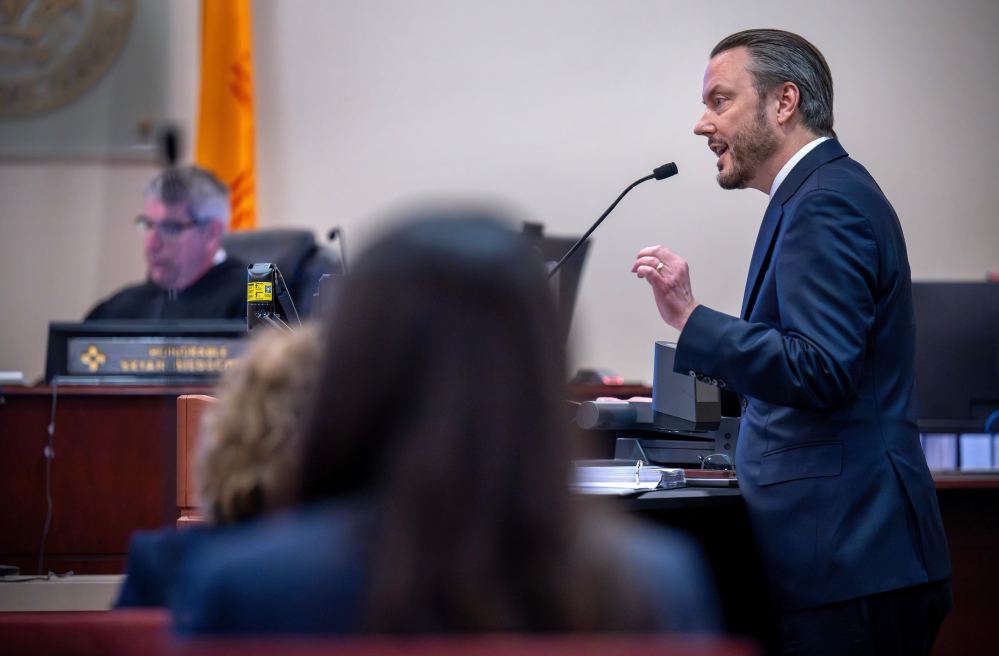
Here are looming questions as related lawsuits approach trial.
Will these verdicts harm Meta’s business?
The answer is not really — or, at least, not yet.
Meta — the owner of Instagram, Facebook and WhatsApp — says it had $201 billion in sales last year.
That revenue stream dwarfs the $375 million in civil penalties imposed on Tuesday by a jury in New Mexico with a verdict that Meta knowingly harmed children’s mental health and concealed what it knew about child sexual exploitation on its social media platforms.
Meta said it disagrees with the verdicts and plans to appeal the jury’s finding that it violated the state Unfair Practices Act.
And tech companies still are shielded from legal responsibility for posted content, based on Section 230 of the 1996 Communications Decency Act.
Investors are shrugging off the verdicts. Meta’s stock closed slightly higher Wednesday, although it is down about 8% year-to-date.
Does Meta have to make changes now to its design or algorithm?
The verdicts this week don’t mandate specific changes to the design of social media platforms, nor to the algorithms that make them tick.
But a second phase of the New Mexico trial in May, before a judge with no jury, could spell out changes for Meta’s platforms for local users by court order.
A state district court judge will determine whether Meta created a public nuisance — and could impose restrictions and order the company to pay for programs that remedy potential harms to children.
New Mexico Attorney General Raúl Torrez, who filed the lawsuit against Meta in 2023, says his office wants improvements to Meta’s enforcement of minimum age limits and removal of sexual predators — in part by lifting encryption on communication that can interfere with police work.
Meta says it continuously works to improve safety and already has made changes that phase out encryption on Instagram and limit access to explicit content by teenagers, block unsolicited messages to children from adults and help young users manage time spent on its platforms and avoid sleep disruptions.
Both the California and New Mexico trials highlighted the addictive properties of platform algorithms and the negative impacts on child mental health.
How much money do Meta and YouTube have to pay?
In New Mexico, a jury in Santa Fe arrived at the $375 million fine against Meta by endorsing the maximum penalty of $5,000 per violation of state consumer protection law — multiplied by thousands of social media accounts for children under 18.
Prosecutors intend to pursue more damages in that trial’s second phase, while an appeal could delay payment — or reverse penalties.
In California, the jury ruled that Meta and Google’s video streaming platform YouTube must pay at least $3 million in damages to a 20-year-old woman who says she became addicted to social media as a child, exacerbating her mental health struggles. TikTok and Snap settled before the trial began.
California jurors recommended an additional $3 million in punitive damages pending a judge’s final review.
Google defends YouTube as a responsibly built streaming platform, and not a social media site.
More trials to come on social media safety
The California verdict has much broader legal and financial implications. The case was designated as a bellwether test that might guide the resolution of other lawsuits. There are thousands of those lawsuits pending, including hundreds in California.
The New Mexico verdict may be an early indicator for lawsuits brought by other publicly elected prosecutors.
Attorneys general in more than 40 states have filed suit against Meta, claiming it is contributing to a mental health crisis among young people. Most are pursuing remedies in U.S. federal court.
Related Articles
What could come next for other social media firms as a jury finds Meta platforms harm children

Advertisement Advertise With Us
Advertisement Advertise With Us