Tracing the roots of democracy to today’s fragmentation

Advertisement
Read this article for free:
or
Already have an account? Log in here »
To continue reading, please subscribe:

Digital Subscription
One year of digital access for only $205*
- Enjoy unlimited reading on winnipegfreepress.com
- Read the E-Edition, our digital replica newspaper
- Access News Break, our award-winning app
- Play interactive puzzles
*First annual payment billed as $205.00 + GST for one year. This annual subscription will automatically renew at $233.00 + GST every 52 weeks (10% off the regular annual price of $259.35). Offer available to new and qualified returning subscribers only. Cancel any time.
To continue reading, please subscribe:
Add Free Press access to your Brandon Sun subscription for only an additional
$1 for the first 4 weeks*
- Enjoy unlimited reading on winnipegfreepress.com
- Read the E-Edition, our digital replica newspaper
- Access News Break, our award-winning app
- Play interactive puzzles
*Your next Brandon Sun subscription payment will increase by $1.00 and you will be charged $17.95 plus GST for four weeks. After four weeks, your payment will increase to $24.95 plus GST every four weeks.
Read unlimited articles for free today:
or
Already have an account? Log in here »
People sometimes joke that we would be no worse off if we picked someone at random from the phone book to rule the country.
Well, the ancient Greeks tried something just like that with their “kleroterion,” a slab of stone and primitive machine used by the Athenians to choose citizens for public office.
Near the end of Athens: Birth of Democracy, co-produced by Winnipeg’s Merit Motion Pictures for CBC’s Nature of Things, host Anthony Morgan and a group of students give this contraption a whirl under the blazing Athenian sun.
Merit photo
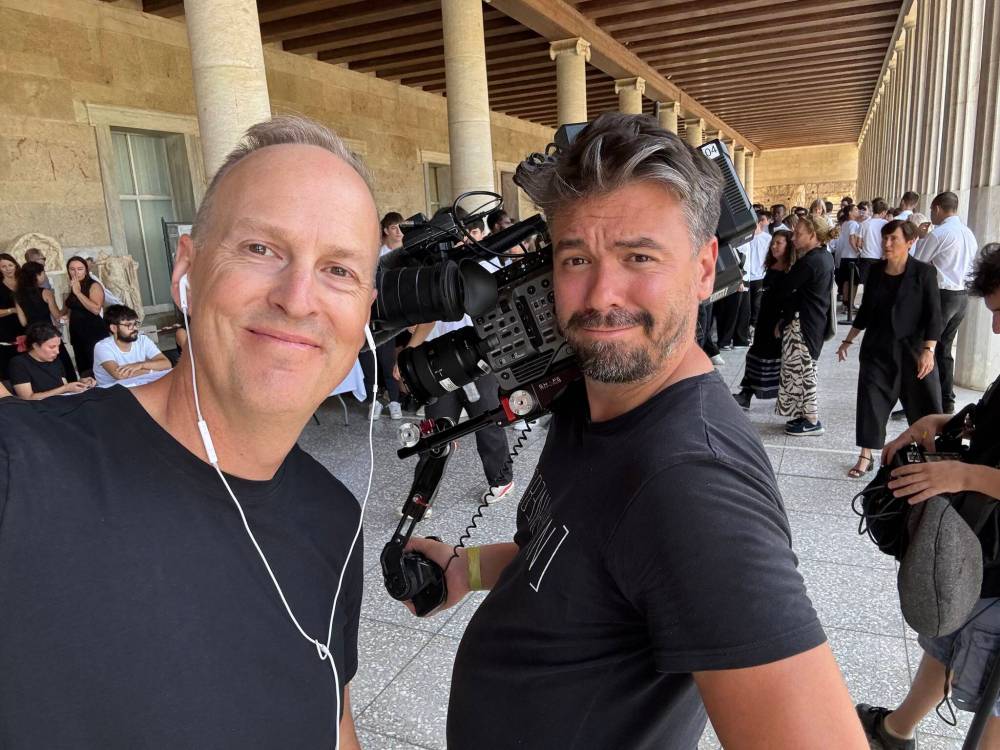
Jeff Newman (left) is the director of Athens: Birth of Democracy, co-produced by Winnipeg’s Merit Motion Pictures for CBC’s Nature of Things.
Students applaud as they’re randomly chosen by the machine’s system of dice. In reality, Athenians often grumbled at this rude imposition of civic duty.
The Greeks may have pioneered humanity’s most revolutionary political idea and institution, but getting citizens to do the often tedious work of actually running the damn thing was helped by treating political office just as they did — and we still do — jury duty: making selection random, but service mandatory.
The 45-minute program, as bright in narrative tone as it is visually, focuses on another reason for this arrangement. As archeologists and historians explain to Morgan amid a beautifully shot Athens, instruments such as the kleroterion and “ostracism” (which referred originally to a ballot procedure allowing citizens to expel other citizens from Athens for a 10-year-period) helped ensure that ambitious upstarts didn’t try to set themselves up as tyrants.
Tyranny and murder are prologues to democracy, so that’s where Athens: Birth of Democracy — a civics class that clearly does not want to come off too dryly — begins, with the story of ruling statesmen and brothers Hipparchus and Hippias.
In the sixth century BC, Hipparchus was offed during a public festival, not because he was known as a terrible tyrant, but because a romantic rival had it in for him. With that, one of history’s most significant chain reactions was accidentally set in motion.
Hippias, now paranoid, began ruling with a heavy fist; popular resentment intensified and ultimately resulted in a coup. Hippias was spared from assassination, but exiled.
“It’s a thriller, how it came to be. It’s war, it’s love triangles, it’s murder, it’s intrigue,” says director Jeff Newman.
Athens tracks democracy’s life and death over the next two centuries. Its first chapter is with Cleisthenes, a reformist aristocrat who guided democracy’s early manifestations. Greek democracy ends around the time — and partially by the hands — of Alexander the Great. Athens bookends this story with inspiring words about all that Greeks can teach us today.
“They really had so many great ways to create a pure form of democracy that have been lost throughout the last 2,500 years,” says Newman.
His program’s interviewees flatteringly contrast the ancients’ more direct, participatory style of democracy with our own, but they also address the ancient model’s exclusions and exploitations.
In classical Greece, citizenship may have been robust, but it extended only to land-owning males. The wealth and labour that fuelled Greek life also depended on slaves, who existed within the ranks of civil service down to the silver mines beneath Athens.
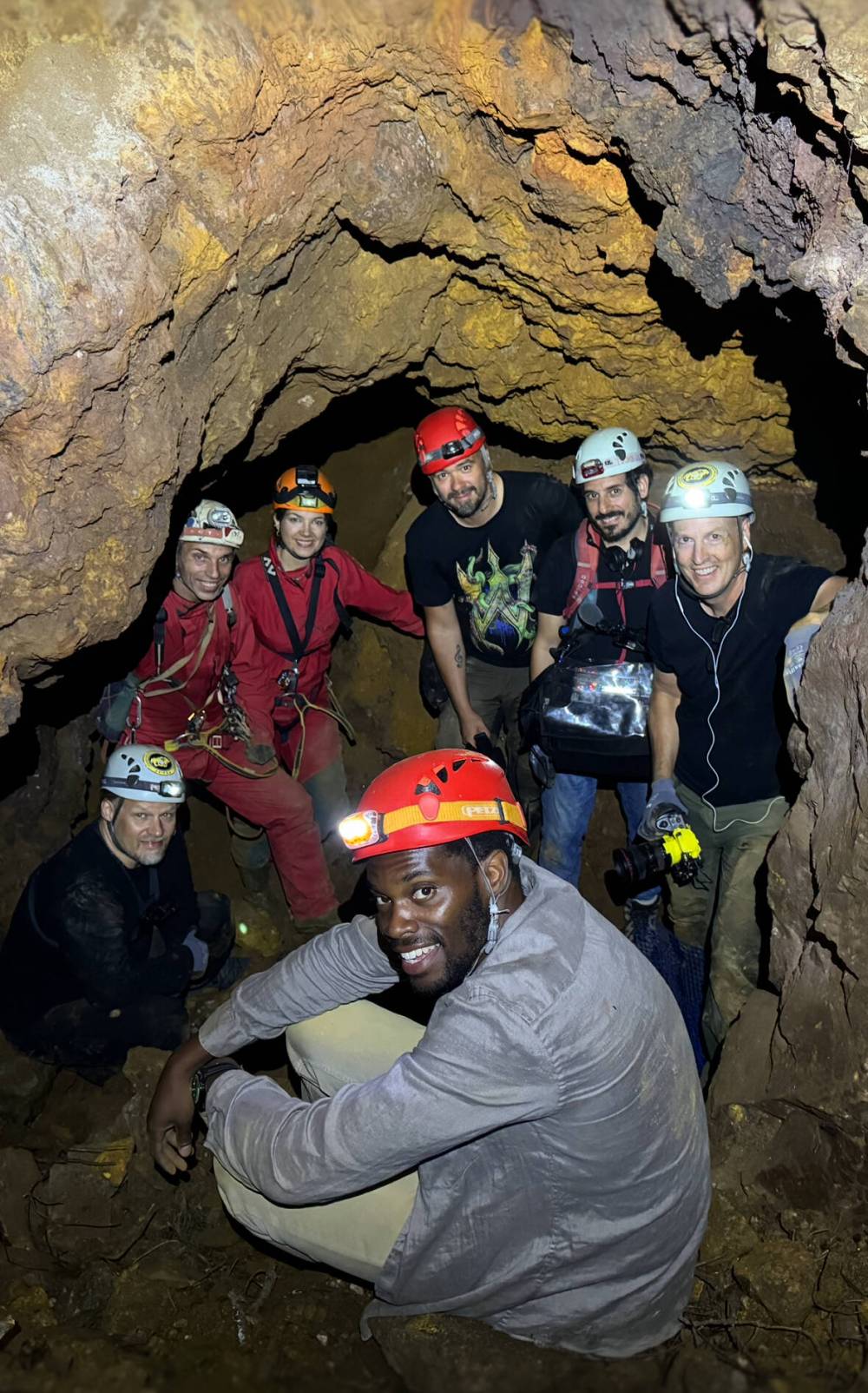
“We’re right inside the mines deep under the ground in these tiny shafts that humans spent their lives crawling through,” says Newman of one of the program’s sequences.
“It was really profound and heavy to be there and experience it first hand.”
Merit photo
Nature of Things host Anthony Morgan (front) goes underground with a group of students to probe the roots of democracy in Athens.
Newman helps to make explicit what’s only hinted at by Athens and its cast of scholars: studying the Greeks can help us resist today’s rising tide of populist authoritarianism.
“(Democracy) is being fragmented right now. We’re seeing a similar trajectory happen here. It’s a bit of a wakeup call,” says Newman.
Ancient Greece didn’t just give birth to Western democracy, but Western philosophy. Its foundational texts by Plato and Aristotle contain among the most poetic, resonant critiques articulated of popular democracy in favour of more aristocratic models of governance.
Echoes of this reinvigorated “classical” outlook can be heard in the critiques of both U.S. President Donald Trump and left-wing populists in favour of more elite-driven, constitutionally constrained, technocratic politics.
Newman, however, suggests today’s new authoritarianism is really just more elite control, despite its folksy facade.
Better elitism can’t be the answer.
“The (early ancient) world was run by oligarchs and tyrants, familiar to where we are today, sadly,” he says. “The mechanisms you need in place to allow true power to the people have broken down, and I think that’s allowed (demagogues) to manipulate, create division.”
He hopes that, in their modest way, programs such as Athens: Birth of Democracy can stimulate and exercise the muscles needed to reinvigorate democracy today — and says Athens was a passion project for its key creatives.
“Merit, this is really her story, right?” he says of producer Merit Jensen-Carr. “I directed and wrote it, but she’s been working on this for years, and this is very important for her.”
winnipegfreepress.com/conradsweatman
Conrad Sweatman is an arts reporter and feature writer. Before joining the Free Press full-time in 2024, he worked in the U.K. and Canadian cultural sectors, freelanced for outlets including The Walrus, VICE and Prairie Fire. Read more about Conrad.
Our newsroom depends on a growing audience of readers to power our journalism. If you are not a paid reader, please consider becoming a subscriber.
Our newsroom depends on its audience of readers to power our journalism. Thank you for your support.
Movie preview
Athens: Birth of Democracy
Directed by Jeff Newman
● CBC TV and CBC Gem
● Premières today at 8 p.m.
Conrad Sweatman is an arts reporter and feature writer. Before joining the Free Press full-time in 2024, he worked in the U.K. and Canadian cultural sectors, freelanced for outlets including The Walrus, VICE and Prairie Fire. Read more about Conrad.
Our newsroom depends on a growing audience of readers to power our journalism. If you are not a paid reader, please consider becoming a subscriber.
Our newsroom depends on its audience of readers to power our journalism. Thank you for your support.
Advertisement Advertise With Us
Advertisement Advertise With Us