

Discount is the new name of the game. What does that mean for conventional stores?
Advertisement
Read this article for free:
or
Already have an account? Log in here »
To continue reading, please subscribe:
Digital Subscription
One year of digital access for only $1.44 a week*
- Enjoy unlimited reading on winnipegfreepress.com
- Read the E-Edition, our digital replica newspaper
- Access News Break, our award-winning app
- Play interactive puzzles
*Billed as $5.77 plus GST every four weeks. After 52 weeks, price increases to the regular rate of $19.95 plus GST every four weeks. Offer available to new and qualified returning subscribers only. Cancel any time.
To continue reading, please subscribe:
Add Free Press access to your Brandon Sun subscription for only an additional
$1 for the first 4 weeks*
- Enjoy unlimited reading on winnipegfreepress.com
- Read the E-Edition, our digital replica newspaper
- Access News Break, our award-winning app
- Play interactive puzzles
*Your next Brandon Sun subscription payment will increase by $1.00 and you will be charged $17.95 plus GST for four weeks. After four weeks, your payment will increase to $24.95 plus GST every four weeks.
Read unlimited articles for free today:
or
Already have an account? Log in here »
The Canadian grocery landscape looks a lot different today from the pre-pandemic era.
Major grocers began a pivot into discount about three years ago as consumers favoured sales and other deals amid high food inflation.
And it’s been paying off. Grocers have been crediting their discount locations for fuelling sales growth; meanwhile, consumers appear set in their deal-seeking behaviour — which will bode well for continued momentum in the discount grocery space.
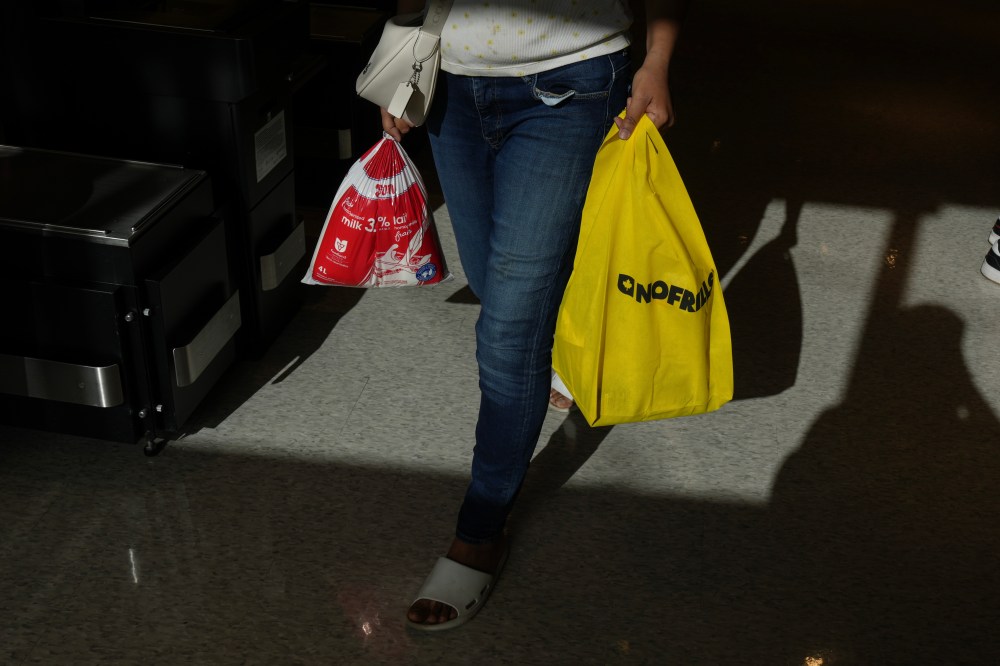
For major grocers, the focus is on bringing shoppers into their stores, said Henry Chambers, senior vice-president of Canada and the Americas at Sentinel.
“How do I help the shoppers stay within my estate, whether that might be a No Frills, whether it might be a Save on Foods, without going to the competition?” he said.
“Because effectively, I sell the same stuff that my competitors do.”
Chambers said grocers didn’t have a choice but to pivot, given consumer demand for lower prices and an intensifying race for the consumer dollar.
It was also a way to guard against potential new entrants into the market, he added.
“Any Canadian retailer’s biggest threat is competition. What if Aldi comes to our market?” Chambers said.
Aldi, a German discount grocer, expanded its existing store footprint in the U.S. market last year and plans to open more storefronts, as value-seeking consumers flock to shop there. Former Industry Minister François-Philippe Champagne had touted the possibility of a foreign entrant shaking up the Canadian grocery landscape at the height of food inflation in recent years.
Growing competition in the discount space has ultimately made the shopping experience better for consumers, said Amar Singh, senior director at research firm Kantar Retail. That, in turn, has reduced the need to visit conventional supermarkets, he added.
Shoppers might once have picked up staple goods at a discount grocer but turned to a traditional store for produce, ready-made meals or a wider variety of choices on some goods.
“But the way discounters are expanding their assortments and their private label brands and bringing in some premium products within the discount banners, discount is a regular grocery trip now,” he said.
“When you have competitive discounters who are trying to outdo each other, Canadians are the end beneficiaries of that.”
Singh said fewer people are shopping for their weekly groceries at a single supermarket or conventional store — which has pushed grocers to convert some of their conventional locations into discount banners and focus on opening new discount locations.
While they will continue to exist, Singh said conventional supermarkets will likely shrink in number as consumers increasingly prefer value to convenience.
“We feel that conventional grocery has its place, especially in urban areas,” he said.
“You want good quality produce, more assortment,” Singh said. “Those sorts of things are still very pronounced in conventional grocers, but the gap is narrowing — and it’s narrowing across the board.”
A Kantar report indicates there are approximately 1,200 discount grocery stores, excluding Dollarama, and over 2,500 supermarkets, or conventional stores. That’s changed from 2019, when there were roughly 1,000 discount grocery stores and more than 2,700 supermarkets.
But for conventional banners to have an edge, Singh said they need to narrow down their focus.
“When we look at the data, it seems that conventional grocers with a purpose or differentiation are doing better than your regular supermarkets,” he said.
He gave the example of T&T Supermarket, a Loblaw-owned store which has a defined focus on Asian food.
“They get superior produce, they get some exotic food products that you can’t buy anywhere,” he said.
Loblaw has said it’s looking to open three new T&T Supermarkets in Canada and three in the U.S. this year. Overall, the grocer has at least 70 new stores — a host of discount stores and pharmacies — in the works for 2026.
Singh said the same idea goes for Empire’s Farm Boy and Longo’s, which cater to consumers looking for premium brands and products.
Chambers said if grocers want to lure consumers back to their conventional stores, they’ll have to lower their costs. And there are only two ways for them to tackle that.
One way is by cutting expenses, such as reducing staff, store wastage or operating hours, he said.

In the U.K., for example, he said some grocers have had to become “vanilla” and stripped out convenience services, such as florists or fresh sushi.
The other way is by putting pressure on suppliers and asking for lower prices so the grocers can sell more volume.
“The harsh reality is we’re going to have to make some cuts within stores to invest into retail price,” he said of grocers.
“Consumers aren’t going to suddenly come back in our store and pay another dollar, another 50 cents for that particular product.”
This report by The Canadian Press was first published April 3, 2026.