Eulogy for the CIA Factbook: The free standard for world facts, long an educational staple, is gone
Advertisement
Read this article for free:
or
Already have an account? Log in here »
To continue reading, please subscribe:
Digital Subscription
One year of digital access for only $1.44 a week*
- Enjoy unlimited reading on winnipegfreepress.com
- Read the E-Edition, our digital replica newspaper
- Access News Break, our award-winning app
- Play interactive puzzles
*Billed as $5.77 plus GST every four weeks. After 52 weeks, price increases to the regular rate of $19.95 plus GST every four weeks. Offer available to new and qualified returning subscribers only. Cancel any time.
To continue reading, please subscribe:
Add Free Press access to your Brandon Sun subscription for only an additional
$1 for the first 4 weeks*
- Enjoy unlimited reading on winnipegfreepress.com
- Read the E-Edition, our digital replica newspaper
- Access News Break, our award-winning app
- Play interactive puzzles
*Your next Brandon Sun subscription payment will increase by $1.00 and you will be charged $17.95 plus GST for four weeks. After four weeks, your payment will increase to $24.95 plus GST every four weeks.
Read unlimited articles for free today:
or
Already have an account? Log in here »
Hey there, time traveller!
This article was published 05/04/2026 (197 days ago), so information in it may no longer be current.
If you attended school any time after the Nixon administration, then you likely beheld at some point the CIA World Factbook, a map and reference manual of Planet Earth and its inhabitants upon which nearly everyone could agree.
Maybe you read parts of it from a floppy disk or a CD-ROM for that social studies project due tomorrow. Or scanned its list of countries for Latvia, because that is the country you are representing next week in Model U.N. Even better, you wandered the earth in your imagination as you held the physical Factbook in your own hands, unfolding its maps and understanding, perhaps for the first time, that the thumbs-up gesture your friends flash each other is considered an obscene insult in parts of the Middle East, Europe and Argentina.
Who knew? The Factbook and its readers did, for more than six decades.
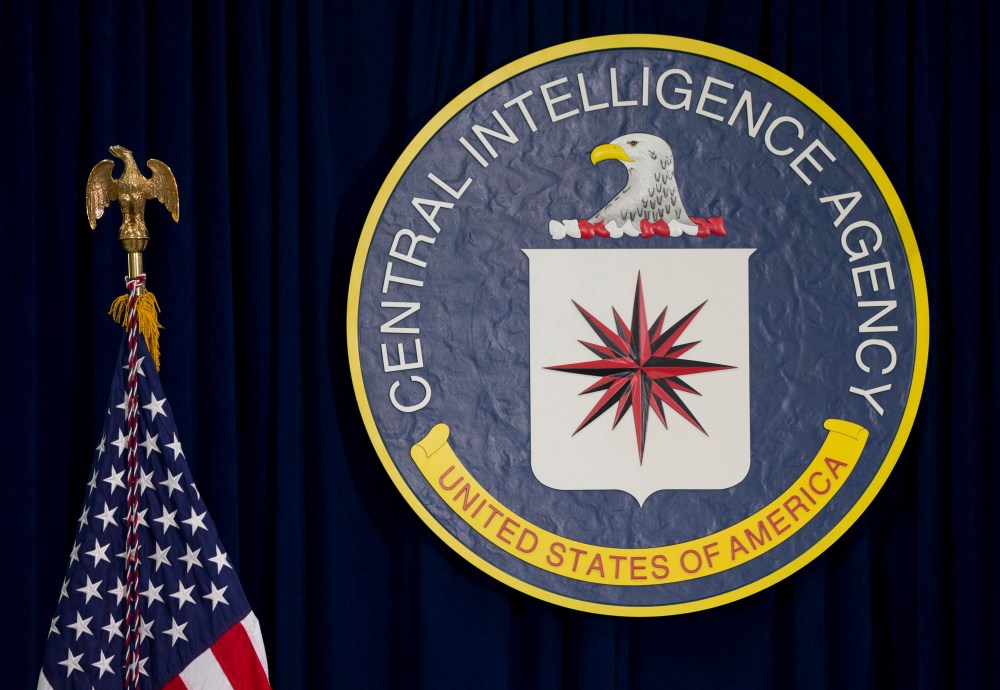
Its authors — some of the world’s best intelligence-gatherers, who contributed thousands of their own photos — kept the curated database updated and online for public use at no charge. The reasons stated were geopolitical and philosophical. But since we are talking about facts, it also is true that the Factbook went public in 1975 with lofty statements of purpose at a time when Congress was revealing abuses by U.S. intelligence agencies, including the CIA.
“We share these facts with the people of all nations in the belief that knowledge of the truth underpins the functioning of free societies,” the CIA itself explained in its pages.
The spy agency is not sharing them anymore.
On Feb. 4, the Trump administration abruptly shuttered this widely accepted account of humanity and its flags, nations, customs, militaries and borders. The CIA framed the move as one of progress for an agency whose core mission has changed.
A great wave of grief rose from Factbook fans. Many said they mourned an America that valued knowledge for its own sake. Some saw darker forces at work under a president whose administration has promoted — in times of war and peace — “alternative facts.”
“Stay curious,” the CIA advised in its “fond farewell” to the Factbook.
And, it might have added: Good luck figuring out what’s true from the wild and frequently
inaccurate world of the internet and artificial intelligence.
The Factbook’s origin story
Decades before Google became an everyday verb, there was the Factbook.
Its origin story is rooted in the Japanese surprise attack on Pearl Harbor in 1941, a U.S. intelligence failure that inspired a more coordinated approach to gathering and organizing information on America’s enemies. The Joint Army Navy Intelligence Studies was born, the country’s first interdepartmental basic intelligence program. But by 1946, national security experts agreed that “the conduct of peace involves all countries, all human activities — not just the enemy and his war production,” in the words of one, George S. Pettee.
The job of gathering basic intelligence on other countries was assigned to the newly minted CIA in 1947, according to the agency’s website.
The Cold War exposed the ongoing need for a one-stop source of basic intelligence — and an opportunity for what in 1971 became the unclassified Factbook. It was released to the public four years later.
In addition to becoming useful to students, it held geopolitical influence. The Factbook showed off American intelligence capabilities to the former Soviet Union and other enemies. Being included in it could confer legitimacy upon a nation or an opposition party. And it was ironic that an agency founded on the need to know and keep secrets was sharing so much data — called “basic intelligence” — with the public.
The Factbook also likely served as a boost to the CIA’s public image and put distance between it and other intelligence agencies tarnished by congressional investigations. In 1975, U.S. Sen. Frank Church, D-Idaho, convened a panel that held more than 100 public hearings, many televised, of the most significant oversight of intelligence agencies since World War II.
In 1976, the Church Committee reported widespread abuse by the CIA, IRS, the National Security Agency and FBI, including the revelation of the CIA’s “Family Jewels.” That was an internal account of illegal CIA activities, such as spying on American activists and an assassination plot against Cuba’s Fidel Castro.
Also in 1975, what would become the CIA World Factbook went public, ascending as a reliable research tool often recommended in class projects. There was never confirmation that the bad press inspired the wide release of the Factbook, but doing so around the same time fit the CIA’s need to rehab its brand.
In 1981, the CIA renamed the publication The World Factbook, and in 1997, it leapt online. The CIA has described it as representing “a tremendous culmination of efforts from some of our country’s brightest analytic minds.”
The jolt of its Trump-era demise
News of the Factbook’s end shocked more than just U.S. students and researchers. It was picked up by news outlets abroad. The story shot across social media, with Reddit users pointing each other to archived Factbooks and racing to set up and identify other sources of unbiased information that might suffice.
Isabel Altamirano, chemistry librarian assistant professor at Auburn University in Alabama, said the information is still out there, but “it’ll be harder to find.” University libraries, for example, offer similar resources to students, who get access through their tuition.

“It was so easy, because it was all in one place,” she said in an interview, noting that on Feb. 4, when she saw the news, she rushed to delete the Factbook from a list of resources for her students in a business communications class.
Fundamentally, one analyst said, a Factbook assembled by a government agency with secret agendas and shadowy methods might never have been unbiased in the first place.
“The compilers aren’t, nor can they be expected to be, neutral,” said Binoy Kampmark, a professor of global, urban and social studies at Royal Melbourne Institute of Technology in Australia. Mourning its loss, he wrote in an email, would be “misplaced.”
The Factbook, he added, might be better saved as a historical document. Its last publication on Feb. 4 is already outdated, according to an archived version: Under Iran, the country’s head of government is still listed as Supreme Leader Ayatollah Ali Khamenei.
Khamenei was reported killed March 1 in U.S. and Israeli strikes. And the world changed once again, this time without the Factbook to note it.
Related Articles
Trump issues an expletive-filled threat against Iran as details of US aviator's rescue emerge
Advertisement Advertise With Us
Advertisement Advertise With Us