Analysis by avalanche experts questions decisions by guides on deadly California backcountry trip
Advertisement
Read this article for free:
or
Already have an account? Log in here »
To continue reading, please subscribe:
Digital Subscription
One year of digital access for only $1.44 a week*
- Enjoy unlimited reading on winnipegfreepress.com
- Read the E-Edition, our digital replica newspaper
- Access News Break, our award-winning app
- Play interactive puzzles
*Billed as $5.77 plus GST every four weeks. After 52 weeks, price increases to the regular rate of $19.95 plus GST every four weeks. Offer available to new and qualified returning subscribers only. Cancel any time.
To continue reading, please subscribe:
Add Free Press access to your Brandon Sun subscription for only an additional
$1 for the first 4 weeks*
- Enjoy unlimited reading on winnipegfreepress.com
- Read the E-Edition, our digital replica newspaper
- Access News Break, our award-winning app
- Play interactive puzzles
*Your next Brandon Sun subscription payment will increase by $1.00 and you will be charged $17.95 plus GST for four weeks. After four weeks, your payment will increase to $24.95 plus GST every four weeks.
Read unlimited articles for free today:
or
Already have an account? Log in here »
Hey there, time traveller!
This article was published 06/04/2026 (194 days ago), so information in it may no longer be current.
Two months after the deadliest avalanche in modern California history, an analysis by leading U.S. experts questions the guides’ decision to lead such a large group through dangerous terrain amid avalanche warnings.
The backcountry skiers were traveling in a tightly packed line when the tour leaders with Blackbird Mountain Guides should have spaced them out to reduce the risk, according to the report prepared by the Sierra Avalanche Center, which was published Saturday on the National Avalanche Center site.
“Exposing only one person at a time to avalanche terrain is an accepted best practice for backcountry travel,” the report said. “Analysis of past avalanche accidents has indicated that larger group sizes (4 or more people) have higher chances of being caught in avalanches.”
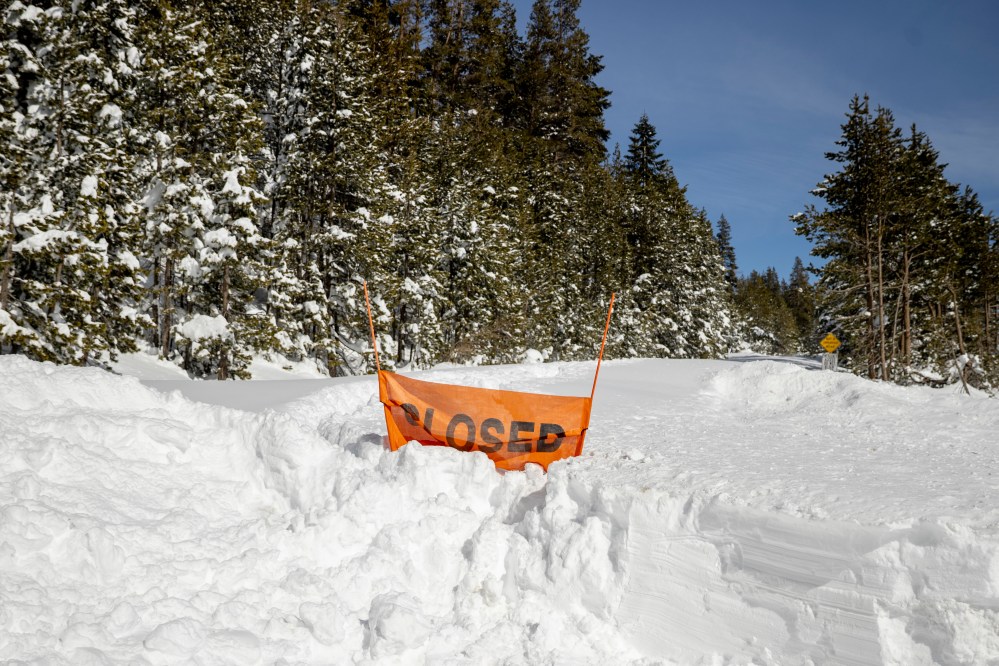
Nine backcountry skiers were killed by the avalanche Feb. 17 in California’s Sierra Nevada when a massive wall of snow plunged down a slope near Lake Tahoe. Six others survived.
The report also noted that several members of the group wore avalanche air bag backpacks, but none of the lifesaving equipment was deployed during the tragedy.
Guide company says more facts to come
Blackbird said Monday that an investigation is ongoing.
“The report does not reflect the full scope of what transpired and does not include all of the facts and information currently under review,” the company said in an email. “We are cooperating fully with authorities and will share more when it is appropriate and based on verified and confirmed findings.”
The report said the group of 15 was traveling through the potential path of an avalanche near Castle Peak following a period of intense snowfall when a slide was likely.
The avalanche center has no enforcement powers. Its reports typically provide safety guidance.
The Nevada County Sheriff’s Office is conducting a criminal investigation and state workplace regulators are investigating the company’s decisions leading up to the avalanche.
The avalanche struck on the last day of the skiers’ three-day tour, when the group decided to end the trip early and leave the huts where they had slept to avoid another impending snowstorm.
The avalanche center said in its report that it relied heavily on the accounts of two skiers, Jim Hamilton and Anton Auzans, who survived and talked to The New York Times about what they witnessed. Both skiers said they had taken basic avalanche safety classes and had only been on a handful of backcountry skiing trips before that fateful day.
Both men said the guides met behind closed doors, and it was unclear if they knew about the warning that a human-caused avalanche was very likely before heading out from the huts, which they noted had internet service. The men told the Times that the women’s and men’s groups were combined that morning with four guides.
Before the last milelong climb, Hamilton struggled to get his boot in his binding and fell behind. Thirteen skiers, mostly women, were bunched together behind the lead guides as they crossed avalanche terrain. Auzans was just behind them when the avalanche hit, the newspaper reported. He was swept away but managed to dig himself out. Moments later, Hamilton and the guide reached them and scrambled to try to unbury people.
The center noted the other survivors may have different details and information that may give a more complete picture if they ever choose to share their stories. Among the dead were three veteran guides and six women who were part of a close-knit group of friends who were experienced backcountry skiers.
Jess Weaver, a spokesperson for the group of female friends on the trip, said the survivors and the families of those who died are not doing interviews at this time. Another skier who survived has not spoken publicly.
Did they break a ‘golden rule’?
Avalanche expert Dale Atkins said the group broke a “golden rule” of spreading out during backcountry travel by staying packed together as they moved through an avalanche zone. But Atkins added that keeping the group together while traveling through safer terrain made sense, given the poor visibility that day and the risk of people getting lost if they were too spread out.

“Did they mess up? A lot of people will say, ‘Yes,’” said Atkins, who has been involved in mountain rescues and avalanche forecasting and research in Colorado for five decades. “I’m not so sure about that. You want to keep the group together. But you don’t keep the group together on an avalanche slope. I suspect the guides in the group didn’t realize they were in an avalanche path.”
Atkins had similar comments about the decision to ski out during the storm: In hindsight, the skiers should have stayed put until the danger lessened. Yet in the moment, the guides might have thought that getting out of the mountains quickly made sense, he said.
“A lot of armchair quarterbacks, if they were in the middle of the storm out there, they might have made a similar decision,” he said. “Tragically for these people and their families, there’s no do-over.”
___
Associated Press journalists Matthew Brown in Billings, Montana, and Julie Watson in San Diego contributed to this report.