Environment Canada to use AI in new weather forecasting model

Advertisement

Advertise with us

OTTAWA - Environment and Climate Change Canada will use artificial intelligence to make its weather forecasts more accurate, the federal department said Thursday.

Read this article for free:


By clicking the button above, an account will be created and you will begin to receive some of our recommended newsletters. You may opt out of any newsletter by visiting your Email and Communication Preferences page or by clicking "unsubscribe" at the bottom of any email.

or

Already have an account? Log in here »

To continue reading, please subscribe:

Digital Subscription

One year of digital access for only $1.44 a week*

  • Enjoy unlimited reading on winnipegfreepress.com
  • Read the E-Edition, our digital replica newspaper
  • Access News Break, our award-winning app
  • Play interactive puzzles

*Billed as $5.77 plus GST every four weeks. After 52 weeks, price increases to the regular rate of $19.95 plus GST every four weeks. Offer available to new and qualified returning subscribers only. Cancel any time.

To continue reading, please subscribe:

Add Free Press access to your Brandon Sun subscription for only an additional

$1 for the first 4 weeks*

  • Enjoy unlimited reading on winnipegfreepress.com
  • Read the E-Edition, our digital replica newspaper
  • Access News Break, our award-winning app
  • Play interactive puzzles
Start now

*Your next Brandon Sun subscription payment will increase by $1.00 and you will be charged $17.95 plus GST for four weeks. After four weeks, your payment will increase to $24.95 plus GST every four weeks.

Hey there, time traveller!
This article was published 09/04/2026 (193 days ago), so information in it may no longer be current.

OTTAWA – Environment and Climate Change Canada will use artificial intelligence to make its weather forecasts more accurate, the federal department said Thursday.

It plans to launch a hybrid model this spring that uses both AI and traditional forecasting and says the combination of the two will lead to more accurate predictions.

“The new hybrid model relies on AI to better predict future weather conditions, as well as relying on the traditional physics‑based model to bring in our knowledge of unique local factors like wind, temperature, and precipitation,” it said in a news release.

People walk through downtown Toronto during a winter storm on Sunday, Jan. 25, 2026. THE CANADIAN PRESS/Cole Burston

AI can analyze decades of historical data covering a whole continent in minutes, the department said, adding AI models “identify relationships between temperature, wind, and pressure and use those learned patterns to estimate the future atmosphere, especially for major weather events like heat waves, or for tracking hurricanes.”

The hybrid model is better at predicting extreme weather, such as strong winds or heat waves, because the traditional model “keeps the small-scale details that AI models tend to miss,” the release said.

With the new model, Environment Canada said its six-day forecast will be as accurate as its five-day forecast. It said that’s “particularly significant because previous improvements to forecasting were only possible after several years of research and development.”

It said the hybrid system will also be faster at predicting major systems such as winter storms, heat waves and atmospheric rivers.

Environment Canada said that over the past year, its “scientists and meteorologists have been carrying out extensive testing on the hybrid model, running it in parallel with our traditional model to evaluate its performance for predicting weather conditions in Canada.”

The department added it will continue to rely on its meteorologists, whose is judgment is “critical” to interpreting results and communicating them to the public.

“The fact that that much climate data can be analyzed so quickly and incorporated into a product that we can use is exciting,” said Halifax-based Cindy Day, who has been a meteorologist for more than 40 years.

Day added that being able to identify systems earlier will benefit public safety by giving people more warning of big storms.

But she questioned how helpful historical data can be, given the effects of climate change.

“The rate at which our temperatures are changing and our climate is changing is significant. And so I’m not sure that the analysis of so much data going back so much time so very quickly is going to make a big difference into producing a forecast for the next five, six, seven days,” Day said.

This report by The Canadian Press was first published April 9, 2026. 
Report Error Submit a Tip

More Stories

Detox centre ready but staffing challenges persist

Scott Billeck 6 minute read Preview

Detox centre ready but staffing challenges persist

Scott Billeck 6 minute read 2:01 AM CDT

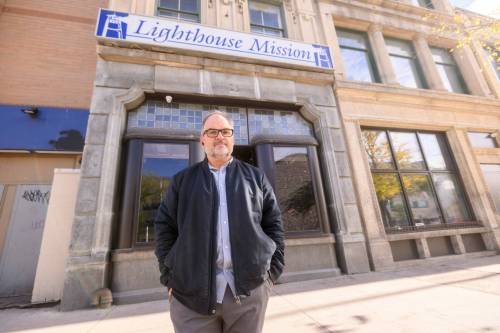
Peter McMullen’s decade-long struggle with addiction gives him insight into the challenges Lighthouse Mission hopes to address with a new Main Street detox facility focused on connecting people with longer-term treatment.

McMullen, executive director of Lighthouse Mission, knows how difficult it can be to navigate Winnipeg’s addiction treatment system, particularly when someone is ready to seek help but the services they need aren’t immediately available.

Now, after years of planning and a lengthy renovation of two century-old buildings, the downtown organization is preparing to open a 10-bed detox facility at 667 and 669 Main St., with five beds each for men and women.

The facility could begin accepting clients as early as November, provided Lighthouse Mission can overcome one final hurdle: recruiting enough staff to operate it.

Read
2:01 AM CDT

Bayer Canada begins construction on new R&D facility in St. B

Gabrielle Piché 3 minute read Preview

Bayer Canada begins construction on new R&D facility in St. B

Gabrielle Piché 3 minute read Friday, Oct. 16, 2026

Instead of canola on Friday, there was sod.

But in two years’ time, by current estimates, the bare plot of land in a St. Boniface industrial park will hold canola samples and seeds for testing.

Bayer Canada officially broke ground on a 60,000-square-foot research and development facility Friday morning.

“It’s about bringing new and better innovation to farmers,” said Kacy Perry, Bayer Crop Science Canada’s country division head.

Read
Friday, Oct. 16, 2026

Disgraced ex-dean landed job at German university after fleeing Winnipeg

Maggie Macintosh 8 minute read Preview

Disgraced ex-dean landed job at German university after fleeing Winnipeg

Maggie Macintosh 8 minute read Friday, Oct. 16, 2026

Before he was arrested in a posh Paris suburb, the disgraced dean of Manitoba’s only law school — who fled the country following a 2020 expense scandal — kept a low profile at a German university.

Read
Friday, Oct. 16, 2026

Movie theatre reopening generates excitement in Selkirk

Gabrielle Piché 3 minute read Preview

Movie theatre reopening generates excitement in Selkirk

Gabrielle Piché 3 minute read Saturday, Oct. 17, 2026

Selkirk got an extra dose of lights, cameras and action this weekend.

And ribbon cutting — for the grand reopening of the city’s sole theatre.

“It’s fantastic,” Mayor Larry Johannson said. “The sky’s the limit.”

The Garry Theatre now operates under a non-profit charity. It’s been closed since 2021, when Landmark Cinemas left the city.

Read
Saturday, Oct. 17, 2026

Half Pints Brewing out of bankruptcy, back on shelves

Aaron Epp 5 minute read Preview

Half Pints Brewing out of bankruptcy, back on shelves

Aaron Epp 5 minute read Friday, Oct. 16, 2026

A pioneer of Winnipeg’s craft brewing scene has reopened under new ownership.

Read
Friday, Oct. 16, 2026

Consumer apprehension grows as US retailers adopt AI-assisted pricing tools

Dee-ann Durbin And Anne D'innocenzio, The Associated Press 7 minute read Preview

Consumer apprehension grows as US retailers adopt AI-assisted pricing tools

Dee-ann Durbin And Anne D'innocenzio, The Associated Press 7 minute read Yesterday at 2:10 AM CDT

U.S. consumers aren't just frustrated with high prices. They're angry and confused about the increasingly high-tech ways that restaurant chains and major retailers are setting those prices.

Digital price tags are rapidly replacing paper ones in grocery aisles. Artificial intelligence tools help businesses decide what to charge by predicting how customers might respond. Terms like “dynamic pricing” and “surveillance pricing” are stirring anxiety on social media, where users wonder if different people are getting different prices for the same product.

Americans have grown accustomed to changing prices when booking flights, hotel rooms and rides, but the prospect of everyday spending shaped by algorithms they don’t understand and personal data they may not realize they’re sharing has touched a nerve.

“There are major tensions happening right now between who’s really going to have the power with some of these algorithms and usage of bots and AI: the companies or the shopper,” said Katie Thomas, who leads an internal consumer behavior think tank at the management consulting firm Kearney.

Read
Yesterday at 2:10 AM CDT