Sweet, salty advice and plenty of drama

Advertisement
Read this article for free:
or
Already have an account? Log in here »
To continue reading, please subscribe:

Digital Subscription
One year of digital access for only $205*
- Enjoy unlimited reading on winnipegfreepress.com
- Read the E-Edition, our digital replica newspaper
- Access News Break, our award-winning app
- Play interactive puzzles
*First annual payment billed as $205.00 + GST for one year. This annual subscription will automatically renew at $233.00 + GST every 52 weeks (10% off the regular annual price of $259.35). Offer available to new and qualified returning subscribers only. Cancel any time.
To continue reading, please subscribe:
Add Free Press access to your Brandon Sun subscription for only an additional
$1 for the first 4 weeks*
- Enjoy unlimited reading on winnipegfreepress.com
- Read the E-Edition, our digital replica newspaper
- Access News Break, our award-winning app
- Play interactive puzzles
*Your next Brandon Sun subscription payment will increase by $1.00 and you will be charged $17.95 plus GST for four weeks. After four weeks, your payment will increase to $24.95 plus GST every four weeks.
Read unlimited articles for free today:
or
Already have an account? Log in here »
As today’s internet burns, with the American president typing out annihilative intentions into a propagandist app he’s dubbed the Truth, it’s easy to feel like a helpless fruit fly caught in a world wide web of lies. We consume alternating doses of negative reality and “harmless” gobbledegook to placate our worst fears.
Strapped onto this hellish seesaw, our friends and neighbours acknowledge that they could use a bit of helpful advice and support, with an estimated 20 per cent of Canadians experiencing mental health or substance use issues in a given year.
Under these circumstances, millions have begun to seek help by explaining their predicaments to large language model chatbots, a growing trend that’s led to discomfort, fear and stress amongst AI skeptics and clinicians alike.
Joey Senft photo
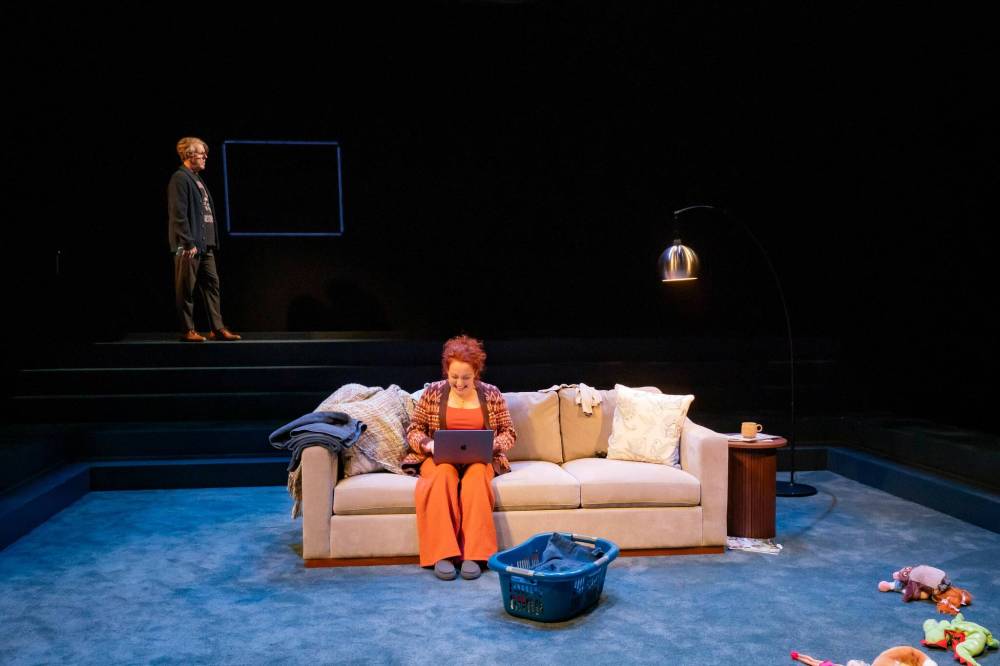
Arne MacPherson (back) seeks advice from Sugar (Laura Olafson) in Tiny Beautiful Things.
Playwright Nia Vardalos’s Tiny Beautiful Things dials back the doomsday clock, focusing on an online advice columnist’s rise to prominence at the tail-end of an epoch of internet exploration known as the blog era, a period when the URL ruled and websites such as The Rumpus healthily covered the digital terrain.
Staged for the first time in 2017, since then licensed over 250 times worldwide, this latest version of the epistolary production, directed by Prairie Theatre Exchange artistic director Ann Hodges, is marked by its characters’ existence in ecosystems that have been altered beyond repair.
Like Eppie Lederer, the real woman behind the Ann Landers byline, The Rumpus’s advice-columnist mantle is bestowed upon a struggling writer (Laura Olafson, in an excellent, patient, deeply felt performance) who is granted the boundless freedom, and the unique pressure, of anonymity.
A few months before the changing of the guard, the Dear Sugar column was penned by a writer who lacked the heart to keep going. He calls Olafson’s Cheryl Strayed with what hardly seems like a dream offer: it’s anonymous, there’s no credit, and as a bonus, it doesn’t pay.
Within seconds of accepting the responsibility, the new Sugar’s inbox is saturated with notes about cliquey teenagers, marital strife, sexual health, motherhood, grief and other problems.
Each email anxiously pings like a front desk bell, and Sugar — a married mother of two who writes in solitude — does her best to keep up with the inquiries from her devoted correspondents (Gislina Patterson, Arne MacPherson, Honey Pham, who as a group skilfully portray characters at both ends of the dramedy spectrum).
When some inbox regulars are slow to trust their new listening ear, Sugar shares some of her salt — a divorce, heroin use, an abortion, the death of her mother when Sugar was 22. Soon, the emails resume, arriving in a crush.
Joey Senft photo
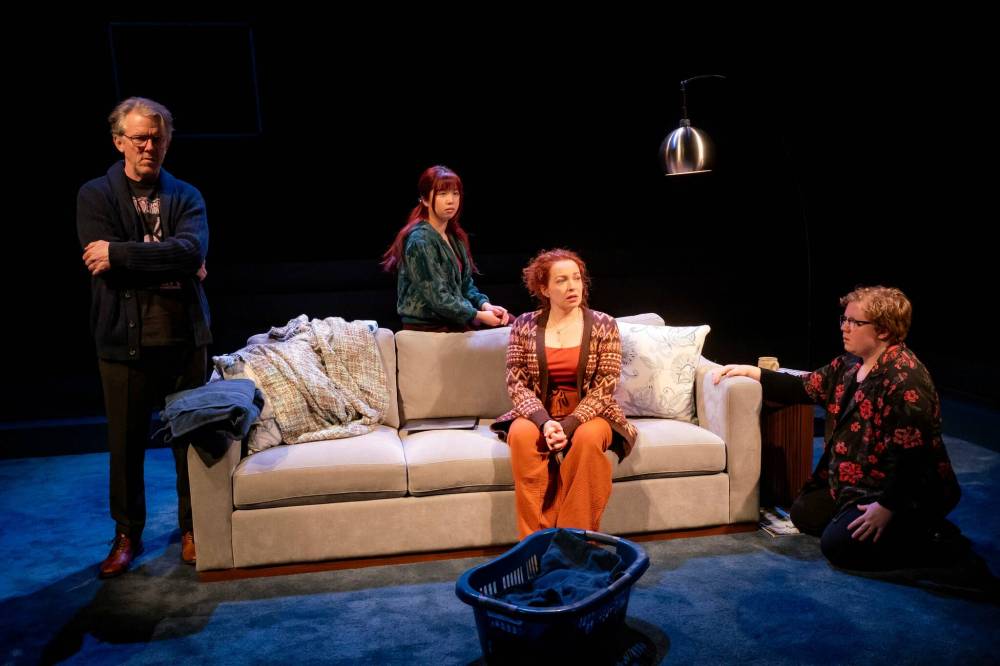
The cast of Tiny Beautiful Things (from left) features Arne MacPherson, Honey Pham, Laura Olafson and Gislina Patterson.
Like the rogue therapist Jimmy Laird (Jason Segel) in Apple TV’s Shrinking, Sugar plays by her own rules, allowing her audience to get a clean glimpse at what some might refer to as dirty laundry.
In Hodges’ interpretation of Vardalos’s script, Sugar first walks onto the set carrying a laundry basket. Placed on the soft blue carpet, it evokes buoyancy — like the readers to whom she replies, Sugar is doing her best to stave off being swallowed up by the tide of domestic responsibility, self-care and healing.
At one point, when Sugar is explaining the backstory of a red dress bought by her mother, one of the letter writers literally begins sorting out the darks, whites and colours of Cheryl’s sartorial armour. With Sugar, the lesson runs in a feedback loop with the recipients.
Designer Anahita Dehbonehie’s set recalls both a mid-century conversational pit and a natural basin, with Sugar’s sofa and desk standing as islands in the blue.
The 90-minute (no intermission) production takes place in a public digital square where Sugar helps her readers make forward progress. (This square motif is echoed by a lit-up window upstage right whose purpose seems open-ended: might the empty shape represent a space held for audience members to look at their own lives? Is it meant as a lens through which the world sees an ever-widening portrait of Cheryl? Is it just an underbaked distraction?)
Olafson has, in recent years, mostly acted in musical theatre, a field in which the powerful, emotive singer excels, but here she reminds audiences of both the softness and the hard edge that help define her skill as a sui generis performer and the fictional Strayed’s as a volunteer helper.
Joey Senft photo
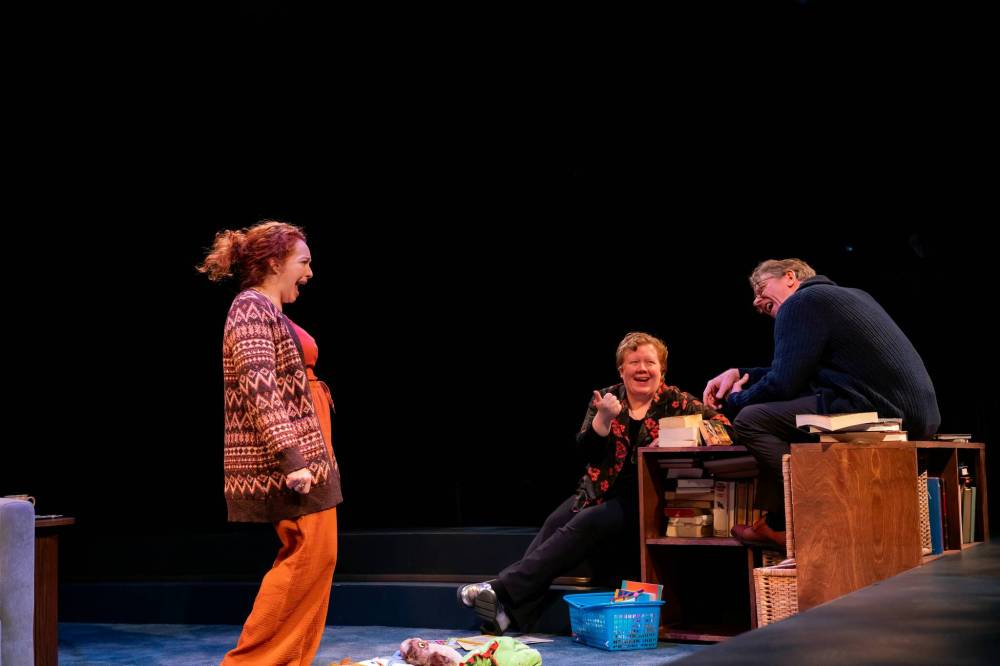
From left: Laura Olafson, Gislina Patterson and Arne MacPherson find reasons to laugh amidst the angst of Tiny Beautiful Things.
With Olafson, as with Sugar, one can be certain of an authentic connection along with a transcendent, empathic reach — an approach that makes the Winnipeg performer perfectly cast in the Prairie Theatre Exchange season finale.
Can a computer ever care as much or as well as a living, breathing human?
winnipegfreepress.com/benwaldman
Ben Waldman is a National Newspaper Award-nominated reporter on the Arts & Life desk at the Free Press. Born and raised in Winnipeg, Ben completed three internships with the Free Press while earning his degree at Ryerson University’s (now Toronto Metropolitan University’s) School of Journalism before joining the newsroom full-time in 2019. Read more about Ben.
Every piece of reporting Ben produces is reviewed by an editing team before it is posted online or published in print — part of the Free Press‘s tradition, since 1872, of producing reliable independent journalism. Read more about Free Press’s history and mandate, and learn how our newsroom operates.
Our newsroom depends on a growing audience of readers to power our journalism. If you are not a paid reader, please consider becoming a subscriber.
Our newsroom depends on its audience of readers to power our journalism. Thank you for your support.
Theatre review
Tiny Beautiful Things
● Prairie Theatre Exchange, 393 Portage Ave.
● To April 19
★★★★ out of five
Ben Waldman is a National Newspaper Award-nominated reporter on the Arts & Life desk at the Free Press. Born and raised in Winnipeg, Ben completed three internships with the Free Press while earning his degree at Ryerson University’s (now Toronto Metropolitan University’s) School of Journalism before joining the newsroom full-time in 2019. Read more about Ben.
Every piece of reporting Ben produces is reviewed by an editing team before it is posted online or published in print — part of the Free Press‘s tradition, since 1872, of producing reliable independent journalism. Read more about Free Press’s history and mandate, and learn how our newsroom operates.
Our newsroom depends on a growing audience of readers to power our journalism. If you are not a paid reader, please consider becoming a subscriber.
Our newsroom depends on its audience of readers to power our journalism. Thank you for your support.
Related Articles
Nia Vardalos’s Tiny Beautiful Things stage adaptation finds the beauty in book of advice columns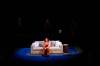

Advertisement Advertise With Us
Advertisement Advertise With Us