

Manitoba premier works on grocery tax-cut pledge as business group calls for more
Advertisement
Read this article for free:
or
Already have an account? Log in here »
To continue reading, please subscribe:
Digital Subscription
One year of digital access for only $1.44 a week*
- Enjoy unlimited reading on winnipegfreepress.com
- Read the E-Edition, our digital replica newspaper
- Access News Break, our award-winning app
- Play interactive puzzles
*Billed as $5.77 plus GST every four weeks. After 52 weeks, price increases to the regular rate of $19.95 plus GST every four weeks. Offer available to new and qualified returning subscribers only. Cancel any time.
To continue reading, please subscribe:
Add Free Press access to your Brandon Sun subscription for only an additional
$1 for the first 4 weeks*
- Enjoy unlimited reading on winnipegfreepress.com
- Read the E-Edition, our digital replica newspaper
- Access News Break, our award-winning app
- Play interactive puzzles
*Your next Brandon Sun subscription payment will increase by $1.00 and you will be charged $17.95 plus GST for four weeks. After four weeks, your payment will increase to $24.95 plus GST every four weeks.
Read unlimited articles for free today:
or
Already have an account? Log in here »
WINNIPEG – The Manitoba government has a major detail to flesh out as part of its budget plan to eliminate the provincial sales tax on food in grocery stores — the legal definition of a grocery store.
“The challenge, of course, is we’ve got a bunch of smart people who work with us in government and they’re like ‘What is a grocery store’?”, Kinew told reporters Friday.
Kinew has already expressed a willingness to extend the tax cut from full-sized traditional grocery outlets to “mom and pop” stores, but said Friday there is no legal definition for those. Convenience stores are another issue.
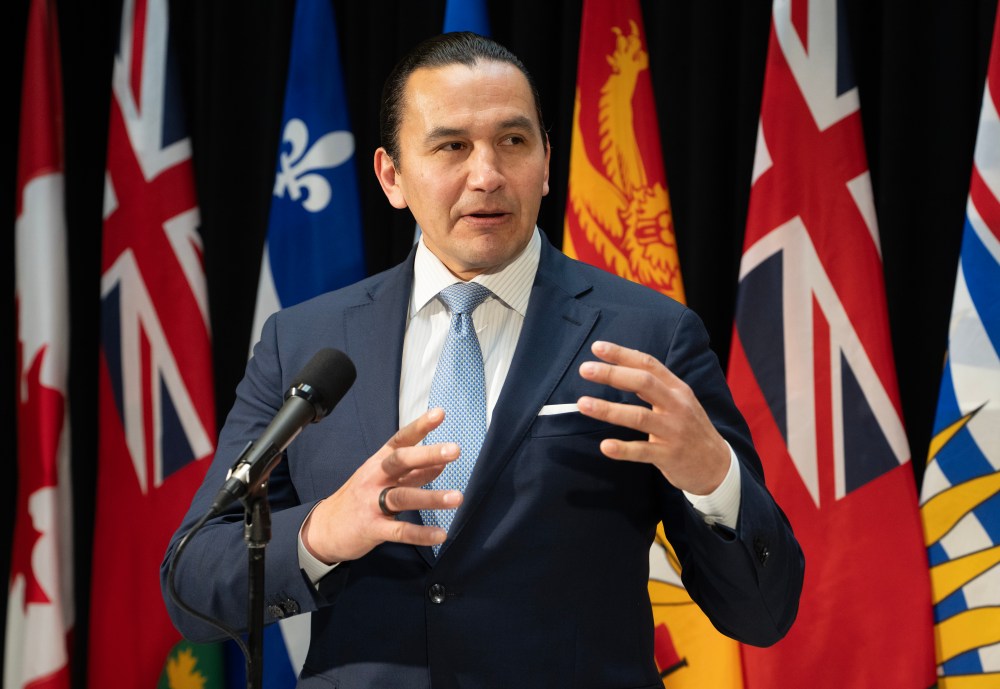
“I want you to eat healthy. For sure, I can see you buying a rotisserie chicken and a salad at the big grocery store. I can see at the, quote-unquote, mom and pop store, buying some healthy food. If you go into (7-11) and you walk past the Taquitos, what’s the healthy food? They do have some salad, they do have some boiled eggs.”
Most groceries, such as meat, produce, bread and milk, are already tax exempt at all retail outlets in the province. The NDP’s plan, announced in last month’s budget and set to take effect July 1, would remove the tax from items such as prepared meals, salads, snacks, candy and soft drinks — but only in grocery stores.
Owners of convenience stores and restaurants have cried foul, saying they will be put at an unfair disadvantage.
The Canadian Federation of Independent Business has launched a petition that demands a series of tax breaks, including an extension of the food-tax cut to all food retailers and restaurants, even dine-in meals.

The provincial finance department, in a recent tax bulletin that Kinew is reviewing, listed examples of outlets that do not qualify as grocery stores, such as cinemas, vending machines, golf courses and restaurants. The bulletin also says food retail spaces do not qualify as grocery stores if they are in a city, sell tobacco products, and are less than 280 square metres.
The tax cut idea has also raised concerns with Doctors Manitoba, which represents physicians across the province. The tax cut reduces the cost of snacks and the group has said it would prefer to see healthy foods, most of which are already tax-free, prioritized.
The food-tax cut promise is part of the government’s focus on addressing the rising cost of living. The Opposition Progressive Conservatives say it won’t go far because most food items are already tax-free.
The government estimates the tax cut will cost the province $32 million a year in revenue. That works out to roughly $22 per individual.
This report by The Canadian Press was first published April 10, 2026