‘Give us a chance’ Supervised drug-site operators commit to neighbourhood with transparency, security, zero tolerance for dealers
Read this article for free:
or
Already have an account? Log in here »
To continue reading, please subscribe:

Digital Subscription
One year of digital access for only $205*
- Enjoy unlimited reading on winnipegfreepress.com
- Read the E-Edition, our digital replica newspaper
- Access News Break, our award-winning app
- Play interactive puzzles
*First annual payment billed as $205.00 + GST for one year. This annual subscription will automatically renew at $233.00 + GST every 52 weeks (10% off the regular annual price of $259.35). Offer available to new and qualified returning subscribers only. Cancel any time.
To continue reading, please subscribe:
Add Free Press access to your Brandon Sun subscription for only an additional
$1 for the first 4 weeks*
- Enjoy unlimited reading on winnipegfreepress.com
- Read the E-Edition, our digital replica newspaper
- Access News Break, our award-winning app
- Play interactive puzzles
*Your next Brandon Sun subscription payment will increase by $1.00 and you will be charged $17.95 plus GST for four weeks. After four weeks, your payment will increase to $24.95 plus GST every four weeks.
Read unlimited articles for free today:
or
Already have an account? Log in here »
The people who will be responsible for operating Manitoba’s first supervised drug consumption site are urging the community to keep an open mind about the politically charged facility, promising round-the-clock security and zero tolerance for drug dealers.
“We are asking for a chance. Give us a chance,” said Monica Cyr, head of the Aboriginal Health and Wellness Centre of Winnipeg, which will run the Indigenous-led facility. “We want a chance to show our city that we’ve got a really strong model here, one worth duplicating.”
The facility, where people will be able to use their own drugs under supervision to prevent overdoses, will also provide testing to ensure the substances obtained on the street are not toxic, offer treatment options and social supports.
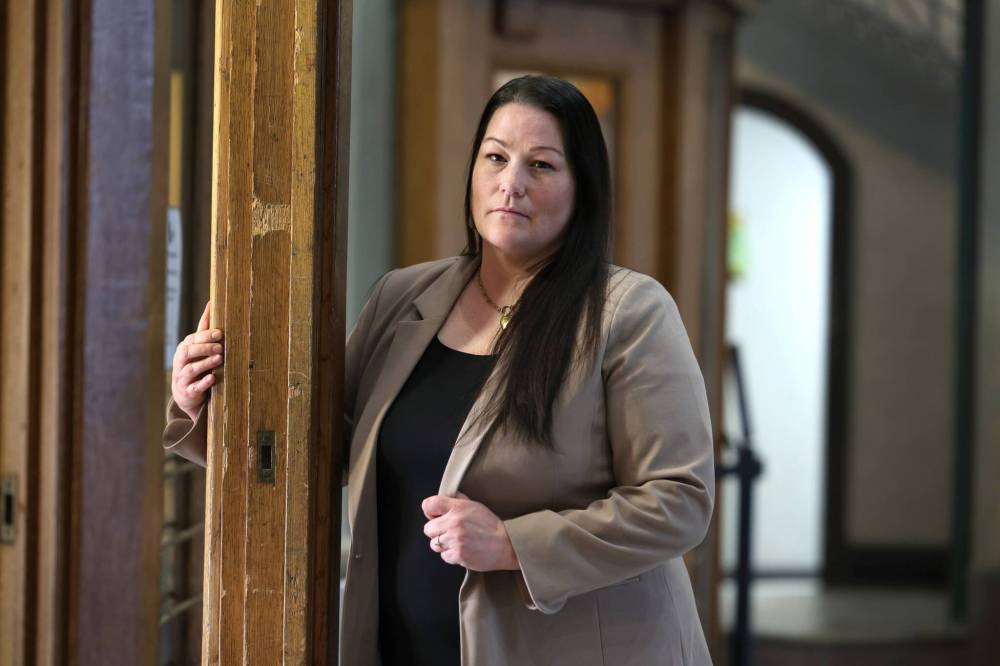
RUTH BONNEVILLE / FREE PRESS
Monica Cyr said the AHWC is committed to supporting the surrounding community, including a direct line and email for local businesses and residents to report concerns and lodge complaints.
It will not supply drugs or allow trafficking.
The provincial government initially planned to open the facility at 200 Disraeli Fwy., but community opposition — in part because of its proximity to a school and park — meant the search continued for an alternative location.
The government has since purchased a former warehouse at 366 Henry Ave., and is awaiting final approval to begin operations.
The project continues to face pushback from some residents, business owners and politicians over safety concerns.
Proponents say it will reduce overdose deaths and ease pressure on city emergency services and overwhelmed hospital emergency departments.
In an exclusive interview with the Free Press, Cyr said the AHWC is committed to supporting the surrounding community, including a direct line and email for local businesses and residents to report concerns and lodge complaints, with responses promised within two business days, followed by prompt investigations, further updates within seven days and documented followup, where necessary.
The organization has also created a “good neighbour commitment” — an eight-page document outlining its obligations to the neighbourhood, including a pledge to maintain transparency through open and honest communication, with clear expectations for how issues will be identified and resolved.
That commitment, which will be released to the community shortly, is backed by a cohort of community partners, including Main Street Project, Sunshine House, Substance Consulting, Manitoba Harm Reduction Network and Indigenous-led service-delivery and healing centre Ka Ni Kanichihk.
There is additional support from more than a dozen others, such as the Winnipeg Police Service, Winnipeg Fire Paramedic Service and the city and provincial governments.
“We want a chance to show our city that we’ve got a really strong model here, one worth duplicating.”
The Henry Avenue site, a block away from Siloam Mission, is in an area dominated by auto-repair shops, small businesses and outreach services. Within a few blocks, there are also some residential pockets, community programs and spaces used by families and youth.
“We want to… let them know that we are going to do our absolute best… in terms of keeping a clean and a safe environment for all of us,” Cyr said, adding local businesses should be able to thrive and residents should feel safe walking the streets.
“And people who use drugs have the right to live.”
The centre’s transparency efforts will include regular email newsletters, updates and published statistics on the AHWC website. Cyr said there will be around-the-clock security to monitor the area and report any criminal activity immediately.
“We do not want and will not tolerate drug-selling around the neighbourhood,” she said.
At the legislature, the Opposition Progressive Conservatives have argued that similar facilities have been ineffective elsewhere. Critics have also pointed to a recent Alberta study that found there was no material difference in the number of deaths or ER visits after a SCS closed in Red Deer.
Point Douglas city councillor Vivian Santos has been among the opponents of the planned facility. She sent out an email late last month to residents and businesses in her ward detailing her concerns.
“As the local councillor, I must reflect the concerns of residents and businesses who will be directly impacted and ensure that the community is treated as a partner,” she said.
Santos said Thursday that she has yet to see the neighbour commitment document, and that her position remains unchanged.
“We want to… let them know that we are going to do our absolute best… in terms of keeping a clean and a safe environment for all of us.”
Ed Gallos, owner of Master Roofing, next door to 366 Henry, said he’d be open to talking with AHWC, but added he’s unlikely to change his mind.
“I don’t know what it would accomplish,” he said. “Nobody is going to convince me it’s going to work.”
Cyr said she expects the facility to open the doors soon. The delay, announced last month by Premier Wab Kinew, is due to pending Health Canada approval.
Data from Winnipeg Fire Paramedic Service between March 1 and April 11 shows a high volume of calls for overdose-related service, including 268 to Siloam Mission — 94 of them occurring between April 1 and April 10 alone.
On its busiest days, Siloam recorded as many as 30 calls per day. The Salvation Army, located at 180 Henry, had 95.
Altogether, five nearby sites recorded a combined 574 calls for overdose-related service over 41 days — an average of 14 per day.
Cynthia Drebot, executive director of the North End Women’s Centre, said staff are spending more time responding to overdoses in the agency’s Selkirk Avenue community than delivering core programming, including the centre’s drop-in.
“We’re all bracing for more, and we already feel we’re at our stretched point,” she said.
Cyr offered a hopeful message: “help is on the way.”

MIKAELA MACKENZIE /FREE PRESS FILES
The future supervised drug-consumption site at 366 Henry Ave.
SCS will have staff on hand to administer opioid-OD reversal drugs, offering a measure of relief to city emergency personnel and ER workers.
Daily needle pickup will also be carried out with the Downtown Community Safety Partnership, extending from Ellen Street to the west, Higgins Avenue to the north, Princess Street to the east and Alexander Avenue to the south.
On Saturday, the Free Press will offer a detailed look at what a visit to the safe consumption site is expected to look like.
scott.billeck@freepress.mb.ca


Scott Billeck is a general assignment reporter for the Free Press. A Creative Communications graduate from Red River College, Scott has more than a decade’s worth of experience covering hockey, football and global pandemics. He joined the Free Press in 2024. Read more about Scott.
Every piece of reporting Scott produces is reviewed by an editing team before it is posted online or published in print — part of the Free Press‘s tradition, since 1872, of producing reliable independent journalism. Read more about Free Press’s history and mandate, and learn how our newsroom operates.
Our newsroom depends on a growing audience of readers to power our journalism. If you are not a paid reader, please consider becoming a subscriber.
Our newsroom depends on its audience of readers to power our journalism. Thank you for your support.
Related Articles
Saskatoon hospitals dealing with more overdoses after drug site closure: Union