

Councillors propose freeze on water, sewer rates if Ottawa, province pony up sewage plant funds

Advertisement
Read this article for free:
or
Already have an account? Log in here »
To continue reading, please subscribe:
Digital Subscription
One year of digital access for only $1.44 a week*
- Enjoy unlimited reading on winnipegfreepress.com
- Read the E-Edition, our digital replica newspaper
- Access News Break, our award-winning app
- Play interactive puzzles
*Billed as $5.77 plus GST every four weeks. After 52 weeks, price increases to the regular rate of $19.95 plus GST every four weeks. Offer available to new and qualified returning subscribers only. Cancel any time.
To continue reading, please subscribe:
Add Free Press access to your Brandon Sun subscription for only an additional
$1 for the first 4 weeks*
- Enjoy unlimited reading on winnipegfreepress.com
- Read the E-Edition, our digital replica newspaper
- Access News Break, our award-winning app
- Play interactive puzzles
*Your next Brandon Sun subscription payment will increase by $1.00 and you will be charged $17.95 plus GST for four weeks. After four weeks, your payment will increase to $24.95 plus GST every four weeks.
Read unlimited articles for free today:
or
Already have an account? Log in here »
A freeze on Winnipeg’s water and sewer bills could be coming in 2027 — if the provincial and federal governments cough up the remaining cash for their parts of the North End treatment plant project.
The city’s growing population and a dry 2025 that resulted in more water usage resulted in a spike of 8.1 per cent in billed water and sewage fees, producing nearly $65 million in extra revenue.
A motion that will be presented by councillors Jeff Browaty (North Kildonan) and Ross Eadie (Mynarski) next week suggests putting that surplus toward removing the planned 4.2 per cent increase in water and sewer rates in 2027, originally put in place to help pay for the sewage treatment plant upgrades, and instead keeping rates at the current level.
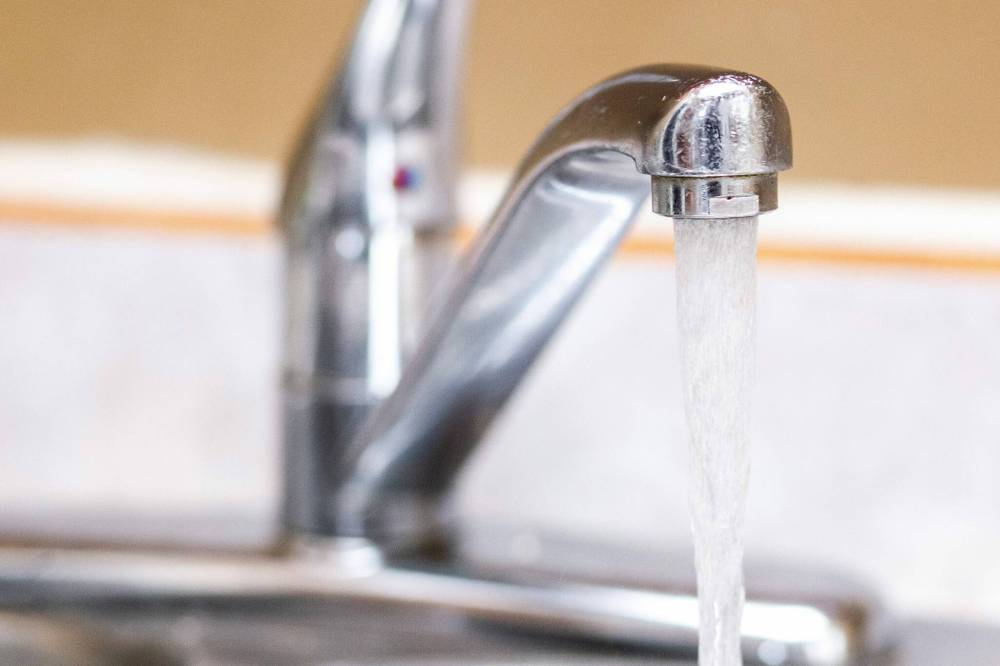
MIKAELA MACKENZIE / FREE PRESS FILES
A freeze on Winnipeg’s water and sewer bills could be coming in 2027.
“We all feel it in our pocketbooks when we see those bills, (and) city council (is) just the same,” Browaty, the chairman of council’s finance committee, said Friday. “We saw there was, perhaps, an opportunity to give people a little bit of relief; we’re suggesting we do that.”
The typical household of four was expected to pay $68 more in 2027 due to the 4.2 per cent increase.
The motion suggests putting $48.6 million of the surplus back into the city’s debt requirement for its share of the North End plant project and $15 million to freeze the tax rates. The remaining $1.1 million would go toward expanding the H20 Help to Others program, which offers support to homeowners struggling to pay for utilities.
But it comes with a catch — the motion suggests that the city freeze water and sewer rates on the condition that the other two levels of government confirm their shares of the third and final phase of the $1.57-billion upgrade to the North End sewage plant.
Mayor Scott Gillingham, who said he would support the motion when it is presented to council’s executive policy committee Tuesday, said conversations with both levels of government are ongoing but the deadline for those confirmations would need to come well before the end of the year.
“The reason the caveat is there is because if we don’t get funding from the federal and provincial governments for the third phase, we are going to need all of the revenues that we will raise from water and sewer rates, because the entirety (of the) $1.5 billion-(Phase 3) project would be paid for by ratepayers,” Gillingham said.
“Which really would crush some ratepayers. Water-sewer rates would have to go up around $1,000 a year.”
The cost of the first two phases of the total $3.1-billion project were paid for by all three levels of government. While the province has promised funding for the final phase, it has not committed to a dollar amount.
Premier Wab Kinew wasn’t surprised to hear the mayor had set a deadline.
“It’s an election year, what do you expect?” he said at an unrelated news conference Friday.
“The city’s gonna go nuts and say all these election pledges. That’s fine. I just want to see good taxpayer value.”
He pointed to the inquiry into the city-owned police headquarters building as an example of “mismanagement and, worse,” that the province is trying to avoid with large infrastructure projects.
“Before we commit to hundreds of millions of dollars… we’ve definitely had some conversations with the mayor about (breaking) this thing down into something that the city can handle in terms of construction phases,” he said.
The North End treatment plant was left out of the 2026 provincial budget. Earlier this month, Environment and Climate Change Minister Mike Moyes said the province had already committed $335 million for the second phase of the project.

In March, the province agreed to extend the deadline of the project to 2032 from 2030.
The Free Press has reached out to Housing, Infrastructure and Communities Canada for comment on Ottawa’s funding for the final phase of the project.
On April 1, 2025, the city imposed a sewer rate hike of $168.03 for a sample household. Later in 2025, council approved another $44 increase to the annual water and sewer rate, which was effective Jan. 1.
Because the jump in water usage was a “surprise” in 2025, there is some risk that the freeze could cost the city money, should use dip down again, Browaty said, but called the measure reasonable, considering Winnipeg’s population growth.
malak.abas@freepress.mb.ca
Malak Abas is a city reporter at the Free Press. Born and raised in Winnipeg’s North End, she led the campus paper at the University of Manitoba before joining the Free Press in 2020. Read more about Malak.
Every piece of reporting Malak produces is reviewed by an editing team before it is posted online or published in print — part of the Free Press‘s tradition, since 1872, of producing reliable independent journalism. Read more about Free Press’s history and mandate, and learn how our newsroom operates.
Our newsroom depends on a growing audience of readers to power our journalism. If you are not a paid reader, please consider becoming a subscriber.
Our newsroom depends on its audience of readers to power our journalism. Thank you for your support.
Malak Abas is a city reporter at the Free Press. Born and raised in Winnipeg’s North End, she led the campus paper at the University of Manitoba before joining the Free Press in 2020. Read more about Malak.
Every piece of reporting Malak produces is reviewed by an editing team before it is posted online or published in print — part of the Free Press‘s tradition, since 1872, of producing reliable independent journalism. Read more about Free Press’s history and mandate, and learn how our newsroom operates.
Our newsroom depends on a growing audience of readers to power our journalism. If you are not a paid reader, please consider becoming a subscriber.
Our newsroom depends on its audience of readers to power our journalism. Thank you for your support.
Related Articles
Delay in senior government funding risky for megaproject: city
Advertisement Advertise With Us
Advertisement Advertise With Us