On the record
Art, technology and memory converge in Lerner’s brief, insightful new novel
Advertisement
Read this article for free:
or
Already have an account? Log in here »
To continue reading, please subscribe:
Digital Subscription
One year of digital access for only $1.44 a week*
- Enjoy unlimited reading on winnipegfreepress.com
- Read the E-Edition, our digital replica newspaper
- Access News Break, our award-winning app
- Play interactive puzzles
*Billed as $5.77 plus GST every four weeks. After 52 weeks, price increases to the regular rate of $19.95 plus GST every four weeks. Offer available to new and qualified returning subscribers only. Cancel any time.
To continue reading, please subscribe:
Add Free Press access to your Brandon Sun subscription for only an additional
$1 for the first 4 weeks*
- Enjoy unlimited reading on winnipegfreepress.com
- Read the E-Edition, our digital replica newspaper
- Access News Break, our award-winning app
- Play interactive puzzles
*Your next Brandon Sun subscription payment will increase by $1.00 and you will be charged $17.95 plus GST for four weeks. After four weeks, your payment will increase to $24.95 plus GST every four weeks.
Read unlimited articles for free today:
or
Already have an account? Log in here »
Hey there, time traveller!
This article was published 18/04/2026 (187 days ago), so information in it may no longer be current.
Pulitzer Prize finalist Ben Lerner’s fourth novel, Transcription, is a compact and profound meditation on the nature of memory, mentorship and the making of fiction in the digital age.
Lerner is the author of several collections of poetry, including the National Book Award-nominated Angle of Yaw, as well as the non- fiction book-length essay, The Hatred of Poetry, in which the titular stance becomes the basis for the genre’s defence. He was awarded a MacArthur Fellowship Genius Grant in 2015.
His fiction tends to the autobiographical. Like Lerner, Adam Gordon — the narrator of his trilogy Leaving the Atocha Station, 10:04 and The Topeka School — was born in Topeka, Kansas in 1979, was a brilliant high school debater, lived in Madrid on scholarship and becomes a Brooklyn-based writer and poet who attains great literary and academic success.
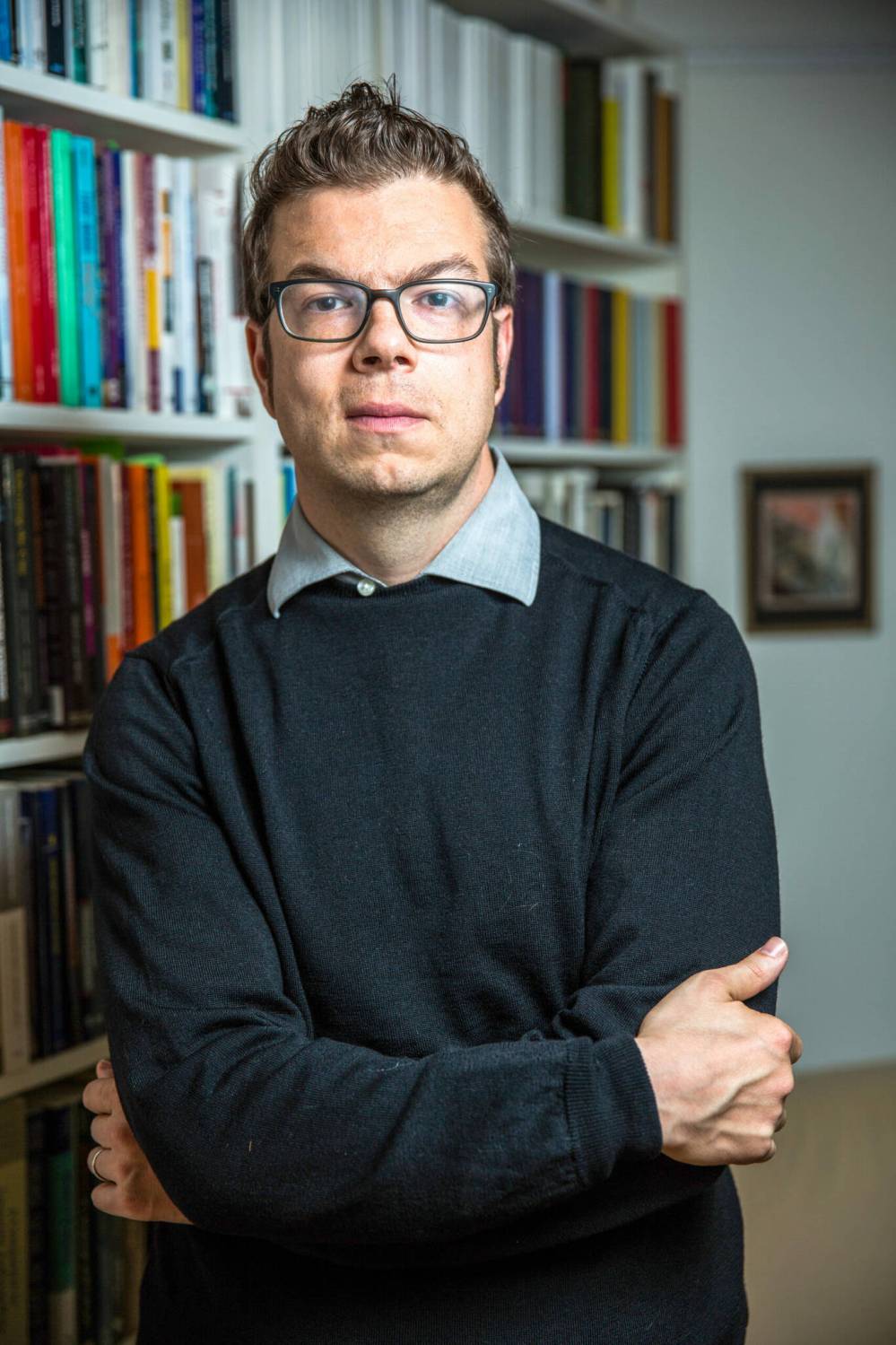
Adam Lerner / MacArthur Foundation
As with his three previous novels, many of the details in Ben Lerner’s latest lean toward the autobiographical.
Lerner’s collaborations with artists include The Polish Rider with Anna Ostoya, which incorporates a short story of the same name by Lerner published in the New Yorker, and The Snows of Venice with Alexander Kluge, the German filmmaker and author who died earlier this year and who some critics pinpoint as the inspiration for the mentor figure of Thomas in Transcription.
Set in the aftermath of the COVID-19 pandemic and present-day worries around screen time, wars and “fires, floods, fascism,” Transcription unfolds in three parts.
In the opening section, “Hotel Providence,” the unnamed narrator, whose life resembles Lerner’s, conducts what will become a final interview in Providence, R.I. with his mentor, the 90-year-old Thomas.
“(Hotel Villa Real)” is the brief midsection in an already condensed work, in which the narrator travels to Madrid to attend a conference honouring Thomas. We meet Rosa, key to the narrator’s past, who offers sharp insights into the ways in which “the myth and the man might get entangled.”
In the closing section, “Hotel Arbez” (a building that straddles the border between France and Switzerland), readers encounter a dialogue in medias res (to borrow a term from the novel) between the oft-interrupted narrator and Thomas’s son Max who speaks, among many things, movingly about fatherhood, privilege and his daughter’s eating disorder and YouTube viewing habits.
A central mystery and ethical tension in the novel is the narrator’s inability to disclose to his mentor that his phone/recording device is broken — does this render the transcript inauthentic? — even when Thomas asks directly, “you are already recording?”
Thomas’s German-inflected English use of the continuous tense — “you are already recording,” for example — uncannily zeroes in on a philosophical point about the nature of art and time that he makes repeatedly throughout the interview, such as “no one ever leaves a theatre” or “we extend the dream when we share it. You call it fiction, but it is more.”
Descriptions of transcendent experiences with art feature in Lerner’s fiction. Leaving the Atocha Station’s Adam Gordon discovers that the best John Ashbery poems are those that bring attention to the act of reading them, “when you read about your reading in the time of your reading… thereby enabling a strange kind of presence.”
Transcription, too, attains moments of energy transference between novel and reader, as in the passage where the narrator first drops his phone into the hotel sink, and “for the duration of this sentence, it was submerged” — as though the novel and reader are suddenly side by side, watching the phone and experiencing time together.

Transcription

Affecting also is the narrator’s account of his visit to the Glass Flowers exhibit at Harvard University — created in the late 1800s by father-son duo Leopold and Rudolf Blaschka, glassmakers of Dresden, Germany, and shipped overseas intact and on display to this day — and its connection to his own artistic awakening as a writer of fiction.
There are parallels between Max and the narrator, including mental health struggles in college, the anxieties of their respective wives and young daughters, their successful careers, the imprint of childhood memories on their contemporary and “progressive” parenting styles — all in the context of ever-changing technologies that begin, as Thomas says, with a “disembodied voice,” like that of the radio or the telephone, but first experienced in the womb.
There is a tender underlying attention paid to the sorrow of aging in midlife — the son becomes the father, the protégé becomes the mentor. At times, there is a yearning for the technologies of the past — overhead projector transparencies from the ’90s get a nod — and a wariness of the addictive technologies of the present.
It is haunting and beautiful, then, when the glassmakers of Dresden reappear on a numberless page, after the novel is done and we hear from Leopold Blaschka, quoted in a letter from 1889 — his words, like his glassworks, echoing through time, preserved in Lerner’s fiction.
Sara Harms is a Winnipeg editor.