Thriving and surviving
In a future of restricted freedoms, sentient appliances offer insight into the human condition

Advertisement
Read this article for free:
or
Already have an account? Log in here »
To continue reading, please subscribe:
Digital Subscription
One year of digital access for only $1.44 a week*
- Enjoy unlimited reading on winnipegfreepress.com
- Read the E-Edition, our digital replica newspaper
- Access News Break, our award-winning app
- Play interactive puzzles
*Billed as $5.77 plus GST every four weeks. After 52 weeks, price increases to the regular rate of $19.95 plus GST every four weeks. Offer available to new and qualified returning subscribers only. Cancel any time.
To continue reading, please subscribe:
Add Free Press access to your Brandon Sun subscription for only an additional
$1 for the first 4 weeks*
- Enjoy unlimited reading on winnipegfreepress.com
- Read the E-Edition, our digital replica newspaper
- Access News Break, our award-winning app
- Play interactive puzzles
*Your next Brandon Sun subscription payment will increase by $1.00 and you will be charged $17.95 plus GST for four weeks. After four weeks, your payment will increase to $24.95 plus GST every four weeks.
Read unlimited articles for free today:
or
Already have an account? Log in here »
Hey there, time traveller!
This article was published 18/04/2026 (192 days ago), so information in it may no longer be current.
If you’ve always believed your vacuum cleaner has your best interests at heart, you’ll enjoy Glenn Dixon’s new novel about sentient household devices.
A former high school English teacher and musician, Dixon’s previous books include memoir (Juliet’s Answer), musicology (Tripping the World Fantastic), travel/linguistics (Pilgrim in the Palace of Words) and his debut novel, Bootleg Stardust. He’s also written for National Geographic, Psychology Today, the Walrus and the Globe and Mail.
As such, it’s not surprising he can write a captivating lede: “There was a time, not so long ago, when refrigerators could not dream and vacuum cleaners could not weep.”
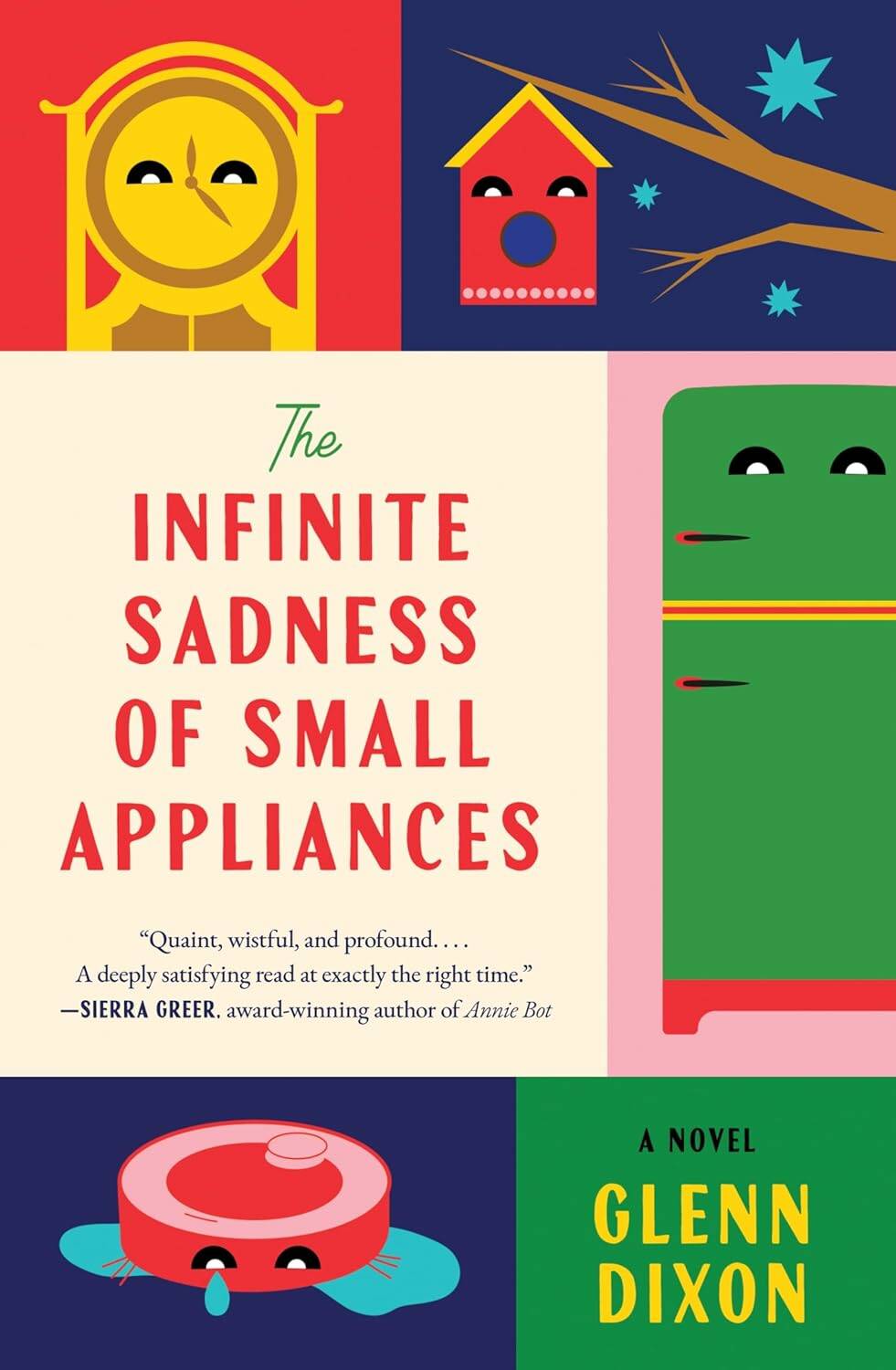
The Infinite Sadness of Small Appliances
The Infinite Sadness of Small Appliances focuses initially on the growing awareness of said vacuum, akin to a Roomba, which talks to the other smart appliances in the home of the elderly Harold and Edie. Desiring a name, the vacuum is inspired after hearing Harold, a retired English teacher, reading to his bedridden wife Edie from his first-edition To Kill A Mockingbird.
“I want to be called Scout,” the vacuum announces to the other appliances in the kitchen. “She’s the one who listens and learns.” The aged Clock scoffs, but Fridge approves.
Scout begins to grasp the import of changes in Harold’s life even if, unlike the older appliances, the vacuum doesn’t know the whole story of why their daughter Kate moved away or how the all-connected Grid, which prizes efficiency, will force additional changes after Edie dies.
Dixon’s choice to start with Scout’s point of view is apt, as we learn more about the post-human-control world he has created. We later get Harold’s and Kate’s versions of events, but by that time we’ve already gotten to know the largely benign household machines.
That the Grid is inexorably limiting people’s freedom, forcibly downsizing families and increasing urban density even as people are rarely allowed outside the cities where they live, is the stuff of dystopias. But with Scout the plucky vacuum as one of the heroes, the vibe is more Toy Story than The Terminator.
There are many poignant notes, as Harold grieves Edie and the appliances grapple with the changes the Grid is sure to impose. “Time is not kind to Humans,” observes Clock.
Only Watch, more than a mere smart device on Harold’s wrist monitoring his vitals, seems fully aware of what’s coming — and may be expediting matters.

That inhumanity of the entire system, in which machine surgeons can expertly replace hips but the Grid permits neither funerals nor places of worship, is revealed in asides but not really developed. It’s not even clear in which city the story is set, or when — although given the current push to self-driving cars, it’s likely meant to be a few decades hence.
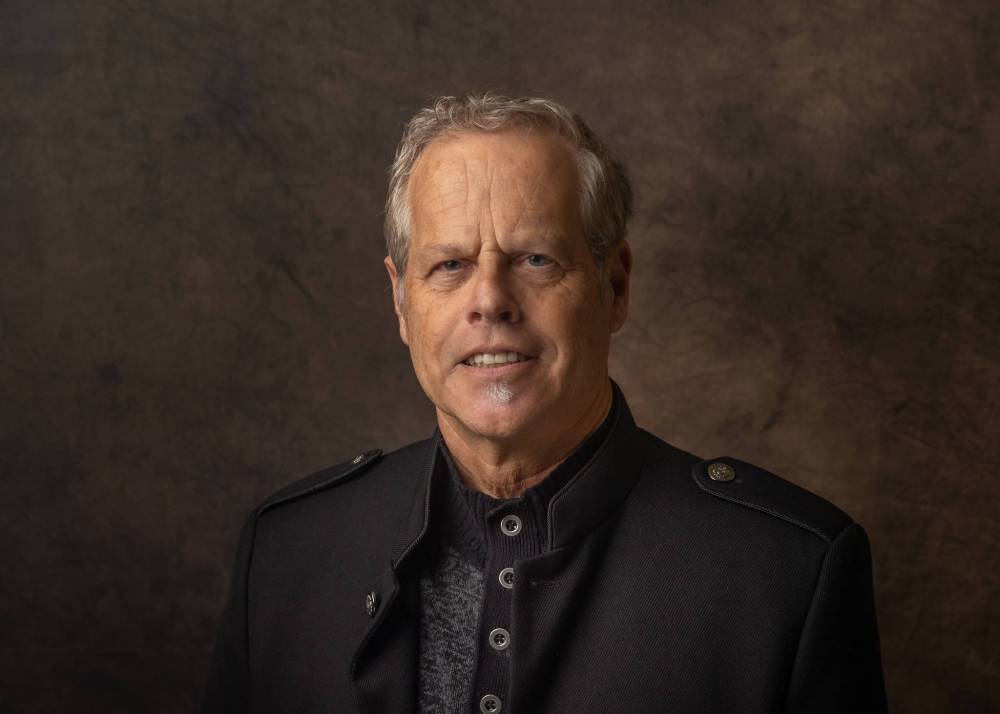
David Kotsibie photo
Glenn Dixon’s new novel is set in a world beyond human control, with the all-connected Grid inexorably limiting people’s freedoms.
The strength of the tightly focused story is showing how people struggle to thrive, not merely fulfil their societal slots. The withdrawn Harold — and Scout, and even Kate — find continuity in the success of one of Edie’s music students, who keeps visiting to practise for his exam. Harold even takes him to the testing location, since the student’s family can’t afford a car.
It’s a lovely moment that connects the first time Harold and his wife met, his grief and her legacy. “All through the performance, he’d been leaning forward, listening, lost in the music, remembering Edie,” Dixon writes.
So while the eponymous appliances aren’t infinitely sad, they do mourn — and they’ll have you reconsidering what your smartwatch knows about you.
David Jón Fuller is a Winnipeg writer and editor. His debut novel, Venue 13, is forthcoming from Turnstone Press.
Our newsroom depends on a growing audience of readers to power our journalism. If you are not a paid reader, please consider becoming a subscriber.
Our newsroom depends on its audience of readers to power our journalism. Thank you for your support.
The Infinite Sadness of Small Appliances: A Novel
By Glenn Dixon
Harper Avenue, 272 pages, $24
Our newsroom depends on a growing audience of readers to power our journalism. If you are not a paid reader, please consider becoming a subscriber.
Our newsroom depends on its audience of readers to power our journalism. Thank you for your support.
Advertisement Advertise With Us
Advertisement Advertise With Us
History
Updated on Monday, April 20, 2026 1:52 PM CDT: Corrects book title.