

Cannabis vapes causing fires at Brady landfill
City launches trial on collection of vapes at 4R depots

Advertisement
Read this article for free:
or
Already have an account? Log in here »
To continue reading, please subscribe:

Digital Subscription
One year of digital access for only $205*
- Enjoy unlimited reading on winnipegfreepress.com
- Read the E-Edition, our digital replica newspaper
- Access News Break, our award-winning app
- Play interactive puzzles
*First annual payment billed as $205.00 + GST for one year. This annual subscription will automatically renew at $233.00 + GST every 52 weeks (10% off the regular annual price of $259.35). Offer available to new and qualified returning subscribers only. Cancel any time.
To continue reading, please subscribe:
Add Free Press access to your Brandon Sun subscription for only an additional
$1 for the first 4 weeks*
- Enjoy unlimited reading on winnipegfreepress.com
- Read the E-Edition, our digital replica newspaper
- Access News Break, our award-winning app
- Play interactive puzzles
*Your next Brandon Sun subscription payment will increase by $1.00 and you will be charged $17.95 plus GST for four weeks. After four weeks, your payment will increase to $24.95 plus GST every four weeks.
Read unlimited articles for free today:
or
Already have an account? Log in here »
Discarded cannabis packaging and related products are posing ongoing challenges to Winnipeg’s waste-and-recycling streams — including becoming a fire hazard at the Brady Road landfill.
Built-in lithium-ion batteries in disposable vaporizers are believed to be linked to an average of one fire a month at the landfill, said Mark Kinsley, Winnipeg’s superintendent of waste diversion.
The fires are triggered when the batteries come in contact with the heavy equipment, he said.
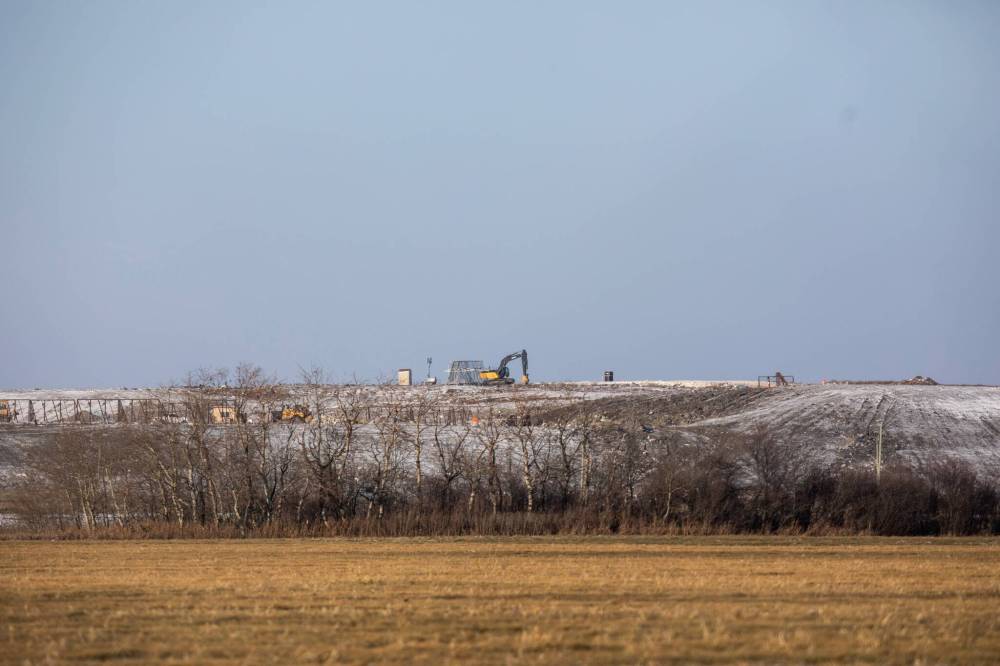
MIKAELA MACKENZIE / FREE PRESS FILES
The Brady landfill is logging an average of one fire month as a result of all-in-one vaporizers.
“When the batteries get damaged, they can start a chemical reaction,” Kinsley said. “The good news is, they’re caught quite quickly, but you can see the potential. Fires are so destructive.”
There are more than 240 cannabis stores in Manitoba — including 142 in Winnipeg — since the drug was legalized in October 2018. As of last year, revenue growth from cannabis sales now outpaces alcohol sales in the province.
The stores typically sell a wide range of cannabis-related products, packaged in a variety of containers, pouches and tubes, along with disposable vapes.
Kinsley said there haven’t been any fires at Winnipeg’s recycling facilities, where there’s less contact with heavy equipment, but the vapes show up in both waste streams.
Efforts are underway to keep the devices out of the city’s trash cans and recycling bins, Kinsley said, with the public encouraged to drop off used vapes at the city’s 4R depots as part of a pilot project.
“Everybody’s efforts make a difference,” he said.
What is not acceptable for recycling, however, are the plastic pouches and black plastic containers used in packaging cannabis, he said.
Kinsley would like to see manufacturers redesign the vapes so that the potentially dangerous batteries can be removed, while also switch to clear plastic packaging, which is easier to recycle and remade into new products.
“We’re trying to keep these away from the landfill and the recycling plant.”
He’d also like to see Extended Producer Responsibility applied to the vapes, which means manufacturers would be responsible for the products’ entire lifespan, including its collection and disposal.
“We’re trying to keep these away from the landfill and the recycling plant,” Kinsley said.
Jesse Lavoie, founder and CEO of TobaGrown, an advocacy group turned grower and processor, said producers are keen to do their part to reduce waste but are limited in what they can do because the industry is heavily regulated.
“We’re always looking for innovative ways to make our packaging more green, but a big part of the challenge is that cannabis packaging isn’t designed by producers,” he said, adding it’s difficult to make the child-safety and tamper-proof packaging environmentally friendly.
“I truly wish we could use very green, easy-to-open packaging, but when we get the federal audits from Health Canada, they’d rip us apart.”
He agreed the all-in-one vaporizing devices, including nicotine ones, should be designed so that batteries can be removed.
And while he supports the city’s trial collection of the vapes, he suggested it should be incentivized, much like it is for aluminum cans.
“It’s a fantastic first step, I think incentivizing that return could definitely bring it a lot further,” he said.
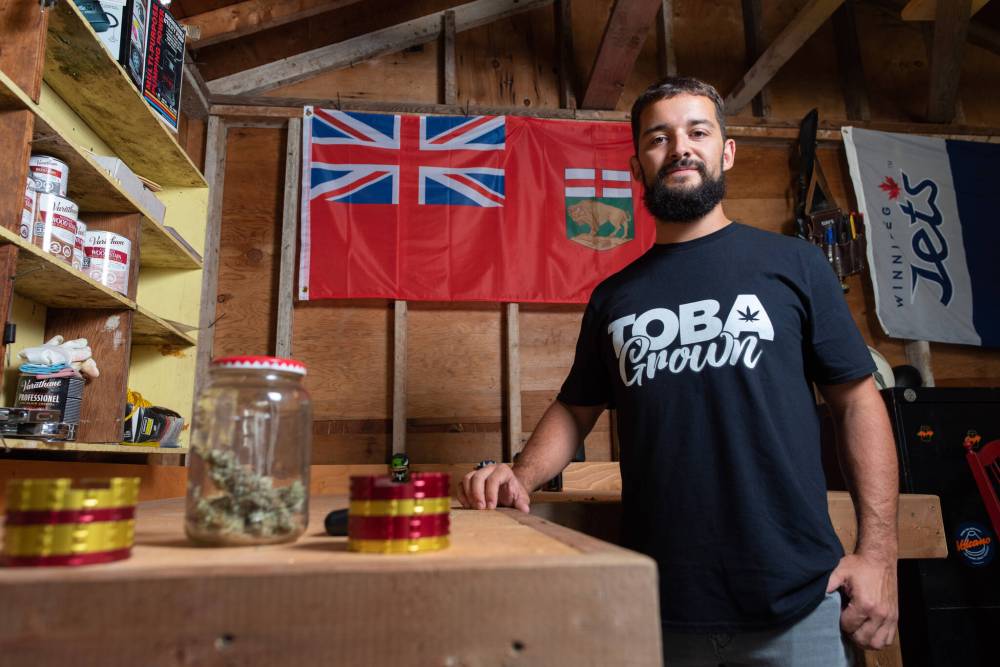
JESSE BOILY / FREE PRESS FILES
Jesse Lavoie with advocacy group turned producer TobaGrown says he supports a trial to collect cannabis vaporizers at 4R depots in the city, on Thursday, Aug. 27, 2020.

Lavoie said a lingering stigma attached to cannabis use contributes to the degree of packaging used. For example, cannabis-infused beverages require additional security features, but no such requirement exists for alcohol.
“It’s not safe for a child to crack open a six pack, it’s also not safe for a child to open a pack of cannabis drinks, but why do cannabis drinks need to have these additional hard-plastic locks on them,” he said.
The solution, he said, is for stakeholders to come together and work on packaging that’s both secure and green.
“If our packaging was on similar requirements, overnight you’d see green innovation on the packaging,” he said.
morgan.modjeski@freepress.mb.ca
Morgan Modjeski
Reporter
Signal
Morgan Modjeski is a news reporter and multimedia producer for the Free Press. Read more about Morgan.
Every piece of reporting Morgan produces is reviewed by an editing team before it is posted online or published in print — part of the Free Press‘s tradition, since 1872, of producing reliable independent journalism. Read more about Free Press’s history and mandate, and learn how our newsroom operates.
Our newsroom depends on a growing audience of readers to power our journalism. If you are not a paid reader, please consider becoming a subscriber.
Our newsroom depends on its audience of readers to power our journalism. Thank you for your support.
Morgan Modjeski
Reporter
Signal
Morgan Modjeski is a news reporter and multimedia producer for the Free Press. Read more about Morgan.
Every piece of reporting Morgan produces is reviewed by an editing team before it is posted online or published in print — part of the Free Press‘s tradition, since 1872, of producing reliable independent journalism. Read more about Free Press’s history and mandate, and learn how our newsroom operates.
Our newsroom depends on a growing audience of readers to power our journalism. If you are not a paid reader, please consider becoming a subscriber.
Our newsroom depends on its audience of readers to power our journalism. Thank you for your support.
Related Articles
Growing number of Manitoba youths are addicted to vaping
Advertisement Advertise With Us
Advertisement Advertise With Us