Manitoba summit to explore solutions to chronic truancy
Read this article for free:
or
Already have an account? Log in here »
To continue reading, please subscribe:

Digital Subscription
One year of digital access for only $205*
- Enjoy unlimited reading on winnipegfreepress.com
- Read the E-Edition, our digital replica newspaper
- Access News Break, our award-winning app
- Play interactive puzzles
*First annual payment billed as $205.00 + GST for one year. This annual subscription will automatically renew at $233.00 + GST every 52 weeks (10% off the regular annual price of $259.35). Offer available to new and qualified returning subscribers only. Cancel any time.
To continue reading, please subscribe:
Add Free Press access to your Brandon Sun subscription for only an additional
$1 for the first 4 weeks*
- Enjoy unlimited reading on winnipegfreepress.com
- Read the E-Edition, our digital replica newspaper
- Access News Break, our award-winning app
- Play interactive puzzles
*Your next Brandon Sun subscription payment will increase by $1.00 and you will be charged $17.95 plus GST for four weeks. After four weeks, your payment will increase to $24.95 plus GST every four weeks.
Read unlimited articles for free today:
or
Already have an account? Log in here »
Winnipeg teachers are cutting class on Thursday to strategize how to improve student attendance and remove barriers so more children show up for lessons on a regular basis.
The Winnipeg School Division has partnered with the University of Winnipeg faculty of education to organize a new conference on the downtown campus.
The itinerary for the Student Absenteeism Summit, believed to be a first-of-its-kind in Manitoba, is packed with moderated panels and breakout discussions on student belonging and related topics.
MIKAELA MACKENZIE / FREE PRESS FILES Winnipeg School Division chief superintendent Matt Henderson.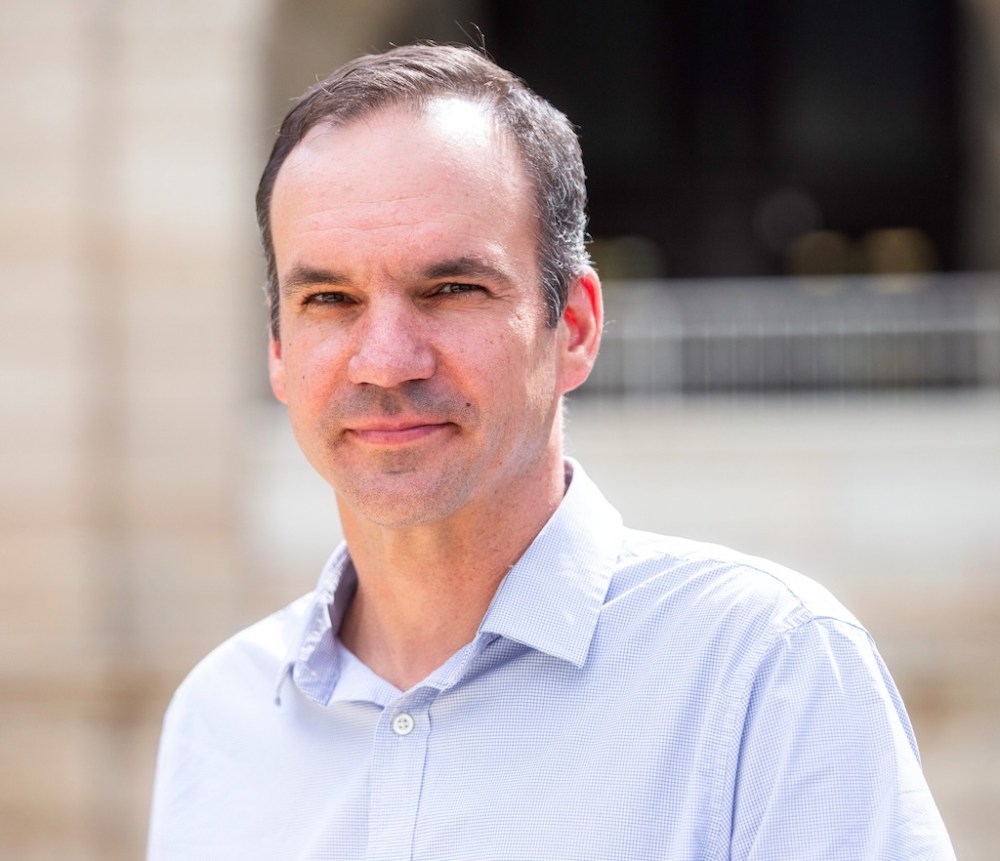
“Nobody’s coming with a silver bullet or a magic solution,” said Matt Henderson, chief superintendent of the largest public school division in the province.
“We should all be leery of simple solutions to complex problems. This is a wicked problem and wicked problems don’t have right or wrong responses — they just have better or worse (ones).”
Attendees will have the opportunity to reflect on the fallout of regularly missing school on children, pan-Canadian research and cross-sectoral responses.
The crowd will be made up of principals, researchers, knowledge keepers, government officials and community leaders, among others. Roughly 200 people, including individuals who have lived experience with chronic absenteeism, are expected to attend.
Following the event, organizers will compile recommendations, come up with a list of strategic actions and report on their progress to the public, Henderson said.
“Nobody’s coming with a silver bullet or a magic solution.”
Internal government documents detailing the troubling state of severe chronic absenteeism were leaked last month by Mark Wasyliw, an independent MLA and former WSD school board chairperson.
The data show that seven per cent of elementary students and 16 per cent of high schoolers were deemed to have “severe chronic absenteeism” in the central division in 2023-24.
Kindergarten-to-Grade 12 students who self-identified as First Nations, Métis or Inuit accounted for three quarters of them, despite only representing 30 per cent of the population.
(The education department’s “severe chronic absenteeism” label refers to an elementary student who misses 20 per cent of all classes during a reporting period. A Grade 9 to 12 student is flagged if they have 20 or more unexcused absences in a core course.)
Vern Dano said it’s important to acknowledge the reality that Indigenous students are more likely to be chronically absent for numerous reasons, including intergenerational trauma connected to residential schools and a lack of culturally sensitive support services.

“Systems need to truly support and rebuild by networking and partnering with Indigenous organizations (to) bring their voices to the tables as equal voices,” said Dano, a grandfather-in-residence in the inner-city division.
Dano, who is Anishinaabe and Métis and hails from Mallard, in central Manitoba, in Treaty 2, is one of the speakers taking part in Thursday’s summit, which he called “a step in the right direction.”
He was asked to sit on a panel exploring classroom climate and the roles school employees and parent advisory councils have when it comes to fostering student engagement.
“It’s very organic, it’s very unique and it’s going to be a response from Winnipeggers, from Manitobans, by Winnipeggers and Manitobans,” said Lesley Eblie Trudel, an associate professor and associate dean in U of W’s faculty of education.
“This is not a school problem. This is a societal problem.”
While noting truancy was an issue long before COVID-19, pandemic-related learning disruptions have renewed discussions about absenteeism and its numerous and often complex causes, said Eblie Trudel, a member of the summit’s planning committee.
“This is not a school problem. This is a societal problem,” she said.
The day-long conference, which has been in the works since January, will begin with an 8 a.m. pipe ceremony and run through 3:30 p.m.
Tanya Talaga, the award-winning author of Seven Fallen Feathers, is delivering a bonus lecture at U of W in the evening Thursday.

Talaga investigated the deaths of seven Indigenous high school students in Thunder Bay — located just outside Fort William First Nation, her maternal family’s community — in her debut book.
The work of literary non-fiction, which explores themes of intergenerational trauma and systemic racism, has become assigned reading in classrooms across the country since its 2017 release.
Talaga’s upcoming keynote is anticipated to delve into her thoughts on student belonging and the role education plays in equity and democratic participation.
maggie.macintosh@freepress.mb.ca

Maggie Macintosh
Education reporter
Maggie Macintosh reports on education for the Free Press. Originally from Hamilton, Ont., she first reported for the Free Press in 2017. Read more about Maggie.
Funding for the Free Press education reporter comes from the Government of Canada through the Local Journalism Initiative.
Every piece of reporting Maggie produces is reviewed by an editing team before it is posted online or published in print — part of the Free Press‘s tradition, since 1872, of producing reliable independent journalism. Read more about Free Press’s history and mandate, and learn how our newsroom operates.
Our newsroom depends on a growing audience of readers to power our journalism. If you are not a paid reader, please consider becoming a subscriber.
Our newsroom depends on its audience of readers to power our journalism. Thank you for your support.
Related Articles
15,000-plus students regularly skip school across Manitoba, leaked documents show