

Supreme Court seems wary of limiting federal regulators’ power in a data privacy case
Advertisement
Read this article for free:
or
Already have an account? Log in here »
To continue reading, please subscribe:
Digital Subscription
One year of digital access for only $1.44 a week*
- Enjoy unlimited reading on winnipegfreepress.com
- Read the E-Edition, our digital replica newspaper
- Access News Break, our award-winning app
- Play interactive puzzles
*Billed as $5.77 plus GST every four weeks. After 52 weeks, price increases to the regular rate of $19.95 plus GST every four weeks. Offer available to new and qualified returning subscribers only. Cancel any time.
To continue reading, please subscribe:
Add Free Press access to your Brandon Sun subscription for only an additional
$1 for the first 4 weeks*
- Enjoy unlimited reading on winnipegfreepress.com
- Read the E-Edition, our digital replica newspaper
- Access News Break, our award-winning app
- Play interactive puzzles
*Your next Brandon Sun subscription payment will increase by $1.00 and you will be charged $17.95 plus GST for four weeks. After four weeks, your payment will increase to $24.95 plus GST every four weeks.
Read unlimited articles for free today:
or
Already have an account? Log in here »
WASHINGTON (AP) — The Supreme Court seemed wary of limiting the power of federal regulators on Tuesday in a case over multimillion-dollar penalties levied against telecommunications giants Verizon and AT&T.
The cellular companies appealed to the justices after the Federal Communications Commission found they sold customers’ location data without proper safeguards. The FCC slapped the companies with hefty penalties totaling over $100 million.
The telecom companies challenged the process as unconstitutional because it gives them little opportunity to tell their side of the story in court. Key justices seemed skeptical, however. “I wonder if, at the end of the day, you’re really just talking about a PR problem,” Chief Justice John Roberts said.
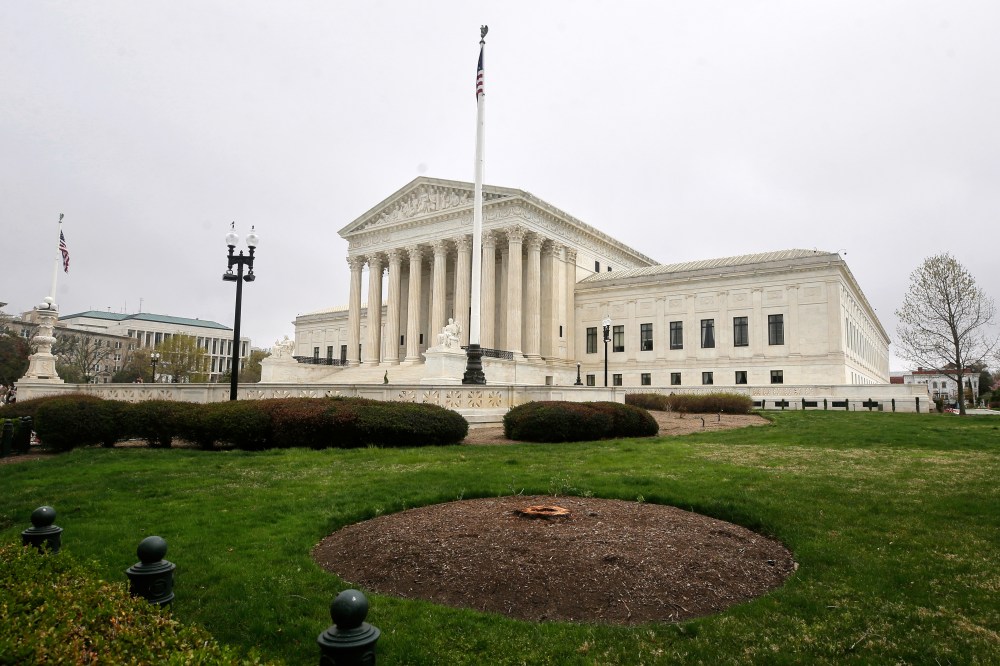
In arguments Tuesday, the Trump administration defended the penalty as an essential regulatory tool that does leave a path to court. Still, the companies appear to have scored a legal point when the government said companies don’t have to pay immediately after getting a forfeiture notice, Justice Brett Kavanaugh said. “It seems like you’ve won on the law going forward one way or the other,” Kavanaugh told an attorney for AT&T and Verizon.
The Supreme Court’s conservative majority has limited the power of federal agencies before, including overturning a decades-old decision that had given regulators an advantage in court and stripping another agency of a major tool in fighting securities fraud. A victory for AT&T and Verizon in this case could have widespread effects for other agencies who use similar enforcement mechanisms, advocates said.

Companies who get notices that they’ve run afoul of FCC regulations now have two options: pay the penalty and then contest it before an appeals court or refuse to pay and wait for a federal lawsuit that could eventually go before a jury. Doug Orvis, a veteran telecom attorney, said neither option is viable, so most companies pay up.
A ruling is expected by late June.