

China’s factory activity expands for a second month despite shocks from the Iran war
Advertisement
Read this article for free:
or
Already have an account? Log in here »
To continue reading, please subscribe:
Digital Subscription
One year of digital access for only $1.44 a week*
- Enjoy unlimited reading on winnipegfreepress.com
- Read the E-Edition, our digital replica newspaper
- Access News Break, our award-winning app
- Play interactive puzzles
*Billed as $5.77 plus GST every four weeks. After 52 weeks, price increases to the regular rate of $19.95 plus GST every four weeks. Offer available to new and qualified returning subscribers only. Cancel any time.
To continue reading, please subscribe:
Add Free Press access to your Brandon Sun subscription for only an additional
$1 for the first 4 weeks*
- Enjoy unlimited reading on winnipegfreepress.com
- Read the E-Edition, our digital replica newspaper
- Access News Break, our award-winning app
- Play interactive puzzles
*Your next Brandon Sun subscription payment will increase by $1.00 and you will be charged $17.95 plus GST for four weeks. After four weeks, your payment will increase to $24.95 plus GST every four weeks.
Read unlimited articles for free today:
or
Already have an account? Log in here »
HONG KONG (AP) — China’s factory activity expanded for a second straight month in April, according to an official survey on Thursday, as its economy remained resilient despite higher energy prices due to the Iran war.
The official manufacturing purchasing managers index slipped slightly to 50.3 from 50.4 in March, according to the National Bureau of Statistics, better than what economists had expected. Measured on a scale between 0 and 100, a reading above 50 reflects expansion.
The new orders sub-index slowed to 50.6 from 51.6 in March, although the sub-index on production rose slightly to 51.5.
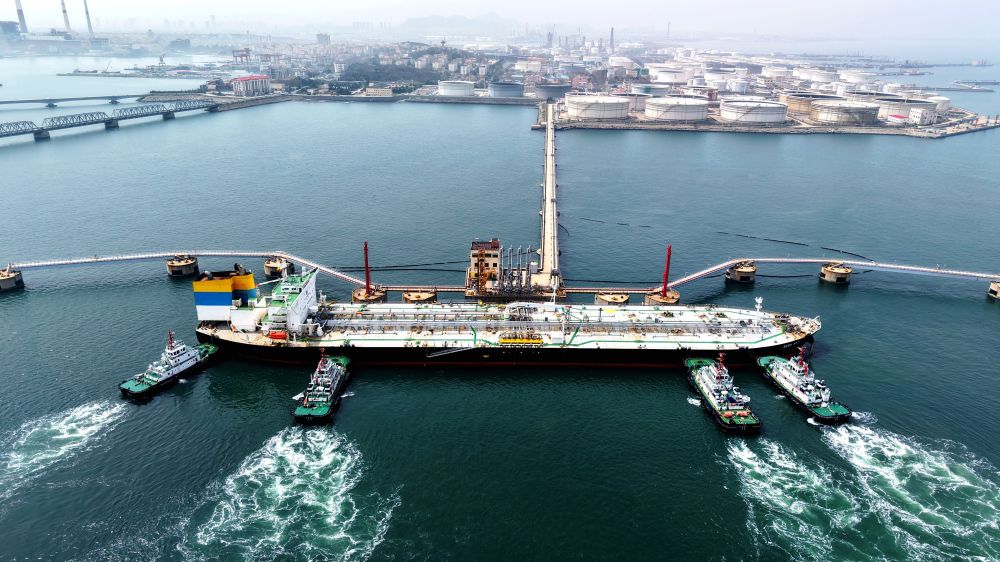
Higher oil prices have so far not weighed on industrial activity in China, Leah Fahy, senior China economist at Capital Economics wrote in a research note this week, and the recent acceleration of industrial activity appears to have been driven by strong export demand.
Surging oil prices also are driving up global demand for green technology, a boon for Chinese companies that dominate manufacturing of clean energy equipment, she wrote.
A private sector PMI survey by S&P Global and RatingDog, a Chinese credit research and analysis firm, was more upbeat. It showed China’s factory activity rose to 52.2 in April, up from 50.8 in March. The survey focuses more on smaller and export-focused private companies.
U.S. tariffs on China have been lowered after a Supreme Court ruling earlier this year against U.S. President Donald Trump’s sweeping tariffs. That means China’s exports to the U.S. could pick up in coming months, Fahy said.
A long planned visit to Beijing by Trump to meet with Chinese leader Xi Jinping next month may help extend a year-long trade truce reached between the two leaders late last year.

China’s economy expanded at a 5% annual pace in January-March, acclerating from the previous quarter and beating economists’ estimates. Chinese leaders have set a 4.5% to 5% economic growth target for 2026, the lowest since 1991.
A prolonged property sector slump has weighed on domestic investment and consumption although exports remain robust, with China recording an all-time high of $1.2 trillion trade surplus last year.