The AP Interview: Ukraine bets on battlefield AI as the race for weapons autonomy intensifies

Advertisement

Advertise with us

KYIV, Ukraine (AP) — Rapid military adoption of artificial intelligence is becoming essential to Ukraine's survival, even as full integration across the battlefield may still be several years away, according to a senior AI official.

Read this article for free:

or

Already have an account? Log in here »

To continue reading, please subscribe:

Digital Subscription

One year of digital access for only $1.44 a week*

  • Enjoy unlimited reading on winnipegfreepress.com
  • Read the E-Edition, our digital replica newspaper
  • Access News Break, our award-winning app
  • Play interactive puzzles

*Billed as $5.77 plus GST every four weeks. After 52 weeks, price increases to the regular rate of $19.95 plus GST every four weeks. Offer available to new and qualified returning subscribers only. Cancel any time.

To continue reading, please subscribe:

Add Free Press access to your Brandon Sun subscription for only an additional

$1 for the first 4 weeks*

  • Enjoy unlimited reading on winnipegfreepress.com
  • Read the E-Edition, our digital replica newspaper
  • Access News Break, our award-winning app
  • Play interactive puzzles
Start now

*Your next Brandon Sun subscription payment will increase by $1.00 and you will be charged $17.95 plus GST for four weeks. After four weeks, your payment will increase to $24.95 plus GST every four weeks.

KYIV, Ukraine (AP) — Rapid military adoption of artificial intelligence is becoming essential to Ukraine’s survival, even as full integration across the battlefield may still be several years away, according to a senior AI official.

Danylo Tsvok said AI is already helping Ukraine hold territory, while reducing risks to its soldiers as it faces a larger, better-resourced adversary.

“We need to be faster than the enemy in decision-making,” he told The Associated Press, adding that AI is “not only a competitive advantage. It’s about our survival.”
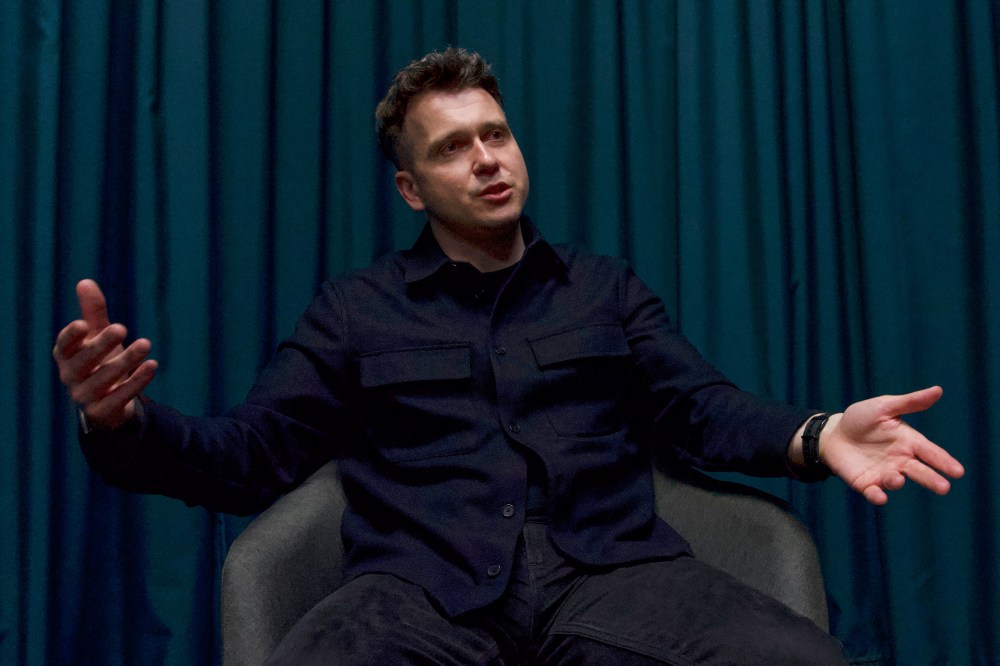
Danylo Tsvok, head of the Defense Artificial Intelligence Center of Ministry of Defence of Ukraine, speaks during an interview with The Associated Press in Kyiv, Ukraine, on April 24, 2026. (AP Photo/Vasilisa Stepanenko)

Tsvok, 35, leads the Defense Artificial Intelligence Center, which was established last month by the Defense Ministry. He previously served in the government’s top civilian AI role.

Ukraine and Russia are locked in an intensifying race to deploy increasingly automated systems — from aerial drones to ground and maritime platforms. At the center of that race is the ability to maintain operations under heavy electronic warfare.

Many newer systems are designed to shift toward autonomous functionality, maintaining target focus even under hostile jamming.

Ukraine’s rapidly expanding domestic arms sector now includes more than 2,000 manufacturers and military technology firms. Developers are testing tools that enable coordinated drone swarms, aiming to boost efficiency while easing the burden on human operators.

“We need to understand that the future belongs to autonomous systems,” Tsvok said. “AI makes it possible to automate parts of the kill chain.”

In its more mature form, he said, AI could underpin a networked battlefield in which smart weapons operate in coordination under a unified assessment platform.

“That could happen within three to five years,” he said. “Within that time frame, front lines could be secured by tightly integrated hardware and software systems.”

In the nearer term, he pointed to wider deployment of autonomous interceptors, expanded use of ground-based robotic systems, and an escalation in electronic warfare capabilities.

Some elements are already in place. Unmanned ground platforms are increasingly used in logistics, evacuation and combat roles.

President Volodymyr Zelenskyy recently said land drones supported more than 20,000 battlefield missions — including medical evacuations, supply runs and direct combat — over a three-month period this year. Among them, he said, was a successful attack carried out without any human soldiers.

Tsvok insisted the objective is not fully autonomous ‘killer robots,’ but a more coordinated system that accelerates decision-making and integrates more closely with Western partners.

“It’s not about reaching 100% autonomy, it’s about being efficient on the battlefield,” he said.

Ukraine is deepening partnerships with Western allies and Gulf states to secure funding, scale production and embed itself in security alliances, while also opening access to its extensive battlefield data.

Tsvok’s department receives financial support from the U.K. Ministry of Defence — the type of relationship he described as both militarily and politically significant.

“Democracies must develop strong defensive capabilities,” he said. “Without AI, they cannot effectively protect peace. This is not only about Ukraine. It’s about global security.”

___

Volodymyr Yurchuk and Vasilisa Stepanenko in Kyiv, Ukraine contributed.

Report Error Submit a Tip

More Stories

Former Shared Health CEO worked one month in 2025 before firing, got nearly $1M in compensation

Nicole Buffie 5 minute read Preview

Former Shared Health CEO worked one month in 2025 before firing, got nearly $1M in compensation

Nicole Buffie 5 minute read Updated: Yesterday at 8:25 PM CDT

The former CEO of Shared Health received nearly $1 million in salary and other pay last year, despite working for only one month before being fired following a provincial health-care system audit.

Read
Updated: Yesterday at 8:25 PM CDT

The AP Interview: Ukraine bets on battlefield AI as the race for weapons autonomy intensifies

Derek Gatopoulos And Hanna Arhirova, The Associated Press 3 minute read Preview

The AP Interview: Ukraine bets on battlefield AI as the race for weapons autonomy intensifies

Derek Gatopoulos And Hanna Arhirova, The Associated Press 3 minute read Thursday, Apr. 30, 2026

KYIV, Ukraine (AP) — Rapid military adoption of artificial intelligence is becoming essential to Ukraine's survival, even as full integration across the battlefield may still be several years away, according to a senior AI official.

Danylo Tsvok said AI is already helping Ukraine hold territory, while reducing risks to its soldiers as it faces a larger, better-resourced adversary.

“We need to be faster than the enemy in decision-making,” he told The Associated Press, adding that AI is “not only a competitive advantage. It’s about our survival.”

Tsvok, 35, leads the Defense Artificial Intelligence Center, which was established last month by the Defense Ministry. He previously served in the government’s top civilian AI role.

Read
Thursday, Apr. 30, 2026

Puzzles Palace

1 minute read Tuesday, May. 26, 2026

To solve our puzzles, please subscribe with this special offer:

Digital SubscriptionOne year of digital access for only $1.44 a week*

Enjoy unlimited reading on winnipegfreepress.comRead the E-Edition, our digital replica newspaperAccess News Break, our award-winning appPlay interactive puzzles Continue

250 years ago Thomas Jefferson and the American Declaration of Independence

Allan Levine 5 minute read Preview

250 years ago Thomas Jefferson and the American Declaration of Independence

Allan Levine 5 minute read 2:02 AM CDT

In the 16th and 17th centuries, countries and territories such as the Netherlands and Portugal boldly declared their independence from Spain. But 250 years ago, on July 4, 1776, the American Declaration of Independence — marked in the U.S. by the semiquincentennial celebrations — was the first time an overseas colony (the 13 colonies, in this case) had set out in an official document its reasons for breaking away from its mother country.

Because the Declaration ultimately gave birth to the United States, it is considered one of the greatest of historical treatises. Thomas Jefferson, its primary author, later explained that his main aim was “not to find out new principles, or new arguments, never before thought of … but to place before mankind the common sense of the subject; in terms so plain and firm as to command their assent.”

He did so brilliantly, creating, in theory at least, an enlightened argument for American independence based on the political, economic, social and philosophical thinking of the era.

Influenced by such philosophers as John Locke and Montesquieu, Jefferson, then 33 years old, a lawyer, landowner, Virginia politician and a delegate to the Second Continental Congress which met in Philadelphia, passionately believed in natural law — that all human beings were born free and equal and that no king or ruler could abolish these rights. It was a key point he made in the Declaration’s well-known preamble.

Read
2:02 AM CDT

Welcome to Viggopeg

Ken Wiebe 7 minute read Preview

Welcome to Viggopeg

Ken Wiebe 7 minute read Yesterday at 5:13 PM CDT

Viggomania ran wild this week. And the Winnipeg Jets latest first-round pick did everything in his power to keep the hype train rolling.

By the time Viggo Bjorck skated off the ice on Friday at Hockey For All Centre and signed a bunch of autographs and posed for photos, it was abundantly clear that the eighth overall pick in the 2026 NHL Draft had left a positive impression on the Jets fan base.

Although it’s important to remember where we are in the calendar, Bjorck showcased his skillset on numerous occasions, whether it was making a deft pass up the middle to Jacob Julien to open the scoring during the scrimmage or burying a dish from Alfons Freij to show off his finishing ability.

Bjorck also provided a glimpse of his competitive nature when he got involved in a discussion over whether or not the goals scored during the shootout held between periods would count in this battle between Team White and Team Blue.

Read
Yesterday at 5:13 PM CDT

Flooding leaves rail line near Roblin teetering

Morgan Modjeski 3 minute read Preview

Flooding leaves rail line near Roblin teetering

Morgan Modjeski 3 minute read Yesterday at 6:42 PM CDT

Richard Suidak said it will be a long time before the trains near Roblin get rolling again after a portion of CN Rail track was left hanging following severe flooding in Manitoba this week.

Suidak, a 67-year-old land owner who has a cattle herd, had a front-row seat Tuesday as the earth beneath the railway track, located between Roblin and Deepdale, gave way in front of him.

“I was just watching the waterfall coming over … and then I heard this bang,” he said. “I looked at the water, and I just jumped on my quad, put it in high and got out of there as fast I could.”

He said floodwater filled the valley where the track had been established and said he saw kilometres of water being held back by the earth before it gave way.

Read
Yesterday at 6:42 PM CDT