

Province officially decommissions Prairie Green Landfill search site

Advertisement
Read this article for free:
or
Already have an account? Log in here »
To continue reading, please subscribe:
Digital Subscription
One year of digital access for only $1.44 a week*
- Enjoy unlimited reading on winnipegfreepress.com
- Read the E-Edition, our digital replica newspaper
- Access News Break, our award-winning app
- Play interactive puzzles
*Billed as $5.77 plus GST every four weeks. After 52 weeks, price increases to the regular rate of $19.95 plus GST every four weeks. Offer available to new and qualified returning subscribers only. Cancel any time.
To continue reading, please subscribe:
Add Free Press access to your Brandon Sun subscription for only an additional
$1 for the first 4 weeks*
- Enjoy unlimited reading on winnipegfreepress.com
- Read the E-Edition, our digital replica newspaper
- Access News Break, our award-winning app
- Play interactive puzzles
*Your next Brandon Sun subscription payment will increase by $1.00 and you will be charged $17.95 plus GST for four weeks. After four weeks, your payment will increase to $24.95 plus GST every four weeks.
Read unlimited articles for free today:
or
Already have an account? Log in here »
The Manitoba government has officially decommissioned its search site at Prairie Green Landfill, where the remains of two First Nations women slain by a serial killer were recovered after a months-long search in 2025.
Morgan Harris, 39, and Marcedes Myran, 26, both from Long Plain First Nation, were slain and disposed of by convicted serial killer Jeremy Skibicki in 2022.
“Now we can say that the Prairie Green Landfill search has been fully completed,” Premier Wab Kinew said Thursday at an unrelated press conference.
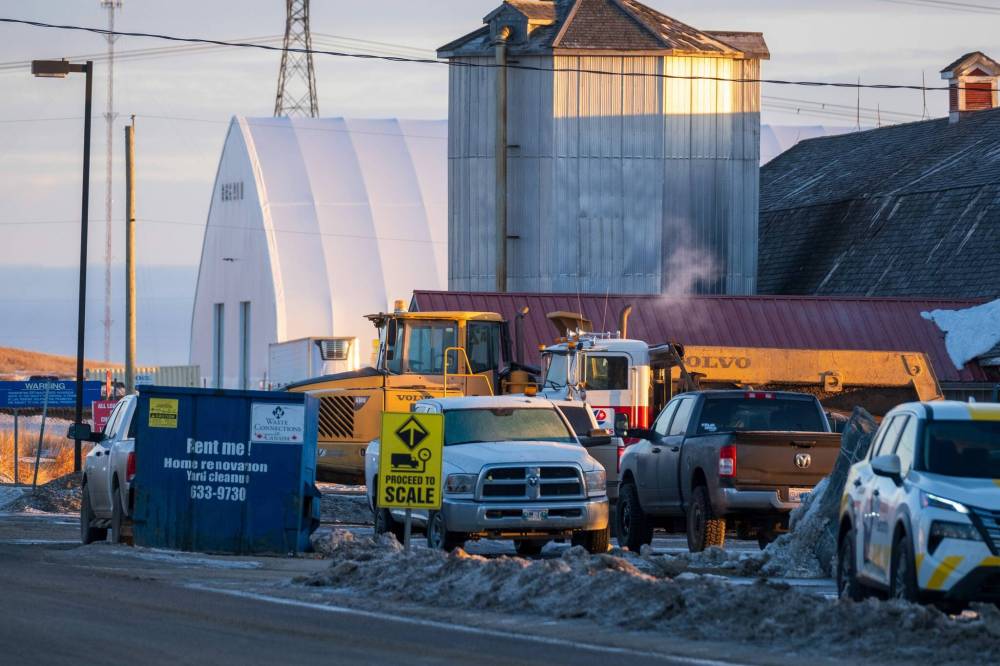
Mike Deal / Winnipeg Free Press files
The search facility building at the Prairie Green Landfill, where a search for the remains of two of Jeremy Skibicki’s victims began in 2024.
“We’ve remediated our presence on the Prairie Green Landfill and we’ve also done all the accounting for the costs and, to me, it is significant.”
The final tally for the search was $18.4 million, one-tenth of the $184 million that an Assembly of Manitoba Chiefs’ feasibility study advised that it could cost, while taking as many as three years with no guarantee remains would be found.
During the 2023 provincial election, the Progressive Conservatives vowed not to search for the women’s remains, saying it would be too expensive and dangerous. The PCs lost the election and have since apologized for their position.
The NDP formed government and launched the search in December 2024. Within three months, the remains of Harris and Myran were found and identified.
The final bill for the search was less than half of the $40 million total committed for it by the federal and provincial governments.
“All of the various arguments that the PCs tried to make in their last election campaign about it have been disproven, which leads me to conclude that this was never about cost, this was never about safety, this was never about feasibility. This was always about racism,” Kinew said.
Skibicki was convicted in 2024 of first-degree murder in the First Nations women’s deaths, as well as the slayings of Rebecca Contois, 24, and Ashlee Shingoose, 30. The remains of Contois were discovered in a Winnipeg garbage bin and at the city-run Brady Road landfill in 2022.
Shingoose’s identity was not known at the time of the serial murderer’s trial. Her remains are believed to be at the Brady Road landfill, where a search has been underway since December. It is using specialized equipment and personnel transferred from the Prairie Green search site north of the city.
In January, the premier said that searchers found items with addresses and time stamps indicating they’re looking in the right area of the landfill.
“It’s now just a very time-consuming effort of searching the material to find what we hope are the remains of Ashley Shingoose or items that might help us here,” Kinew said Thursday.
“It’s a big city, so there’s a lot of materials,” the premier said. “We are understanding in a very direct way that searching different landfills leads you to different conditions. When we searched Prairie Green in the past, there was more commercial waste there, which led search technicians to move at a certain pace,” he said.
“Now we’re searching at Brady Road and it’s more residential, which is leading them to the same meticulous level of attention to detail. But it means that they’re proceeding at a slower pace.”
He’s hopeful it will be a success.
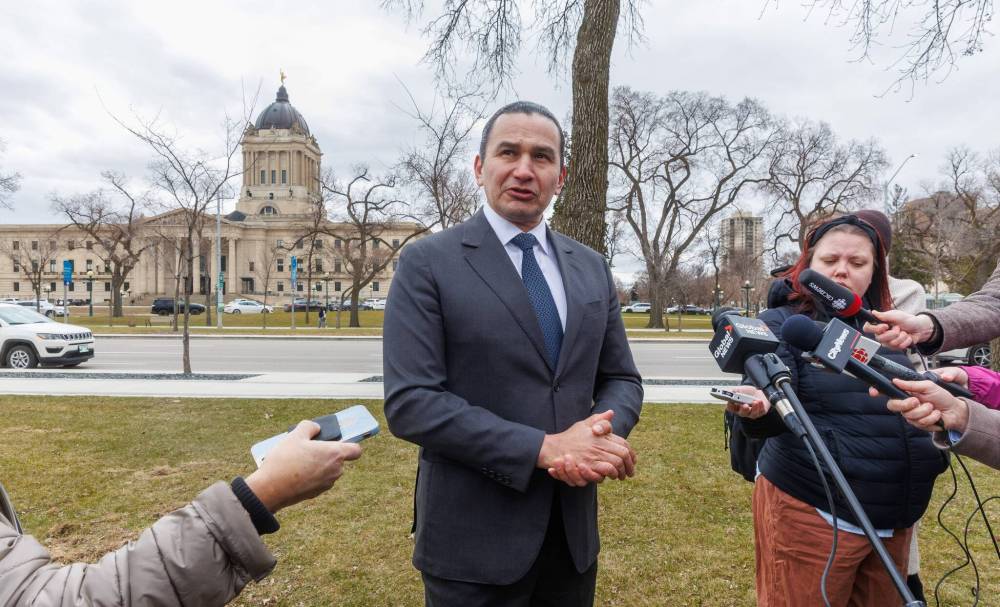
MIKE DEAL / FREE PRESS
Premier Wab Kinew: “This was always about racism.”
“When we were searching Prairie Green we would always say, ‘We can’t guarantee it, but we’re going to try,’” the premier said. “Looking at Ashley’s family and the search of Brady, I feel the same hopefulness that we can bring about some closure, some healing for them, but recognizing the reality that this is a different search — that we can’t guarantee any outcome as bad as we may want it.”
Winnipeg Mayor Scott Gillingham commended all those involved in the “very difficult search” at Prairie Green, and the premier for his leadership.
“My hope is that for some family members it provides a measure of comfort,” the mayor said Thursday.
“Without a doubt, we should learn lessons from this horrific incident where we had a serial killer preying upon women and disposing of their remains in a landfill.”

In 2022, then-police chief Danny Smyth said the Winnipeg Police Service would not search Prairie Green following an internal study that found a successful search and recovery was not feasible. It cited safety concerns, the passage of time (34 days) before investigators learned the women’s remains were deposited at the site, and the large volume of material that was dumped and compacted over that period.
On Thursday, Gillingham said he hasn’t spoken to Chief Gene Bowers specifically about what the city would do differently if it were to happen again.
“I think there’s an opportunity to certainly do better and differently as a city,” the mayor said.
— With files from Joyanne Pursaga
carol.sanders@freepress.mb.ca
Carol Sanders
Legislature reporter
Carol Sanders is a reporter at the Free Press legislature bureau. The former general assignment reporter and copy editor joined the paper in 1997. Read more about Carol.
Every piece of reporting Carol produces is reviewed by an editing team before it is posted online or published in print — part of the Free Press‘s tradition, since 1872, of producing reliable independent journalism. Read more about Free Press’s history and mandate, and learn how our newsroom operates.
Our newsroom depends on a growing audience of readers to power our journalism. If you are not a paid reader, please consider becoming a subscriber.
Our newsroom depends on its audience of readers to power our journalism. Thank you for your support.
Carol Sanders
Legislature reporter
Carol Sanders is a reporter at the Free Press legislature bureau. The former general assignment reporter and copy editor joined the paper in 1997. Read more about Carol.
Every piece of reporting Carol produces is reviewed by an editing team before it is posted online or published in print — part of the Free Press‘s tradition, since 1872, of producing reliable independent journalism. Read more about Free Press’s history and mandate, and learn how our newsroom operates.
Our newsroom depends on a growing audience of readers to power our journalism. If you are not a paid reader, please consider becoming a subscriber.
Our newsroom depends on its audience of readers to power our journalism. Thank you for your support.
Related Articles
Children’s DNA confirms death of Indigenous woman missing since 2023




Advertisement Advertise With Us
Advertisement Advertise With Us
History
Updated on Thursday, April 30, 2026 4:39 PM CDT: Adds quotes, details, photo