Winnipeg, midwest U.S. congregations proclaim love for one another amid Trump tensions

Advertisement
Read this article for free:
or
Already have an account? Log in here »
To continue reading, please subscribe:
Digital Subscription
One year of digital access for only $1.44 a week*
- Enjoy unlimited reading on winnipegfreepress.com
- Read the E-Edition, our digital replica newspaper
- Access News Break, our award-winning app
- Play interactive puzzles
*Billed as $5.77 plus GST every four weeks. After 52 weeks, price increases to the regular rate of $19.95 plus GST every four weeks. Offer available to new and qualified returning subscribers only. Cancel any time.
To continue reading, please subscribe:
Add Free Press access to your Brandon Sun subscription for only an additional
$1 for the first 4 weeks*
- Enjoy unlimited reading on winnipegfreepress.com
- Read the E-Edition, our digital replica newspaper
- Access News Break, our award-winning app
- Play interactive puzzles
*Your next Brandon Sun subscription payment will increase by $1.00 and you will be charged $17.95 plus GST for four weeks. After four weeks, your payment will increase to $24.95 plus GST every four weeks.
Read unlimited articles for free today:
or
Already have an account? Log in here »
Two Winnipeg churches are reaching across the border to build relations with American congregations through a new program created by Mennonite Church Manitoba.
Called Companion Congregations, the program was created in 2025 when U.S. President Donald Trump imposed tariffs against Canada — along with making threats about annexing the country.
“People in our congregations started talking about not going to the U.S. anymore,” said Mennonite Church Manitoba conference minister Michael Pahl of church events outside the country.
Concerned that political tensions might disrupt relations between Canadian and American Mennonites, Pahl reached out to Doug Luginbill, one of his counterparts in the U.S.
Together, the two dreamed up a way for congregations in Manitoba to connect and build bridges with Mennonite churches in the U.S. to counter tensions arising from the divisive rhetoric of the Trump administration.
“I was hoping it could be a practical way to show that the body of Christ transcends borders,” Pahl said, adding the goal was to “seek God’s reign above the kingdoms of this world.”
“We see Canadians as our friends,” added Luginbill, noting the program is consistent with the Anabaptist belief in not letting the state define who the church’s enemies should be.
To date, four churches are involved in the program: River East, in North Kildonan, is partnered with First Mennonite in Bluffton, Ohio, while Hope Mennonite, which meets at Thomson Funeral Chapel on Broadway, is connected to Mennonite Church of Normal, Ill.
Leading the group from River East is Rennie Regehr, a retired symphony musician and teacher. Developing relationships with First Mennonite is a way to “stand together with American Mennonites” who are resisting the Trump administration’s policies, including the war against Iran, he said.
First Mennonite is represented by Richard Bucher, a retired pastor who also served at a Mennonite church in Saskatchewan.
When representatives from the two churches met for the first time over Zoom, the first thing members of First Mennonite did was to apologize for how Trump was treating Canada, Bucher said.
“We felt we had to say that right from the start,” he said. “It’s ridiculous what is happening because of our leadership.”
Relating to River East is a good thing for his church since both churches are progressive and affirming of LGBTTQ+ people, Bucher said. “We are an outlier in our community on Trump and his policies,” he added.
The churches plan to do worship services together via Zoom and have invited children in the two congregations to correspond.
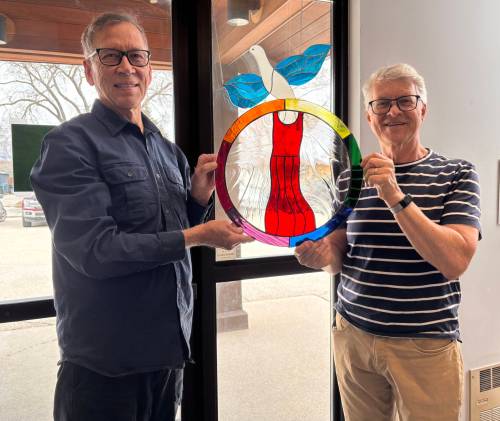
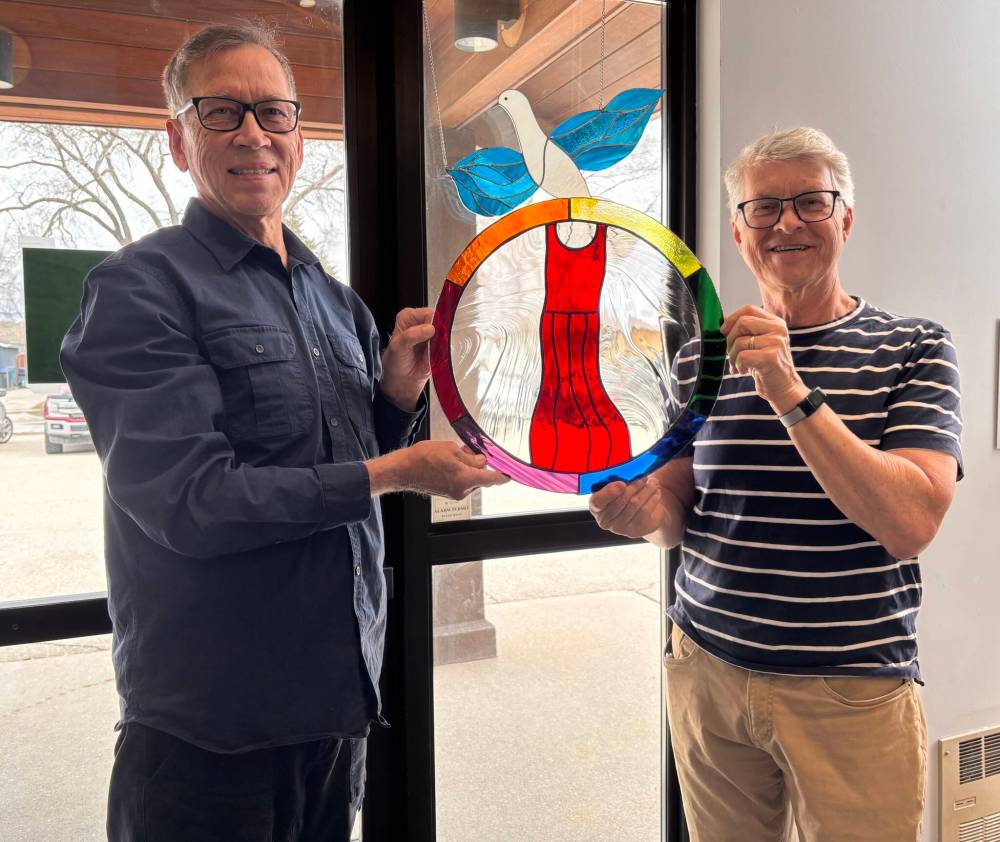
They will also share symbolic gifts as tokens of their relationship; two River East members, Don Loewen and Keith Poysti, made a stained glass piece of art that features a red dress and rainbow colours to represent the church’s commitment to Indigenous issues and LGBTTQ+ inclusivity.
At Hope Mennonite, Dori Zerbe Cornelsen said the program is a way for that congregation to “look across the border and past the antagonism we feel” from the Trump administration.
At the same time, “it gives us a chance to meet people who are doing incredibly good things for peace and resistance, and to be supportive,” she said.
At the first meeting between people from those two churches, representatives from Mennonite Church in Normal also said sorry for how the Trump administration is treating Canada.

The program has given the American church “a Canadian connection to make amends,” said Kevin Chupp, pastor of the Normal congregation.
The two churches are also just starting to find ways to connect. So far, they have also exchanged symbolic gifts — Hope sent First Mennonite a puzzle signed by every member of the congregation, and First Mennonite sent a history book about the church.
“It shows how we want to listen to the hearts of people in Canada and promote healing between our countries,” Chupp said.
The two groups are also talking about doing worship services together online and sharing information in each other’s bulletins.
faith@freepress.mb.ca
The Free Press is committed to covering faith in Manitoba through our Religion in the News project. This reporting continues because readers like you step forward to fund it.
Donate now to support our reporting on religion.
Your donation is eligible for a charitable tax receipt.
BECOME A FAITH JOURNALISM SUPPORTER
Our newsroom depends on a growing audience of readers to power our journalism. If you are not a paid reader, please consider becoming a subscriber.
Our newsroom depends on its audience of readers to power our journalism. Thank you for your support.
The Free Press is committed to covering faith in Manitoba through our Religion in the News project. This reporting continues because readers like you step forward to fund it.
Donate now to support our reporting on religion.
Your donation is eligible for a charitable tax receipt.
BECOME A FAITH JOURNALISM SUPPORTER
Our newsroom depends on a growing audience of readers to power our journalism. If you are not a paid reader, please consider becoming a subscriber.
Our newsroom depends on its audience of readers to power our journalism. Thank you for your support.
Advertisement Advertise With Us
Advertisement Advertise With Us
The Free Press acknowledges the financial support it receives from members of the city’s faith community, which makes our coverage of religion possible.