Joining the colony
Canadian biologist chronicles life among Antarctic penguins — and warns about perils of climate change
Advertisement
Read this article for free:
or
Already have an account? Log in here »
To continue reading, please subscribe:

Digital Subscription
One year of digital access for only $205*
- Enjoy unlimited reading on winnipegfreepress.com
- Read the E-Edition, our digital replica newspaper
- Access News Break, our award-winning app
- Play interactive puzzles
*First annual payment billed as $205.00 + GST for one year. This annual subscription will automatically renew at $233.00 + GST every 52 weeks (10% off the regular annual price of $259.35). Offer available to new and qualified returning subscribers only. Cancel any time.
To continue reading, please subscribe:
Add Free Press access to your Brandon Sun subscription for only an additional
$1 for the first 4 weeks*
- Enjoy unlimited reading on winnipegfreepress.com
- Read the E-Edition, our digital replica newspaper
- Access News Break, our award-winning app
- Play interactive puzzles
*Your next Brandon Sun subscription payment will increase by $1.00 and you will be charged $17.95 plus GST for four weeks. After four weeks, your payment will increase to $24.95 plus GST every four weeks.
Read unlimited articles for free today:
or
Already have an account? Log in here »
They have the loopy waddle of Charlie Chaplin strolling; in Edwardian times, they were called “comical little men in dinner jackets.”
And Canadian scientist Louise Blight went halfway round the world to study them for over three months in our winter and their summer.
Blight was in Antarctica scanning the thousands of penguins around her when she and one of them locked eyes.

ANDREA SACHS / WASHINGTON POST
Adelie penguins chill out on an iceberg in Antarctica. Author Louise Blight spent the summer of 2003 with thousands of the penguins in their habitat.
“To be held in the gaze of a wild animal remains a primordial thrill,” says Blight in Where the Earth Meets the Sky, “and the trusting nature of the animals, who have not evolved a fear of humankind, had such a transformative effect that the feeling of it remains in my bones.”
Blight is a conservation biologist with a doctorate in zoology. She is an adjunct professor in environmental studies at the University of Victoria and lives on Salt Spring Island, B.C.
Blight is one of few who haved experienced the quirky luxury of living with wild animals unafraid of humans. In Where the Earth Meets the Sky she recounts the magic in her three months living with penguins far, far away from Canada in 2003 as part of her work.
Antarctica is the coldest, windiest and most inhospitable place on earth (next to Portage and Main), and Blight would very much like it to stay that way. She writes with enthusiasm about one of the most unvisited areas of the world, a virgin landscape now being menaced by climate change. She lived for months among the penguins as a field assistant to David Ainley, one of the world’s most eminent Antarctica scientists.
Blight, like Rachel Carson in Silent Spring, now wants to speak for those living things that cannot speak for themselves.
Carson’s book in the 1960s blew the lid off pesticides. Now Blight is speaking with wonder and awe about a pristine part of the earth she aches to see left free to live as if we were never there. “We are wounded by the loss of our connection with wild beings and wild places without quite knowing what it is that we have lost,” she says.

Where the Earth Meets the Sky
Blight knows that Antarctica is being brutalized by climate change more so than most parts of the earth, and that things are quickly changing for the worse.
“I wanted to write this book as a way of bearing witness to the world’s beauty,” Blight proclaims. “And as a way of bearing witness to what we are losing in it. This is the story of falling in love with a wild place.”
Blight spent an Antarctica summer with thousands of Adelie penguins, with sunlight shining around the clock, melting sea ice and bustling wildlife on land and water. She says the absence of civilization’s sounds is so profound that the ears perk up to search for meaning in the emptiness. It feels so empty because there are just the penguins and the wind.
Blight explains how she lived among the penguins and experienced the most spiritual of human reactions when she realized the penguins were treating her as if she belonged there — as if she too was one of them, or at the very least something the penguins had no reason to fear.

What Blight learned from the penguins: “That we as humans are not central to life, but are mere specks carried along with its flow; important, but no more so than anything else. And that nature is indifferent to all human suffering — and yet paradoxically, it holds the key to our healing from it.”
Blight also learned that “(t)here’s nowhere quite like a seabird colony — penguin or any other — for instilling the harshness of the natural world. Mates desert each other, eggs and chicks are taken by skuas (birds) or whatever the local predators may be, offspring are deserted by parents and starve.”
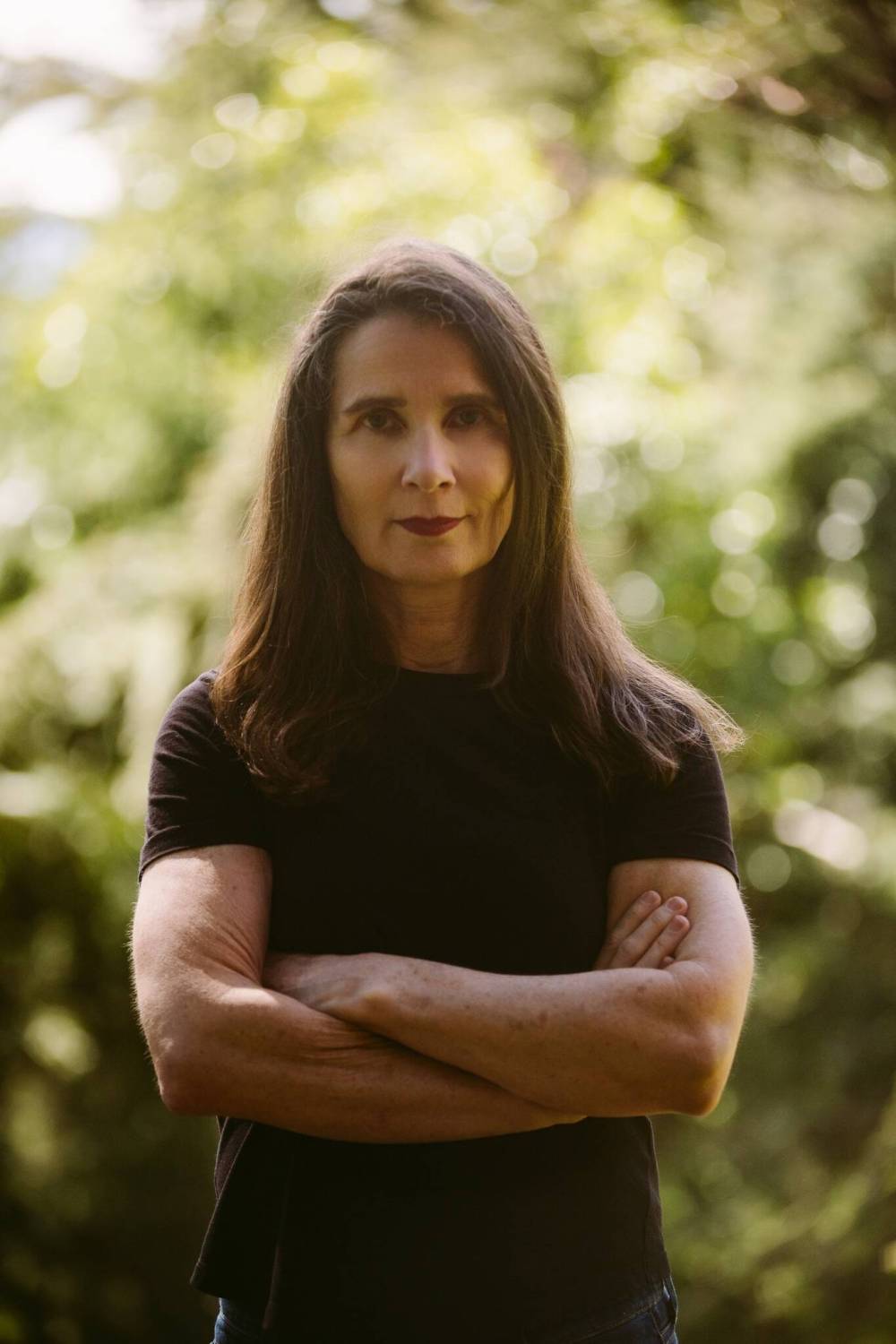
PAMELA GREGORIADIS PHOTO
Louise K. Blight
Protective clothing is a necessity around penguins.
“One of the birds has persisted in turning its head and pinching my flesh with its beak right through three layers of clothing, up high in the sensitive junction of back, side and armpit, as if it knew instinctively that this was the spot to generate maximum pain,” says Blight. She describes penguin assaults “like some Antarctica version of Hitchcock’s The Birds. ”
Barry Craig is a retired journalist.
History
Updated on Monday, May 4, 2026 4:22 PM CDT: Fixes typo