A secret in plain sight
Dewar’s posthumous tome melds memoir with questions about how the brutal legacy of residential schools slips from the public eye
Advertisement
Read this article for free:
or
Already have an account? Log in here »
To continue reading, please subscribe:

Digital Subscription
One year of digital access for only $205*
- Enjoy unlimited reading on winnipegfreepress.com
- Read the E-Edition, our digital replica newspaper
- Access News Break, our award-winning app
- Play interactive puzzles
*First annual payment billed as $205.00 + GST for one year. This annual subscription will automatically renew at $233.00 + GST every 52 weeks (10% off the regular annual price of $259.35). Offer available to new and qualified returning subscribers only. Cancel any time.
To continue reading, please subscribe:
Add Free Press access to your Brandon Sun subscription for only an additional
$1 for the first 4 weeks*
- Enjoy unlimited reading on winnipegfreepress.com
- Read the E-Edition, our digital replica newspaper
- Access News Break, our award-winning app
- Play interactive puzzles
*Your next Brandon Sun subscription payment will increase by $1.00 and you will be charged $17.95 plus GST for four weeks. After four weeks, your payment will increase to $24.95 plus GST every four weeks.
Read unlimited articles for free today:
or
Already have an account? Log in here »
Pacific Northwest poet David Whyte wrote recently, “Every human being dwells immediately close to the door of revelation they are afraid to pass through.”
Whyte wasn’t addressing the resistance of Canadians to recognizing the disturbing history of abuses perpetrated by the federal government against the country’s First Peoples, but it does address the very concerns of bestselling, award-winning author Elaine Dewar in her final book, Oblivious: Residential Schools, Segregated Hospitals, and the use of Indigenous Peoples as Slaves of Race Science.
Dewar was in hospice in 2025, dying of cancer, when she finalized the editing for this intensely personal story that is both a memoir of the daughter of a Jewish Saskatoon medical doctor and a deep and detailed investigation into the distressing question of why she had grown up oblivious to segregated Indian hospitals and Indian residential schools (IRS).
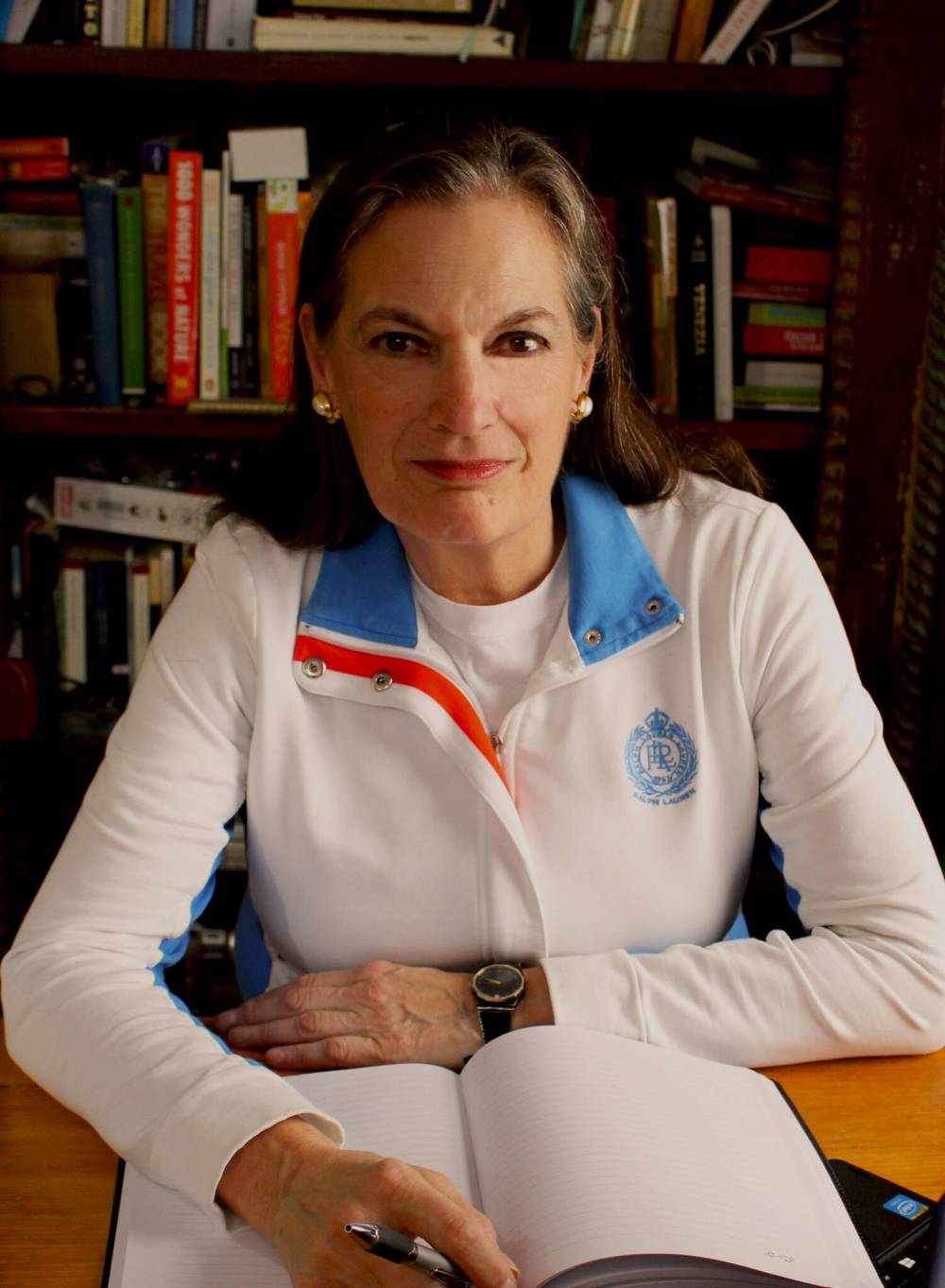
Danielle Dewar photo
Elaine Dewar was in hospice in 2025, dying of cancer when she finalized the edits on her final book. She died in September 2025 at age 77.
Her investigation was triggered in 2022 by an email from a Canadian Indigenous studies professor who wanted her to investigate “the cover-up” of what he called the “genocide” of Indigenous people through the residential schools. Uncomfortable with the “great big grizzly bear of a word” that is genocide, she was about to delete the email but didn’t. Instead, she “took her eyes into her hands,” as her mother would say, and started reading the six volumes on IRS produced by the Truth and Reconciliation Commission (TRC) in 2015.
A year into her investigation Dewar, who died in September 2025 at age 77, realized that residential schools and segregated hospitals were not a big secret. For some 160 years, newspapers, magazines and scientific journals had all published stories about the institutions where violence dominated, where school children and hospital patients had been experimented on without their consent — but those stories quickly disappeared from public view.
“Obliviousness,” said Dewar, “seemed to have almost magical properties.”
Dewar sought out John Milloy, a noted historian whose work is well-known to anyone studying colonialism in Canada, to get his take on this obliviousness. He was one of the first historians to focus on Indigenous history in Canada, despite being warned as a university student that it was not a topic of interest to historians.
Milloy’s first job in 1979 was teaching history at the University of Winnipeg, and his thesis, The Plains Cree: Trade, Diplomacy, and War, 1780-1870, was published in 1988 by the University of Manitoba Press. So little work had been done on Indigenous history in Canada that his thesis contained only a single page of citations.
Milloy was himself oblivious to residential schools until he was tapped by the Royal Commission on Aboriginal Peoples in the 1990s to research exactly that topic. He then spent two years at the Department of Indian Affairs digging through files that had never been opened by historians before. His chapter of the report was published in book form, A National Crime: The Canadian Government and the Residential School System — 1879 to 1986. Milloy was then hired as the research director for the TRC, necessitating commissioner Murray Sinclair’s flying from Winnipeg to Peterborough, Ont. to keep him on the job. It didn’t help that government officials repeatedly blocked access to documents.
Dewar assessed that historians who dismissed Indigenous history as unimportant, and the bureaucrats withholding and redacting government documents, were “the machinists of obliviousness.”
When Dewar asked Milloy about why people weren’t told about the segregated Indian hospitals, she quotes him as replying, “We were told all the time.” A scandal of the day would emerge and “then we move on.”
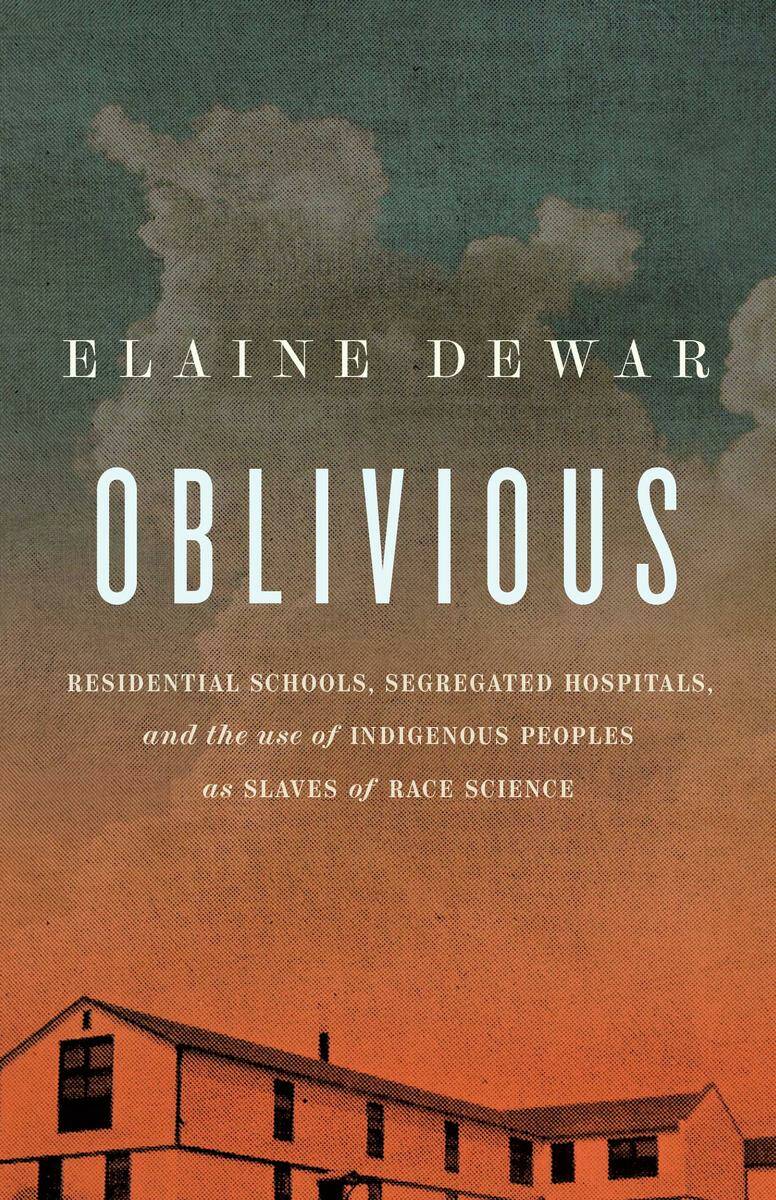
Oblivious
The first Indian hospital was opened in Fort Qu’Appelle, Sask. in 1936, followed later by several dozen other state-run hospitals. The compulsory institutionalizing of ailing Indigenous adults and children to segregate them from white people provided scientists with opportunities to conduct medical research and experiments on patients that would today be considered grossly unethical or even criminal.
Dewar’s investigation of unethical medical treatment led her to Project D, part of the International Biological Programme studying the assumed racial characteristics that allowed Indigenous populations to live in extreme environments (heat, cold, deserts, high elevations, etc.). Canada’s contribution was the study of the entire populations of the Inuit communities of Igloolik and Hall Beach from 1968-1974, the human testing conducted under the guise of generously providing them with medical and dental care.
While Dewar’s writing is engaging, repeatedly following her down research rabbit holes — digging without any assurance of finding anything useful — can at times be daunting.
That said, this lengthy book serves to memorialize Dewar’s investigative chops. It is an apt final story for a tenacious investigative journalist who dared to open a door of revelation.
Sheilla Jones is a Winnipeg author whose doctoral research at the University of Manitoba is examining the politics of settler-Indigenous relations.