

Algoma Steel continues to grapple with U.S. tariffs as net loss widens
Advertisement
Read this article for free:
or
Already have an account? Log in here »
To continue reading, please subscribe:
Digital Subscription
One year of digital access for only $75*
- Enjoy unlimited reading on winnipegfreepress.com
- Read the E-Edition, our digital replica newspaper
- Access News Break, our award-winning app
- Play interactive puzzles
*Billed as $5.77 plus GST every four weeks. After 52 weeks, price increases to the regular rate of $19.95 plus GST every four weeks. Offer available to new and qualified returning subscribers only. Cancel any time.
Monthly Digital Subscription
$4.99/week*
- Enjoy unlimited reading on winnipegfreepress.com
- Read the E-Edition, our digital replica newspaper
- Access News Break, our award-winning app
- Play interactive puzzles
*Billed as $19.95 plus GST every four weeks. Cancel any time.
To continue reading, please subscribe:
Add Free Press access to your Brandon Sun subscription for only an additional
$1 for the first 4 weeks*
- Enjoy unlimited reading on winnipegfreepress.com
- Read the E-Edition, our digital replica newspaper
- Access News Break, our award-winning app
- Play interactive puzzles
*Your next Brandon Sun subscription payment will increase by $1.00 and you will be charged $17.95 plus GST for four weeks. After four weeks, your payment will increase to $24.95 plus GST every four weeks.
Read unlimited articles for free today:
or
Already have an account? Log in here »
The chief executive of Algoma Steel Group Inc. says U.S. tariffs on steel imports continue to define its operating landscape, as the company’s net loss widened during its latest quarter.
Algoma CEO Rajat Marwah says the company incurred $27.4 million in direct tariff costs during the quarter ending March 31, which was lower quarter-over-quarter, as the steel producer continues to reduce its shipments to the U.S. It reported a direct tariff cost of $60.6 million in its fourth quarter.
“Algoma is more exposed to tariffs than virtually any steel company in North America,” Marwah told analysts on an earnings call Wednesday.
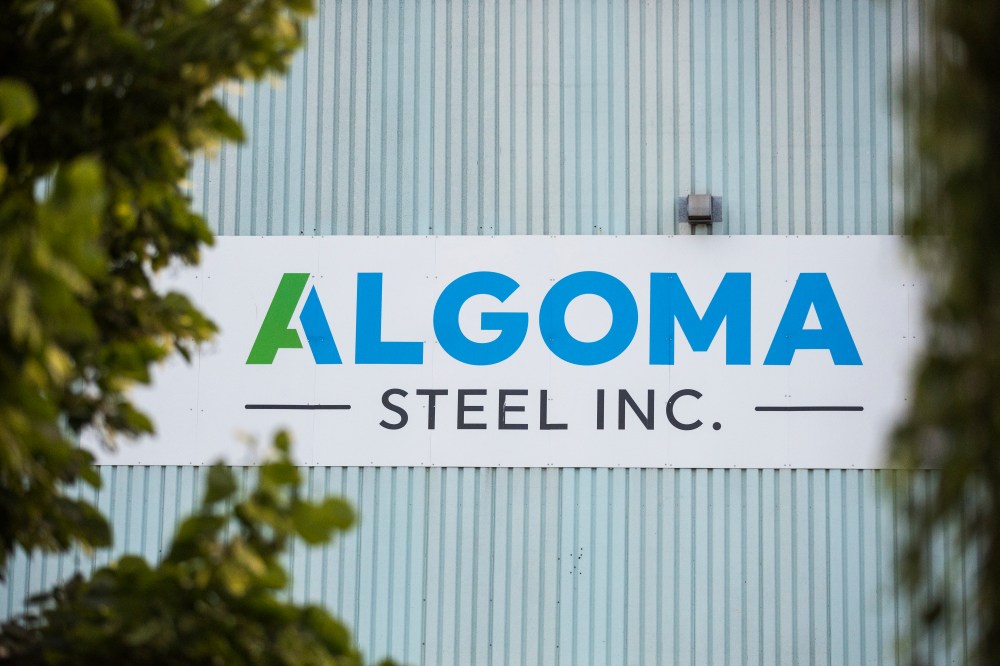
The Sault Ste. Marie-based company is grappling with the U.S.’s 50 per cent Section 232 tariffs on steel imports from Canada.
Algoma reported its shipments during the quarter were approximately 224,000 tons in its first quarter, down 52.4 per cent year-over-year. Shipments to the U.S. made up 28 per cent of total steel volumes, compared with historical ranges of 45 to 55 per cent.
It reported a wider net loss of $159.4 million or $1.46 per diluted share during the quarter, compared with a net loss of $24.5 million or 48 cents per diluted share during the same period a year earlier.
Steel plate sales were up 11 per cent from a year ago, the company said, but the Canadian market remained flooded with an oversupply of steel coil, driving down prices.
“These are structural conditions, not cyclical ones,” Marwah said.
The company is responding strategically by focusing on sales of steel plate, reducing emphasis on steel coil and repositioning itself as a crucial steel manufacturer in the Canadian defence supply chain.
In April, Algoma announced a partnership with defence manufacturer Roshel Inc. to form Roshel Algoma Defence and focus on steel defence solutions in Canada. It also signed a memorandum of understanding with Hanwha Ocean Co., Ltd. for the country’s upcoming submarine program in January.
“They are tangible evidence of where industrial policies and strategic demands are moving,” Marwah said. “Canada is actively seeking to reduce reliance on foreign supply chain for critical material and defence-grade products.”
The company has retired its coal-based blast furnace operations and transitioned to an electric arc furnace, which affected its first-quarter results, but positions it better long-term for the Canadian defence industry.
While defence makes up a smaller segment in the Canadian steel industry, Marwah pointed to increased spending in the sector and the opportunity to scale Algoma to a full-service solution.

“What we don’t look at is the whole supply chain and the entire product that finally gets produced,” he said.
“Steel supply will be limited, but there will be a lot of value-add when you start looking at fabrications, assembling, welding, and so on,” Marwah said. “We’re looking at the entire supply chain to provide a full solution to Canadian needs.”
Earlier this year, the federal government announced a defence industrial strategy, injecting $180 billion in defence procurement and $290 billion in defence-related capital investment opportunities in Canada over the next decade.
This report by The Canadian Press was first published May 13, 2026.
Companies in this story: (TSX: ASTL)