Manitoba logs record-high increase in unclaimed bodies Grieving brother believes bureaucratic breakdown took after-death decisions out of family’s hands
Read this article for free:
or
Already have an account? Log in here »
To continue reading, please subscribe:
Digital Subscription
One year of digital access for only $1.44 a week*
- Enjoy unlimited reading on winnipegfreepress.com
- Read the E-Edition, our digital replica newspaper
- Access News Break, our award-winning app
- Play interactive puzzles
*Billed as $5.77 plus GST every four weeks. After 52 weeks, price increases to the regular rate of $19.95 plus GST every four weeks. Offer available to new and qualified returning subscribers only. Cancel any time.
To continue reading, please subscribe:
Add Free Press access to your Brandon Sun subscription for only an additional
$1 for the first 4 weeks*
- Enjoy unlimited reading on winnipegfreepress.com
- Read the E-Edition, our digital replica newspaper
- Access News Break, our award-winning app
- Play interactive puzzles
*Your next Brandon Sun subscription payment will increase by $1.00 and you will be charged $17.95 plus GST for four weeks. After four weeks, your payment will increase to $24.95 plus GST every four weeks.
Read unlimited articles for free today:
or
Already have an account? Log in here »
When Robert Dobson died last year, no one attended his funeral.
It’s not that family members didn’t want to be there; they were unaware it was taking place due to what appears to be miscommunication between two provincial bureaucracies.
As a result, Dobson became part of a startling statistic; he was one of a record 238 unclaimed bodies recorded in 2025 by Manitoba’s Office of the Chief Medical Examiner.
“He was very ill,” older brother Phil Dobson said. “His passing was a bit of a relief because he was suffering. But how he was treated after he died, I’m ashamed.”
The number of unclaimed bodies in 2025 was up by 70, or a 40 per cent increase over the previous year and a 53 per cent increase compared to the five-year average of 155.
“His passing was a bit of a relief because he was suffering. But how he was treated after he died, I’m ashamed.”
The chief medical examiner’s office said in a statement there was no identifiable demographic or systemic change to explain the spike; instead it may, ultimately, be a statistical anomaly.
“A common misconception is that unclaimed individuals are primarily unidentified, transient, or unhoused,” the office said in the statement. “That is not reflective of our experience.
“Unclaimed persons come from all walks of life, which could include nursing home residents, individuals who live alone and were socially isolated, and people who outlived family members or became estranged over time.”
The medical examiner’s office said it’s rare for officials not to know the deceased’s identity and that the province’s homeless and substance-addicted people make up a small portion of its overall caseload. Eighty-four per cent of unclaimed bodies are over the age of 60, while men account for 71 per cent of cases.
JOHN WOODS / FREE PRESS Phil Dobson says seeing his brother’s current resting place offered him no comfort, as it’s not what he would have wanted. 
Dobson, 64, who had schizophrenia, died of natural causes March 28, 2025. He had no children.
Initially, the office of Manitoba’s Public Guardian and Trustee, which was responsible for Dobson’s affairs, had contacted his stepmother. She, in turn, directed them to Phil, because she wasn’t a blood relative.
“They took my information and thanked me,” Phil said. “They never said they were going to do anything.”
Phil said he didn’t hear from the public trustee’s office until September 2025, at which time his brother’s remains were classified as unclaimed and had been interred.
A report from the public trustee office noted Dobson had three living siblings — two brothers and a sister — but their identities were unknown and that, according to their stepmother, “none of them wished to be involved in planning a funeral service.”
Phil subsequently learned his brother had been cremated and his ashes were placed in a columbarium at the Glen Lawn cemetery. The $14,000 bill — approved by the chief medical examiner’s office — was covered by Dobson’s estate.
In addition to not knowing about the funeral, the surviving family members would have preferred to have Dobson’s ashes spread at a meaningful location, much like they did for his older brother and father.
In retrospect, Phil acknowledges that he should have followed up with the public trustee’s office as the months passed. But he was grieving and thought the bureaucratic process involving the trustee’s office would be a lengthy one. He was confident he’d be consulted before any final decisions were made.
The hefty price tag covered by his late brother’s estate is a concern, but there’s a “bigger picture” at stake, he said.
SUPPLIED Phil Dobson, left, and his brother Robert Dobson, can be seen in this photo taken in the early 80s.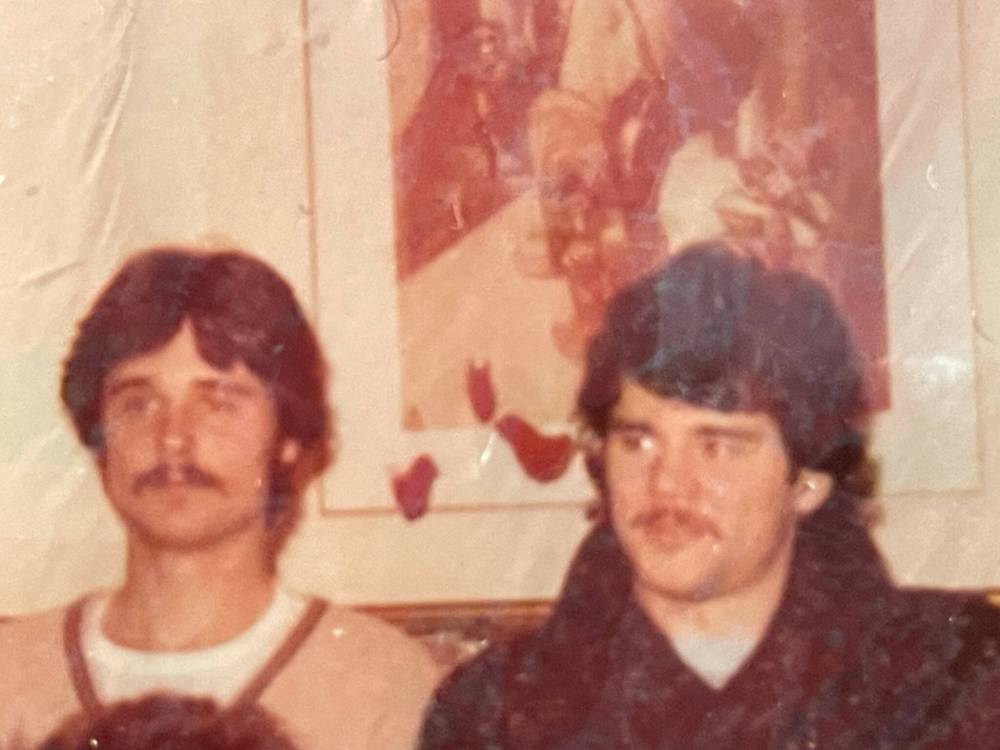
Knowing what happened to his family, Phil is calling for a review of the 237 other cases where a body went unclaimed last year.
“How many other people have they done this to?” he said. “They are cutting corners because it’s easier, and people like me are suffering.”
A government spokesperson said in a statement the public trustee’s office cannot comment on specific cases, but noted the chief medical examiner’s office has the authority to arrange funerals for unclaimed bodies.
The miscommunication involving the Dobson family “is extremely rare,” said Dr. John Younes.
“If a problem was identified, regarding communication between the various agencies and this office, steps would be taken to improve it,” Younes said, adding his office will look into the family’s concerns, but he doesn’t believe a wider review is required.
“I have not heard of any major complaints or issues with the unclaimed body system.”
He stressed the process involving unclaimed bodies is rigorous, closely monitored and that the efforts undertaken to locate next of kin are extensive. It’s common for staff to go through a person’s home searching for leads on contacts in their life, he said.
A minimum of 28 days will pass before an unclaimed body is buried. At that point, the office will request a funeral home to perform a “small and simple service.”
“The people that do take on this work are very serious about it and go to the utmost length to make sure that things are done appropriately,” Younes said.
Despite the spike in cases last year, Younes doesn’t think it’s part of a longer trend.
The number of unclaimed bodies recorded thus far in 2026 suggests there will be fewer than last year, he said. As of April 21, there were 58, which would lead to a total of 192.
What happens to your body after you die in Manitoba?
Under Manitoba’s Anatomy Act, there are essentially three outcomes that can occur after you die.
Under Manitoba’s Anatomy Act, there are essentially three outcomes that can occur after you die.
Your remains are claimed by your family members, who then become responsible for properly and legally dealing with the body. This means hiring a funeral home to help with a burial or cremation.
Your remains go unclaimed. If this is the case, the Office of the Chief Medical Examiner will do its best to track down next of kin, a process that can last up to a month. If no one claims the body, it then becomes the responsibility of the office, or its designates, to provide a proper burial.
Your remains go unclaimed but the body is needed for research. Under the act, an unclaimed body may be diverted to the University of Manitoba or another designated institution for the “purposes of anatomical or other scientific instruction or requirements.” This is rare and happens only on request now.
The trafficking of dead bodies in any other capacity or form is strictly prohibited.
— Morgan Modjeski
There are, however, factors that might contribute to an explanation for any increase.
“Costs for funeral services have steadily risen, and that’s a significant component in families deciding not to claim decedants, because they can’t afford to, or choose not to, pay the money that would be required,” he said.
Phil is hopeful the review will provide some answers into how his brother’s case slipped through the cracks. And he said the family would still like the opportunity to spread the ashes elsewhere.
However, Younes said his office needs to know more about the case before it can consider facilitating the request.
Melissa Iarusso, manager of corporate communications for Toronto-based Arbor Memorial — the company that operates Glen Lawn — said the funeral home cannot comment on individual cases due to privacy concerns.
However, Iarusso noted the funeral home’s role is to carry out arrangements “exactly as directed by the legally responsible government authority.”
“Our involvement begins only after those determinations and instructions are made, and we do not independently assess or alter that status,” she said in the statement.
“In all cases, including unclaimed decedents, our team is committed to providing respectful, compassionate care and ensuring the individual is treated with dignity, regardless of their personal circumstances or the complexity of the situation.”
JOHN WOODS / FREE PRESS Robert Dobson was one of a record 238 unclaimed bodies recorded in 2025 by Manitoba’s Office of the Chief Medical Examiner.
Iarusso said if an unclaimed decedent is later determined by authorities to have next-of-kin status with legal standing, any further steps “are guided by those authorities within the framework of applicable legislation, cemetery regulations and policies.”
She added Glen Lawn officials “are open to dialogue” with the Dobson family to discuss any legally available options.
Kevin Sweryd, who has worked in the funeral business for more than 30 years, estimates he has provided service for hundreds of unclaimed bodies.
“It’s heartbreaking” when no one else is present, he said.
As president of the Manitoba Funeral Service Association and co-owner of Bardal Funeral Home and Crematorium in Winnipeg, the increase in the number of unclaimed bodies saddens him.
“It’s a difficult process,” he said. “Because everybody deserves to have a proper goodbye. Everybody deserves dignity in death, but it’s hard when you don’t know anything about that person.”
“Everybody deserves dignity in death, but it’s hard when you don’t know anything about that person.”
While funeral homes will try to find friends to attend a service or serve as pallbearers, sometimes it’s just staff members involved.
In those situations, Sweryd takes comfort in his faith, to thank God for the blessings he has with family and friends.
“It causes me to be very introspective,” he said. “To remember how important it is to take time for relationships. I doubt any one of these people planned for their lives to turn out this way, where no one would show up at their funeral.”
Human life is sacred and it’s important to acknowledge individuals for being part of a community and to recognize any impact they may have had, he said.
“Even in situations where there is no one who knows — or can come forward — for that person, it’s still critical to do something. To recognize that life that was lived, because every life has significance.”
On occasion, such funerals draw a large number of attendees; unclaimed does not necessarily mean unknown, or unloved.
After visiting for the first time on a grey spring day, Phil said seeing his brother’s current resting place offered him no comfort.
His brother was anti-establishment, anti-religion and spent much of his life on the streets, a far cry from the peaceful space surrounding the columbarium and whatever kind of service he received at the funeral home.
It’s not that his brother did not deserve such a goodbye, Phil said, but it’s not what he would have wanted.
“If I could see his ghost and talk to him about it, he would have some expletives,” Phil said.
morgan.modjeski@freepress.mb.ca

Morgan Modjeski
Reporter
Signal
Morgan Modjeski is a news reporter and multimedia producer for the Free Press. Read more about Morgan.
Every piece of reporting Morgan produces is reviewed by an editing team before it is posted online or published in print — part of the Free Press‘s tradition, since 1872, of producing reliable independent journalism. Read more about Free Press’s history and mandate, and learn how our newsroom operates.
Our newsroom depends on a growing audience of readers to power our journalism. If you are not a paid reader, please consider becoming a subscriber.
Our newsroom depends on its audience of readers to power our journalism. Thank you for your support.