

Fertilizer, diesel costs beset farmers
‘Right now … we need to get the crop in the ground and so you pay what the price is’

Advertisement
Read this article for free:
or
Already have an account? Log in here »
To continue reading, please subscribe:

Digital Subscription
One year of digital access for only $205*
- Enjoy unlimited reading on winnipegfreepress.com
- Read the E-Edition, our digital replica newspaper
- Access News Break, our award-winning app
- Play interactive puzzles
*First annual payment billed as $205.00 + GST for one year. This annual subscription will automatically renew at $233.00 + GST every 52 weeks (10% off the regular annual price of $259.35). Offer available to new and qualified returning subscribers only. Cancel any time.
To continue reading, please subscribe:
Add Free Press access to your Brandon Sun subscription for only an additional
$1 for the first 4 weeks*
- Enjoy unlimited reading on winnipegfreepress.com
- Read the E-Edition, our digital replica newspaper
- Access News Break, our award-winning app
- Play interactive puzzles
*Your next Brandon Sun subscription payment will increase by $1.00 and you will be charged $17.95 plus GST for four weeks. After four weeks, your payment will increase to $24.95 plus GST every four weeks.
Read unlimited articles for free today:
or
Already have an account? Log in here »
Soybeans are on Jason Rempel’s radar.
The Manitoba farmer has dodged rising nitrogen fertilizer prices — he pre-bought last fall — but if costs continue to climb, he’ll be seeking more soybeans for 2027.
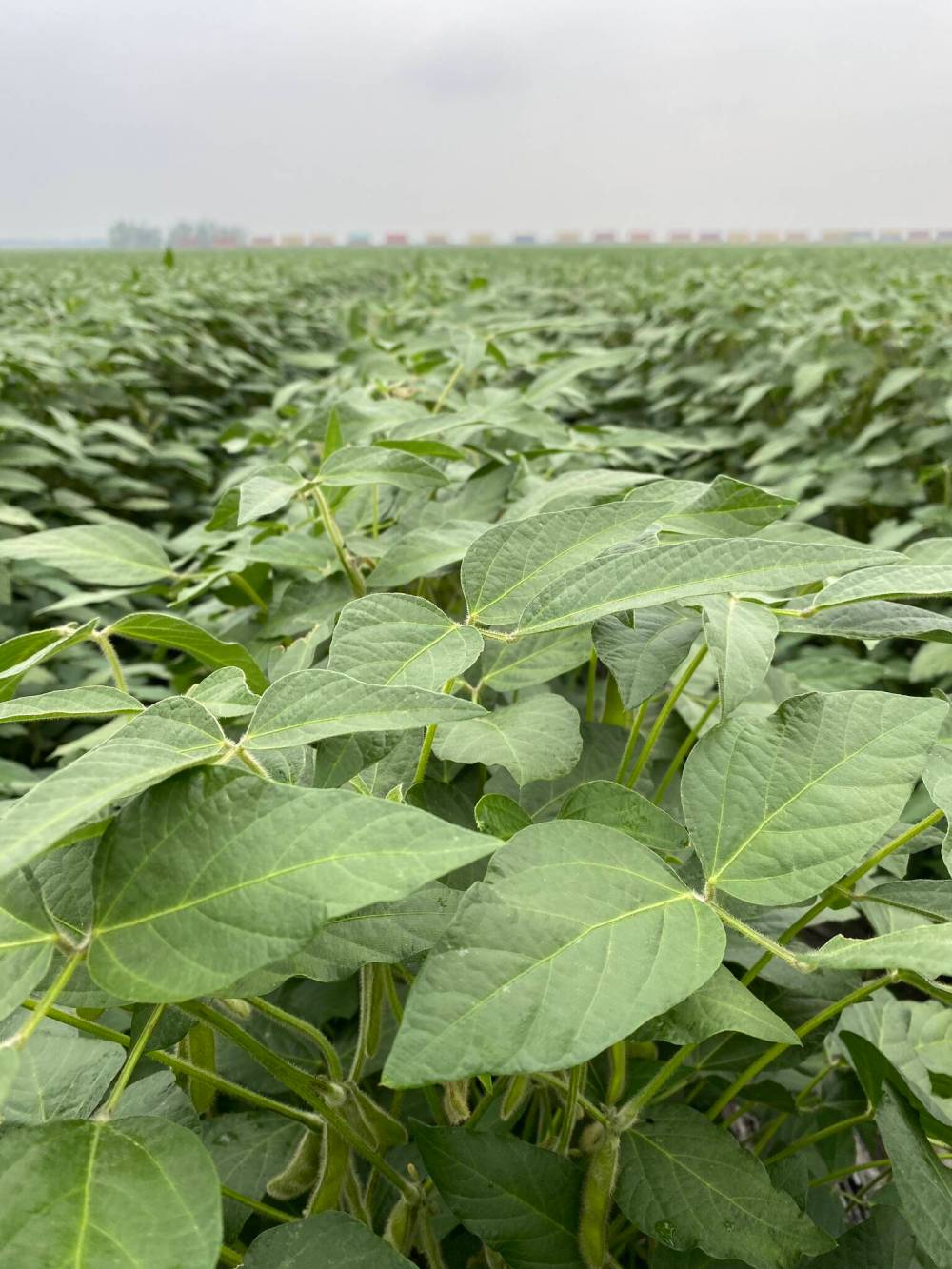
The crop doesn’t require much nitrogen fertilizer, unlike the wheat and corn Rempel is currently spreading across his land near Landmark.
FILES
Soybeans do not require much nitrogen fertilizer.
Nitrogen fertilizer prices have jumped 30 to 40 per cent in Western Canada since the United States and Israel attacked Iran earlier this year, according to Farm Credit Canada. Around one-third of global seaborne fertilizer ships through the now-blockaded Strait of Hormuz.
Farm diesel prices have also skyrocketed, from $1.30 to roughly $2 per litre. Agriculture experts expect grocery prices to jump over the next year.
For Rempel, whose diesel-powered tractors are in fields, the ballooned costs have already appeared.
“Fingers-crossed that the price goes down a little bit before fall, but that may be a bit optimistic,” Rempel said, referencing the demands of harvest season. “Right now … we need to get the crop in the ground and so you pay what the price is.”
His roughly 2,000-acre farm sees up to 5,000 litres of diesel used on a busy seeding week. Spring fuel-ups are a fraction of Rempelco Acres’s direct input costs, Rempel noted — fertilizer is the biggest expense.
“I’m fairly optimistic for the growing season,” he said. “All those other factors have me worried — all those things that we can’t control. The weather and the global commodity market.”
Even if the Middle East conflict ended tomorrow, it would “take some time” before fuel and fertilizer prices lower, said Leigh Anderson, a senior economist at Farm Credit Canada.
Mines will need to be cleared from the Strait of Hormuz; fertilizer plants may require repair before production restarts, Anderson said.
He expects phosphate fertilizer prices to rise in the interim. Mosaic Co., one of the world’s largest phosphate producers, announced Wednesday it would cut some production in response to raw material costs.
Manitoba Agriculture Minister Ron Kostyshyn is scheduled to meet with his counterparts and the federal agriculture minister in Halifax in July.
“I can most assure you … this will be a high-level discussion moving forward,” Kostyshyn said when asked about relief measures for inflation-stricken farmers, adding he’s in “constant communication” with the feds.
“The last thing producers need is additional expenses.”
Quebec Premier Christine Fréchette announced Friday her province’s farmers would be reimbursed for fuel taxes.
Kostyshyn, formerly a farmer, said the occupation held “the biggest risk takers” who regularly face challenges beyond their control. “I have a lot of respect for agriculture producers.”
Michael Schriemer has inked sales deals six months in advance. While diesel and fertilizer costs rise, the price of his company’s sweet corn and squash remains static through the contracts.
Schriemer bought nitrogen fertilizer for his Otterburne-area farm earlier this year. The bill was at least 20 per cent higher than in 2025, he said.
“We have millions of dollars invested in pack lines,” Schriemer said, adding he’s in the business “for the long haul.”
He’s taking an optimistic view: now is the time to test and be innovative, Schriemer said. He and staff — about 50 people — will use a new machine to spot-spray weeds, instead of broadly applying herbicide within the company’s 425 acres.
Farmers have become more efficient with increasingly low margins, said Jared Carlberg, a University of Manitoba agribusiness professor.
“A farmer has to be bigger, (to) spread out equipment costs over more acres,” Carlberg said. “Prairie farmers are being stretched very thin in terms of their time and stress levels, and financial management.”
Manitoba held 14,543 farms in 2021, a government census found. It was a 1.7 per cent drop from the 14,791 counted in 2016.

Whether farmers profit this year will depend on global commodity prices, noted Jill Verwey, president of Keystone Agricultural Producers. Weather — affecting crop yields — will contribute.
They may benefit from higher prices on cereals and pulses, Verwey said.
Canada began 2026 with relatively strong crop inventories, TD Bank reported this week. Wheat and corn stocks were up 12 and 27 per cent, respectively, when compared to 2025.
The inventories provide “limited” short-term stability, TD says.
gabrielle.piche@winnipegfreepress.com
Gabrielle Piché reports on business for the Free Press. She interned at the Free Press and worked for its sister outlet, Canstar Community News, before entering the business beat in 2021. Read more about Gabrielle.
Every piece of reporting Gabrielle produces is reviewed by an editing team before it is posted online or published in print — part of the Free Press‘s tradition, since 1872, of producing reliable independent journalism. Read more about Free Press’s history and mandate, and learn how our newsroom operates.
Our newsroom depends on a growing audience of readers to power our journalism. If you are not a paid reader, please consider becoming a subscriber.
Our newsroom depends on its audience of readers to power our journalism. Thank you for your support.
Gabrielle Piché reports on business for the Free Press. She interned at the Free Press and worked for its sister outlet, Canstar Community News, before entering the business beat in 2021. Read more about Gabrielle.
Every piece of reporting Gabrielle produces is reviewed by an editing team before it is posted online or published in print — part of the Free Press‘s tradition, since 1872, of producing reliable independent journalism. Read more about Free Press’s history and mandate, and learn how our newsroom operates.
Our newsroom depends on a growing audience of readers to power our journalism. If you are not a paid reader, please consider becoming a subscriber.
Our newsroom depends on its audience of readers to power our journalism. Thank you for your support.
Advertisement Advertise With Us
Advertisement Advertise With Us