

United Nations’ top court says right to strike is protected by a key labor treaty
Advertisement
Read this article for free:
or
Already have an account? Log in here »
To continue reading, please subscribe:

Digital Subscription
One year of digital access for only $205*
- Enjoy unlimited reading on winnipegfreepress.com
- Read the E-Edition, our digital replica newspaper
- Access News Break, our award-winning app
- Play interactive puzzles
*First annual payment billed as $205.00 + GST for one year. This annual subscription will automatically renew at $233.00 + GST every 52 weeks (10% off the regular annual price of $259.35). Offer available to new and qualified returning subscribers only. Cancel any time.
To continue reading, please subscribe:
Add Free Press access to your Brandon Sun subscription for only an additional
$1 for the first 4 weeks*
- Enjoy unlimited reading on winnipegfreepress.com
- Read the E-Edition, our digital replica newspaper
- Access News Break, our award-winning app
- Play interactive puzzles
*Your next Brandon Sun subscription payment will increase by $1.00 and you will be charged $17.95 plus GST for four weeks. After four weeks, your payment will increase to $24.95 plus GST every four weeks.
Read unlimited articles for free today:
or
Already have an account? Log in here »
THE HAGUE, Netherlands (AP) — The United Nations’ top court issued a landmark advisory opinion on the right to strike on Thursday, finding that a cornerstone labor treaty protects the ability of workers to walk off the job.
The International Court of Justice was asked in 2023 by the International Labor Organization, a U.N. agency, to settle an internal dispute over whether one of the ILO’s conventions gives workers the right to strike.
Advisory opinions aren’t legally binding, but carry significant weight. The decision could have a worldwide impact on labor regulations, enshrining the right to strike in labor standards and international trade agreements.
Labor unions welcomed the decision.
“As any trade unionist will tell you, there is no right to organize without the right to strike!” Christy Hoffman, general-secretary of UNI Global Union, said in a statement after the opinion was announced. “The two are inseparable foundations of any functional and fair industrial relations system. Congratulations to the many advocates who argued the point so brilliantly before the ICJ.”
The word “strike” never appears in the 1948 Freedom of Association and Protection of the Right to Organize Convention, but the ICJ’s 14 judges found walkout actions are covered under the other guarantees.
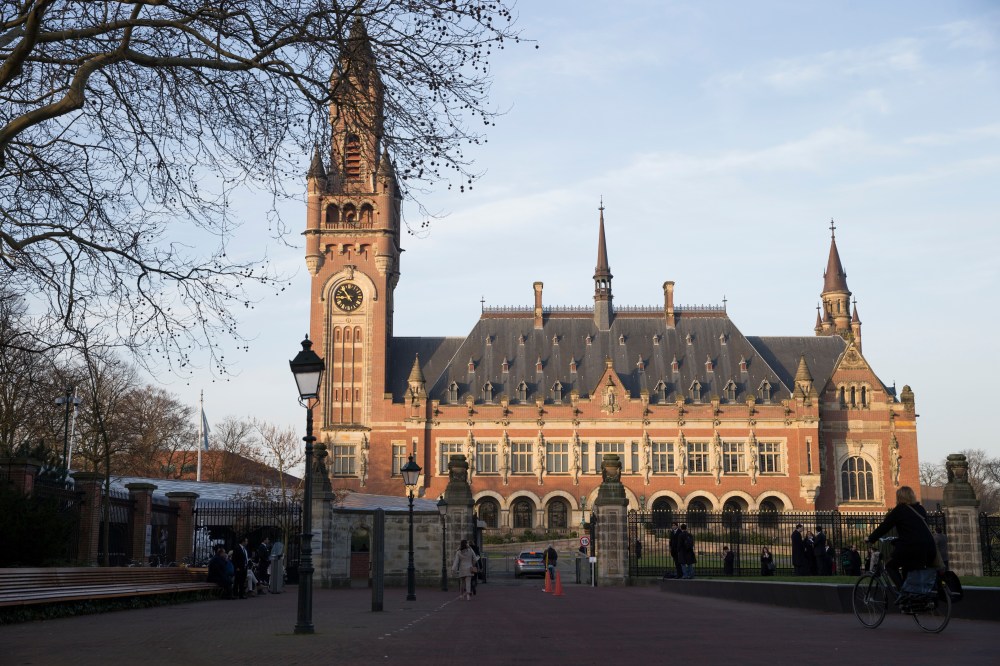
“The protection of the right to strike is encompassed in the freedom of association,” court president Yuji Iwasawa said, reading out the ruling in the Great Hall of Justice in The Hague.
The convention has been ratified by 158 countries and is incorporated into a variety of employment guidelines and standards, including those from the United Nations, the Organization for Economic Cooperation and Development and various international trade agreements.
The United States is a member of the ILO, but hasn’t ratified the convention.

International labor law expert Paul van der Heijden said that the advisory opinion from the ICJ gives workers an important tool when their actions face legal opposition. This decision “is important when you go to court,” he told The Associated Press.
The judges were careful to note that in some cases, the right to strike may be restricted. The opinion “does not entail any determination on the precise content, scope or conditions for the exercise of that right,” Iwasawa said.
A number of U.N. agencies can ask the ICJ to weigh in on legal questions and issue advisory opinions. Last year, the court said in a landmark advisory opinion that countries could be in violation of international law, if they fail to take measures to protect the planet from climate change.
During hearings in October, the court in The Hague heard from 18 countries and five international organizations, including the ILO, with a number of other countries submitting writing arguments.
The majority of participants favored the right to strike, a protection which is already granted in most European countries.