

S&P/TSX composite closes up more than 350 points amid hopes of end to Iran war
Advertisement
Read this article for free:
or
Already have an account? Log in here »
To continue reading, please subscribe:

Digital Subscription
One year of digital access for only $205*
- Enjoy unlimited reading on winnipegfreepress.com
- Read the E-Edition, our digital replica newspaper
- Access News Break, our award-winning app
- Play interactive puzzles
*First annual payment billed as $205.00 + GST for one year. This annual subscription will automatically renew at $233.00 + GST every 52 weeks (10% off the regular annual price of $259.35). Offer available to new and qualified returning subscribers only. Cancel any time.
To continue reading, please subscribe:
Add Free Press access to your Brandon Sun subscription for only an additional
$1 for the first 4 weeks*
- Enjoy unlimited reading on winnipegfreepress.com
- Read the E-Edition, our digital replica newspaper
- Access News Break, our award-winning app
- Play interactive puzzles
*Your next Brandon Sun subscription payment will increase by $1.00 and you will be charged $17.95 plus GST for four weeks. After four weeks, your payment will increase to $24.95 plus GST every four weeks.
Read unlimited articles for free today:
or
Already have an account? Log in here »
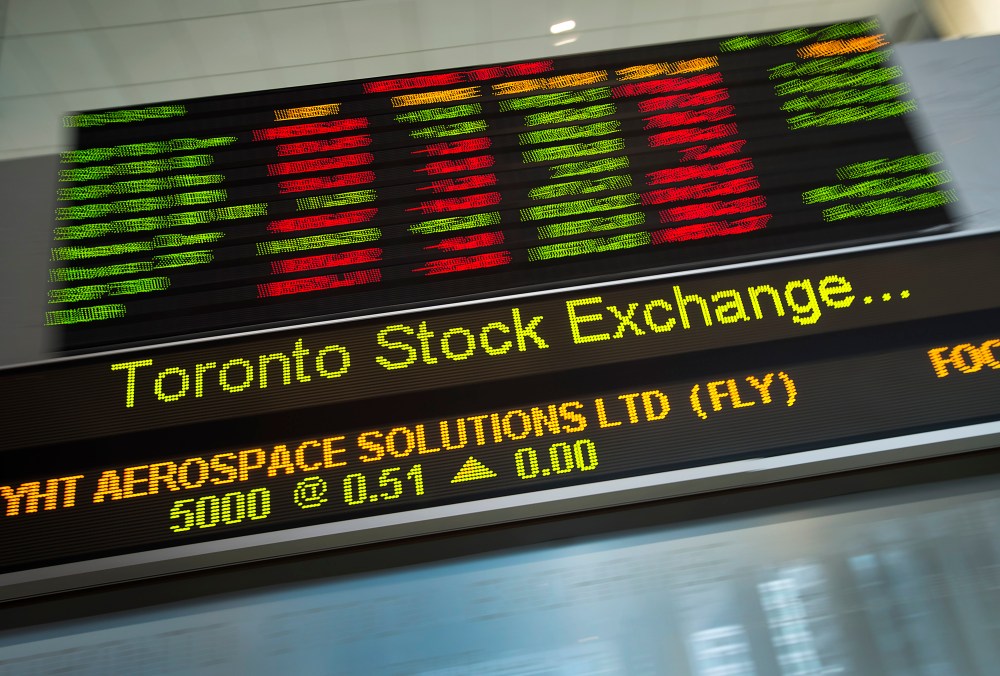
TORONTO – Canada’s main stock index ended more than 350 points higher on Monday, led by the basic materials sector, while oil prices fell as the United States and Iran appeared to be closing in on a deal to end the war in the Middle East.
The S&P/TSX composite index was up 359.53 points at 34,830.89.
“The TSX outperformed today,” said Brianne Gardner, senior wealth manager of Velocity Investment Partners at Raymond James.
“We saw investors rotating a little bit into more of the materials, technology and industrial sectors across the board,” she said. Meanwhile, the energy sector lagged after oil prices pulled back sharply.
U.S. President Donald Trump said that negotiations with Iran are “proceeding nicely,” while reiterating his warning that fighting would resume if no deal is reached. That drove futures higher, though U.S. stock markets were closed on Monday for the Memorial Day holiday.
“A lot of investors are encouraged by signs of progress toward the potential U.S.-Iran agreement,” Gardner said.
Tensions in Iran have kept the Strait of Hormuz effectively shut for about four months. The closure of the crucial waterway has prevented oil tankers from exiting the Persian Gulf to deliver crude to customers worldwide, pushing oil prices higher.
Depending on the swiftness of a deal, Gardner estimated oil prices could settle back down to around U$90.85 a barrel by the end of the year.
“If the Strait of Hormuz reopens, that would be a short-term pullback in the energy sector overall and we’re already starting to see that anticipation on today’s movement as well,” she said.
The July crude oil contract fell US$6.30 to US$90.30 per barrel; though there was no settlement price for crude oil and gold because of the holiday in the U.S.
Gardner said a pullback in crude oil prices shows the markets are becoming less worried about an immediate energy shock and more focused on improving risk sentiment.
“Attention is now going to be turned heavily toward the economic data and how this war has impacted the data in the short-term,” she said.
More eyes will be on Statistics Canada’s first-quarter gross domestic product report, which is expected to shape decisions on growth and overnight interest rates, Gardner said.
The fourth quarter GDP report was negative, she said. She said if the first quarter GDP data also turns out to be negative, “that will confirm we’re in a technical recession.”
RBC senior economist Claire Fan said in a note that the economy likely returned to growth in the first quarter, estimating the GDP rose an annualized 1.7 per cent, supported by improving domestic growth drivers.
That was slightly higher than economists’ average estimate of 1.5 per cent, according to LSEG Data & Analytics.
All of Canada’s Big Six banks are poised to report their second-quarter earnings this week, and are expected to deliver year-over-year gains despite a challenging operating environment and slowing loan growth.

Gardner said investors will be watching closely to see how the banks have “weathered the storm,” as delinquencies rise and mortgage renewals put more pressure on household budgets.
The Canadian dollar traded for 72.44 cents US compared with 72.42 cents US on Friday.
This report by The Canadian Press was first published May 25, 2026.
— With files from The Associated Press
Companies in this story: (TSX: GSPTSE, TSX: CADUSD)
Related Articles
US military says it carried out 'self-defense' strikes in Iran, including on missile launch sites
Advertisement Advertise With Us
Advertisement Advertise With Us