Alberta’s separatist movement is an outlier among global secession efforts: experts
Advertisement
Read this article for free:
or
Already have an account? Log in here »
To continue reading, please subscribe:

Digital Subscription
One year of digital access for only $205*
- Enjoy unlimited reading on winnipegfreepress.com
- Read the E-Edition, our digital replica newspaper
- Access News Break, our award-winning app
- Play interactive puzzles
*First annual payment billed as $205.00 + GST for one year. This annual subscription will automatically renew at $233.00 + GST every 52 weeks (10% off the regular annual price of $259.35). Offer available to new and qualified returning subscribers only. Cancel any time.
To continue reading, please subscribe:
Add Free Press access to your Brandon Sun subscription for only an additional
$1 for the first 4 weeks*
- Enjoy unlimited reading on winnipegfreepress.com
- Read the E-Edition, our digital replica newspaper
- Access News Break, our award-winning app
- Play interactive puzzles
*Your next Brandon Sun subscription payment will increase by $1.00 and you will be charged $17.95 plus GST for four weeks. After four weeks, your payment will increase to $24.95 plus GST every four weeks.
Read unlimited articles for free today:
or
Already have an account? Log in here »
EDMONTON –
Alberta’s secession movement is unlike other separatist efforts in democratic countries across the world, experts say.
Those outside of Canada, including ones that led to the 2014 referendum on Scottish independence and the 2017 vote on whether the distinct people of Catalonia should leave Spain, all have similar characteristics.
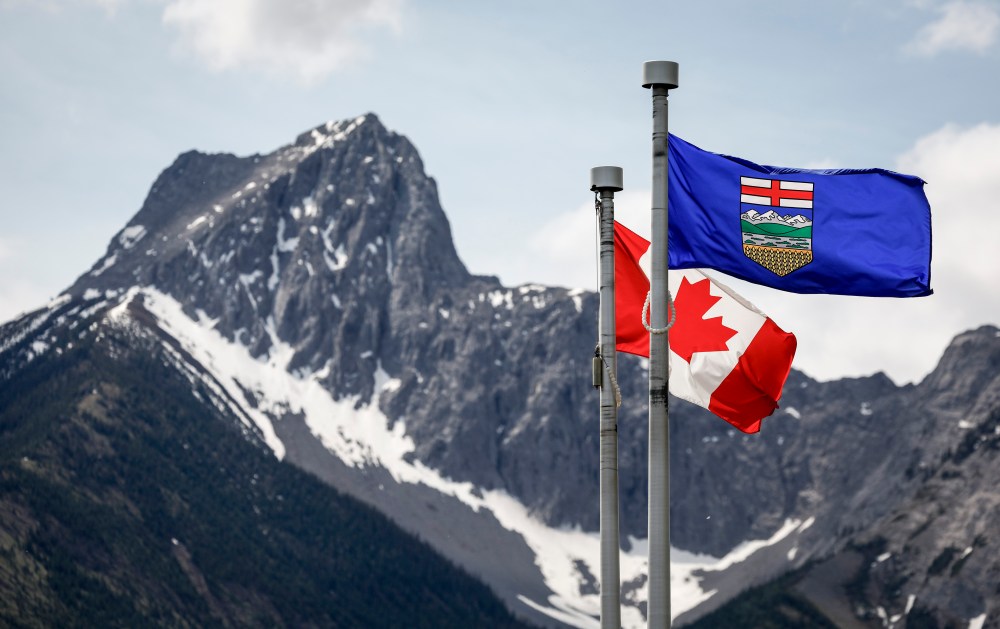
“Significant secession movements starts with nationhood, the idea that members of this movement don’t consider themselves to be members of the nation that is embodied by the state,” said Andre Lecours, a University of Ottawa political science professor.
“Typically, you have an objective cultural marker behind it, religion, language, belief in a different genealogy or a previous independent existence, like Scotland.”
He said these characteristics are nonexistent in Alberta’s separatists, who Premier Danielle Smith has said have a decade-long list of resentments with the federal government over grievances over energy and environmental policies.
Whether these beefs are worth quitting Canada for will be tested in an Oct. 19 referendum, when Albertans will be asked whether they want to remain in Canada or start the process to hold a binding referendum on separation.
“It’s time to have a vote, understand the will of Albertans on this subject, and move on,” Smith announced in an televised address last week.
Lecours said the referendum in Alberta is puzzling.
“There are no significant secessionist movements that hinge only on fiscal and economic grievances,” he said.
“Alberta separatism is an outlier.”
Duane Bratt, a political science professor at Mount Royal University, said Alberta separatists have existed since the province joined Confederation in 1905. But they’ve never been this close to a referendum.
They have generally identified themselves as hard-working people who want little government interference, Bratt said. Their grievances have largely focused on Alberta’s natural resources and western alienation.
Some issues have evolved since, but key economic grievances have remained, he said.
“It’s a moving target.”
The last time Alberta’s separatism movement saw a significant boom was in the 1980s, Bratt said.
Separatists were fed up with former prime minister Pierre Elliott Trudeau’s Liberal government and his National Energy Program, which among other things increased taxes on Alberta’s oil revenue. The program was eventually dismantled.
Throughout Alberta’s history, Bratt said, every time the separatist movement gained momentum, the province’s premiers pushed back against them and the federal government.
The difference today is the premier, Bratt said. “Smith has enabled (separatists).”
Lecours agrees.
“(Smith) negotiates with them, changes legislation,” he said, referring to legislative changes in the last year that make it easier for separatists to put together citizen-led petitions to trigger a referendum.
He said it’s also rare for a leader who didn’t run on a separation platform to charge toward a referendum on one.
Significant referendums recently held elsewhere have been led by political parties dedicated to independence, Lecours said.
In Scotland, for example, the Scottish National Party leads the movement.
“When they were in a position to hold a referendum on independence, they did. They required a consent (from) United Kingdom to do that. In 2014, they had one, which produced 45 per cent in favour of independence.”
Economic grievances have increased separatist sentiments in history, he said, but they were also under extreme circumstances.
Western Australia was a distinct British colony before it joined Australia more than a 100 years ago.
“The history of Western Australia within Australia was only like 32 years before they held a referendum in 1933,” Lecours said.
Lecours said that while it’s unclear how strong Western Australia’s nationhood was, there are indications that the Great Depression exacerbated separatist grievances.
The referendum asked whether Western Australia wanted to return to being a self-governing colony of the British Empire.
About 66 per cent voted in favour of independence, Lecours said. However, the process was too complicated and separatists agreed to enter an agreement with the Australian government that saw them receive grants.
“They created the Commonwealth Grants Commission, which is a fiscal body that administers what we would call today the equalization program,” he said.
“The literature says that was really important. Then there was the outbreak of (Second World War), and there were bigger fish to fry.”
Andrew McDougall, a lawyer and professor in the University of Toronto’s political science department, said the U.S. Civil War over slavery in the 1860s was another significant secession movement.
“But they had a war that settled that point.”
McDougall said in Canada the most known secession movement has been in Quebec over a strong sense of nationhood among French Canadians.
“The Quebec nationalist movement began to question the place of Quebec in Canada, whether or not Canada was fair to the French Canadians,” he said.
“In Alberta, regional grievances are playing out rather than an underlying nationalism you see in Quebec or another place.”

Lecours said Alberta’s population, much like the rest of Canada, was largely formed by Indigenous Peoples and American and European settlers.
He said surveys have shown a majority of Albertans identify as Canadian first.
“It’s unseen, unheard of, that people who don’t identify with a nation different from the country they live in would want independence,” Lecours said.
“Alberta is just fascinating.”
This report by The Canadian Press was first published May 27, 2026.