No road map for dementia’s daunting journey With neurodegenerative disorders, compassion is vital — for those afflicted, their loved ones and caregivers
Read this article for free:
or
Already have an account? Log in here »
To continue reading, please subscribe:

Digital Subscription
One year of digital access for only $205*
- Enjoy unlimited reading on winnipegfreepress.com
- Read the E-Edition, our digital replica newspaper
- Access News Break, our award-winning app
- Play interactive puzzles
*First annual payment billed as $205.00 + GST for one year. This annual subscription will automatically renew at $233.00 + GST every 52 weeks (10% off the regular annual price of $259.35). Offer available to new and qualified returning subscribers only. Cancel any time.
To continue reading, please subscribe:
Add Free Press access to your Brandon Sun subscription for only an additional
$1 for the first 4 weeks*
- Enjoy unlimited reading on winnipegfreepress.com
- Read the E-Edition, our digital replica newspaper
- Access News Break, our award-winning app
- Play interactive puzzles
*Your next Brandon Sun subscription payment will increase by $1.00 and you will be charged $17.95 plus GST for four weeks. After four weeks, your payment will increase to $24.95 plus GST every four weeks.
Read unlimited articles for free today:
or
Already have an account? Log in here »
SELKIRK — Peaceful, meditative music plays in Carol Radway’s room, which her husband Paul Chorney says helps her remain calm.
A giant fluffy blanket, which Radway picked up at a thrift store years ago, serves as a wall-hanging. The room is artfully decorated with some of Radway’s keepsakes, including a collection of earthy and metaphysical jewelry pieces.
The window overlooks other parts of the institutional building. There’s a single bed, a nightstand and a little table; above it, an assortment of family photos from years past and a few more recent depictions of happier days. Radway’s illuminating smile is prominent in all of them.
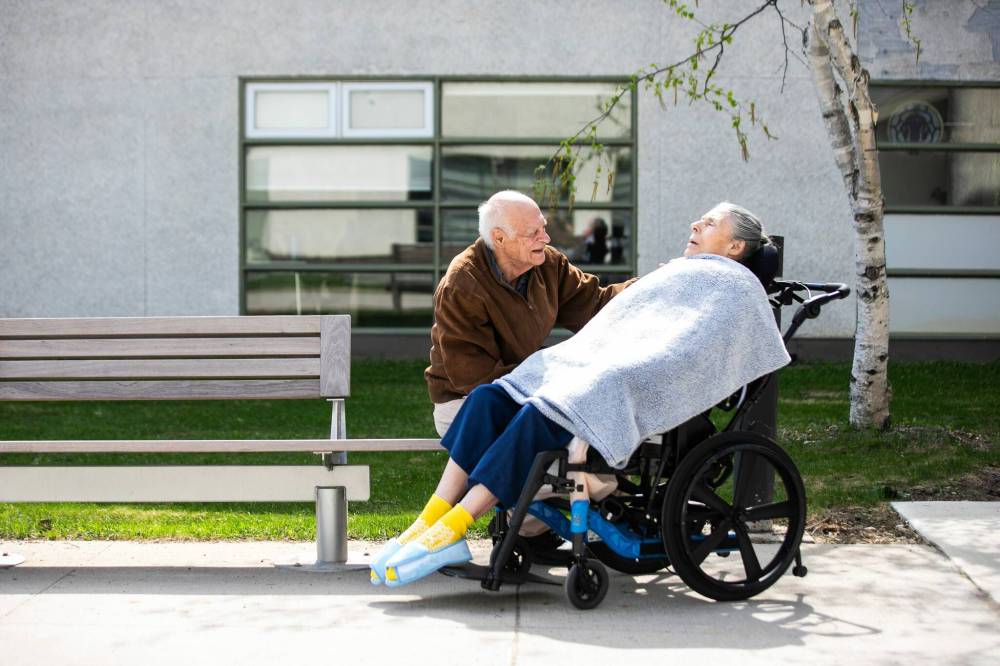
There’s a lone chair for a visitor. When not in bed, Radway spends most of her time in a wheelchair. She broke her femur a few months ago and hasn’t moved much since.
Sometimes Radway screams in her bed. Chorney strokes her forehead, speaks in a quiet voice, and gives her a kiss, hoping to soothe her. At other times, she simply stares up at the ceiling.
Chorney brings Radway water, gently raising it to her mouth, encouraging her to drink. A few minutes later, he offers some apple sauce, which she accepts.
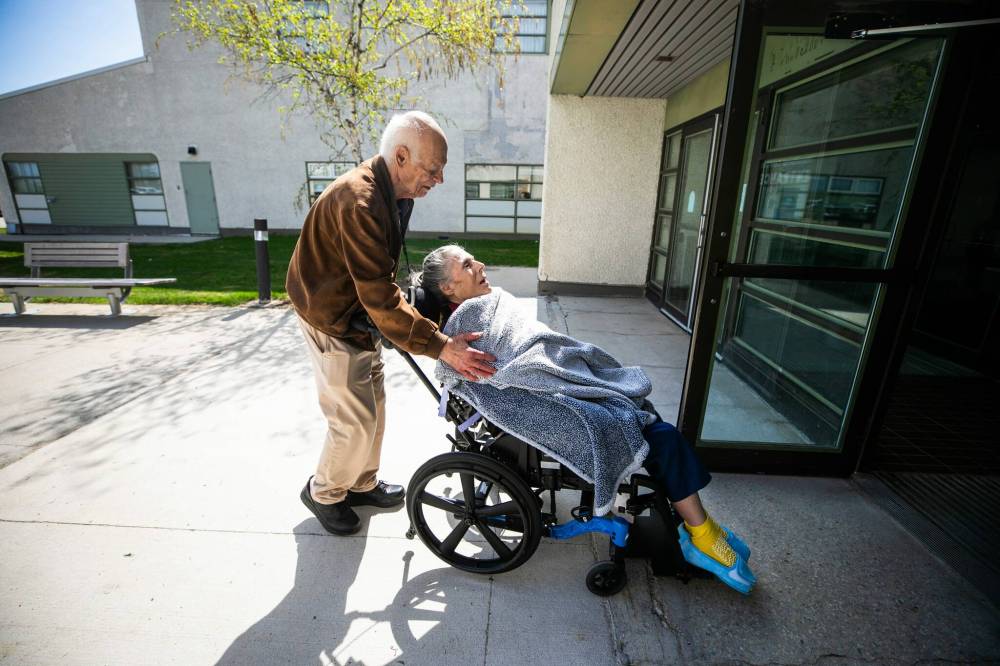
Radway has a youthful and radiant complexion, long silver hair and her eyes sparkle as she gazes intently at her husband with every spoonful. She is non-verbal now, but her spirit shines through in her eyes. Her sense of humour remains. There are big smiles and even bigger laughs sometimes. She weeps during meaningful reunions with loved ones.
Nearly every day, Chorney makes the 30-minute drive from Winnipeg Beach to Selkirk to be by his wife’s side. Their bond remains unbroken.
Radway was diagnosed with Alzheimer’s disease in 2014. After 11 years as her primary caregiver, Chorney came to the grim realization he could no longer care for her at their Winnipeg Beach home, not without endangering his own health. He knew even with home-care support from the Interlake East Regional Health Authority that it was time to seek help.
Chorney had been advised, unofficially, by a home-care worker that the fastest way to get his wife into a personal care home was through the hospital system. So, on July 29, 2025, he took his longtime partner to the Emergency Department at Selkirk Regional Health Centre, where he told the intake staff that he had reached a breaking point.
After a six-hour wait, Radway was admitted.
“Leaving her there alone that night was incredibly painful for me and for her,” Chorney recalled. “We had been together since 1988, living together as partners, and then more formally as a married couple since 2011.”
Radway remained at the hospital until January, when she was transferred to the Transitional Care Unit at the old Selkirk Hospital, where she awaits admission to a personal care home in Gimli.
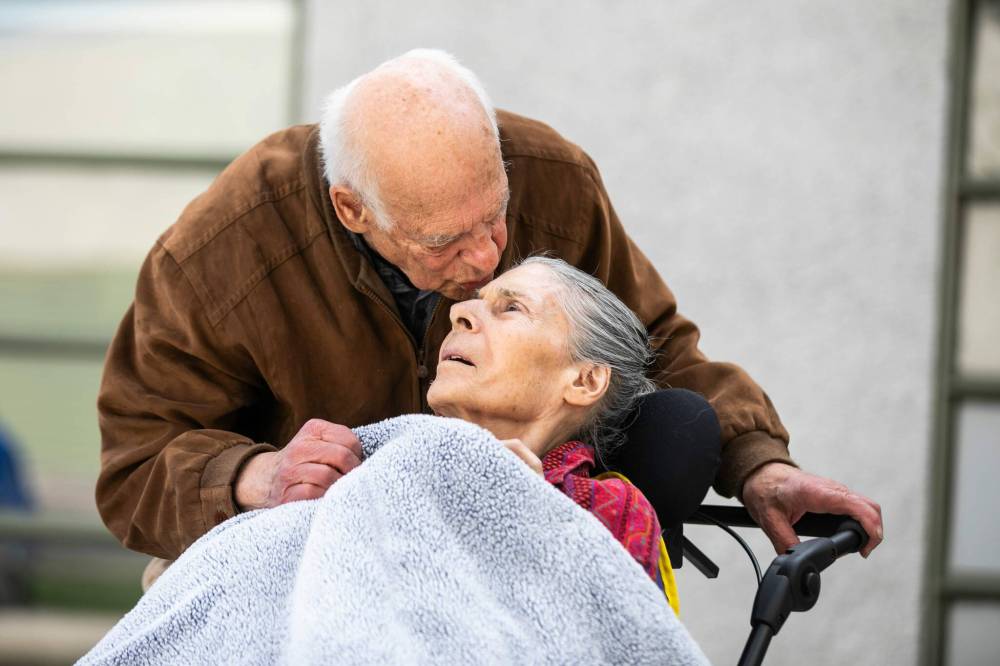
There’s no manual for how to cope with the complexities of living with Alzheimer’s and other forms of dementia, whether it happens to us or to someone we love. No easy 10-step program. No cure. However, despite caregivers often feeling alone and abandoned, more personal stories are being shared to help others in similar situations.
Actor Bruce Willis lives with frontotemporal dementia and his wife, Emma Heming Willis, has written a book about the experience. The Unexpected Journey: Finding Strength, Hope, and Yourself on the Caregiving Path is the resource she wishes she’d been given on the day of her husband’s diagnosis — a supportive guide to navigating the complicated, heartbreaking and transformative experience of caregiving for your loved one.
Numerous films have also explored those themes — including The Father, The Artist’s Wife, Still Alice, The Leisure Seeker, Away From Her and The Notebook — but Hollywood can’t fully convey the excruciating reality ordinary people face while navigating day-to-day life with someone who has dementia.
Chorney, 82, is a longtime community organizer and development worker. Radway, 79, worked as a librarian and spiritual counsellor. She had two children and he had one when they began their life together, a love story with decades of ups and downs.
“She was a social person,” Chorney said. “She used to love long conversations with people. She was definitely tuned into other realms. She was a quiet sage.”
Chorney was part of the group of people who opened the iconic Harvest Collective — now Organic Planet — on Westminster Avenue in Winnipeg’s Wolseley neighbourhood. Radway joined in their efforts along the way. She loved her creative pursuits: photography, music, collecting stones.
“It got to a point I knew something was going on.”
Over the years the couple travelled to meaningful destinations: a wisdom-of-the-elders workshop in Mexico; Findhorn, a renowned spiritual community in Scotland; to see family in Toronto; and for holidays in Arizona and Puerto Vallarta. Chorney and Radway each had their own social circles and full lives, both independently and together.
“It got to a point I knew something was going on,” he said. “She kept denying it, saying, ‘My memory is normal for someone my age.’ I think she had a sense that something was wrong.”
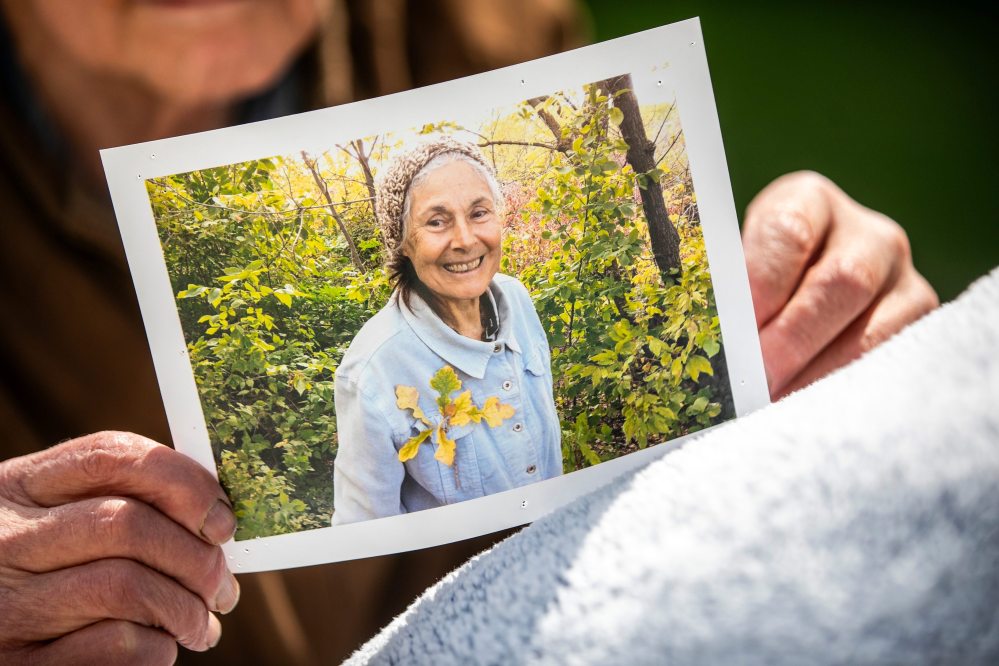
Eventually, Radway agreed to see their family doctor, who referred her to a neurologist and then to the memory clinic at St. Boniface Hospital, which gave the official diagnosis. Radway, whose own mother had lived with Alzheimer’s, was 67 at the time.
His wife’s initial response — “what can I do about it?” — would eventually be overshadowed by the challenges ahead.
“I didn’t understand the implications,” said Chorney. “It was: ‘Get your stuff in order; get a power of attorney.’ I immediately started looking at other alternatives,” referring to the couple’s preference for more natural treatment options.
The first few years were not too difficult, he said, but that changed significantly in the final three years Radway was still at home.
“In the middle of the night, she would get up and faint. She fainted four times during the last while. I called the paramedics twice. I was always hypervigilant,” he said, noting he had become sleep-deprived.
“I shut down on all other things, then asked myself, ‘Do I want to die doing this?'”
Radway then began to wander and the situation became harder to manage. She had lost the ability to dress herself and go to the bathroom on her own. Chorney had a home-care worker coming in for two-and-a-half afternoons during the week, as well as staff in the mornings to help Radway dress and wash. He kept hoping for more help, but it was never enough.
Family members had advised him to find alternate care a year earlier, but Chorney had resisted. Instead, he stopped doing everything else and made it his mission to be his wife’s primary caregiver around the clock. It became too much.
“I shut down on all other things, then asked myself, ‘Do I want to die doing this?’” Chorney said. “I remember taking her to emergency (in Selkirk), then up to the room. I realized I was never taking her home again.
“On admission, she was a woman who had lost many abilities — impairment in speech and generally the ability to care for herself — but she retained her love of nature, her sense of humour and her welcoming smile to all.”
According to Chorney, Radway, who had until that point lived mostly free of medication — aside from occasional Tylenol and, more recently, thyroid medication — received at least four different antipsychotic medications during her time in the hospital.
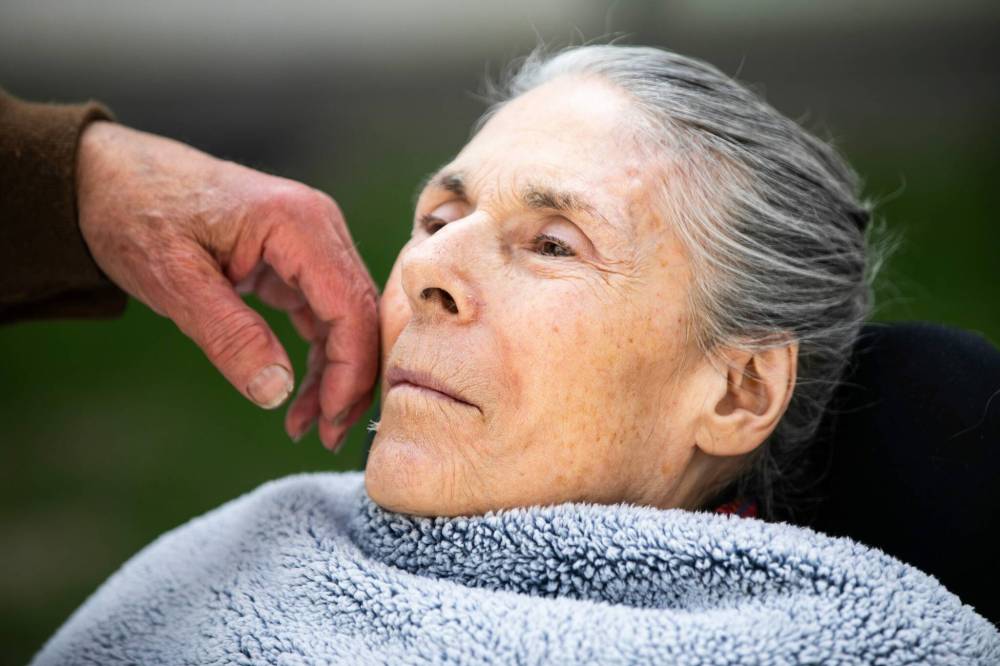
It’s a decision Chorney now realizes may have contributed to Radway’s decline.
The Alzheimer Society of Canada has warned older adults are at an increased risk of adverse events — falls, diabetes, heart disease, and higher rates of hospital admission and death — from the use of antipsychotic medications and that they should be prescribed with extreme caution.
“The Alzheimer Society of Canada recommends that antipsychotics only be used as a last resort to treat behavioural and psychological symptoms of dementia, especially in older adults,” notes a 2017 position statement.
For Radway, Chorney said, the damage had been done.
“In Carol’s case, the drugs have destroyed her,” he said. “She became more of the stereotypical vacant stare or just slept and wasn’t responsive at all.
“Most people are not aware of what their rights are or what can happen if they’re left alone in the hospital. It’s the system. It’s a deeper thing about how we look at health and life.”
Chorney wishes he’d asked more questions early on and told medical staff that he didn’t want his wife to be given antipsychotic medications.
“I was never sort of given a sit-down with the doctor — ‘This is what we want to do and here are the side effects of that.’
“In Carol’s case, the drugs have destroyed her.”
“She liked being in hospital for a couple of weeks, and then she would make her feelings known. There was no time to sit down and talk about trying meds. She was on them from the end of August until she was transferred to the Transition Unit,” he said, adding that the medications were still used as a management strategy when Radway was agitated.
Radway is now completely off antipsychotics, with her chart clearly stating they should not be administered.
Nearly 20,000 Manitobans have Alzheimer’s disease or another form of dementia, according to the province. By 2038, the number is expected to surpass 34,000, representing 2.5 per cent of Manitoba’s population. There were more than 4,500 new cases last year; by 2038, this number is anticipated to rise to more than 9,350 annually.
The increasing prevalence is expected to put further strain on caregivers and government resources, amid an already overburdened health-care system. As a result, worry and dread among families will only amplify.
“That fear is justified given the numbers — the numbers are skyrocketing,” said Samantha Holland, co-ordinator of the Alzheimer Society for the eastern Interlake region.
“This rise shouldn’t be a surprise, with age being the biggest risk factor for dementia. Our age, not enough beds in hospital or in long-term care, (nor) appropriate training to support caregivers formally or informally… we are burning out. It is scary and we need to be more prepared. A dementia-friendly approach is required.”
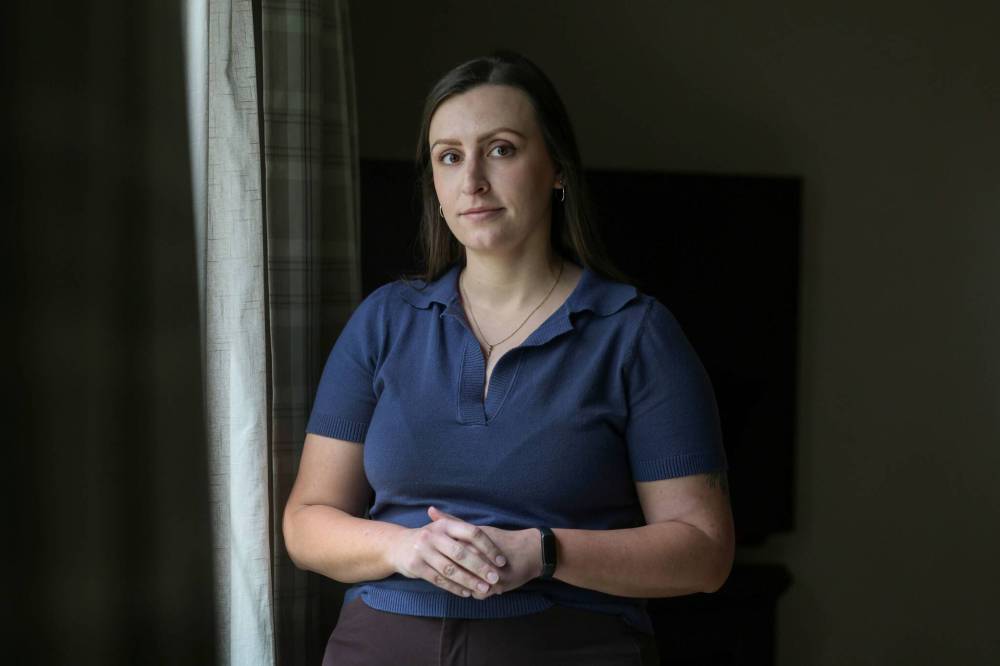
The Alzheimer Society of Manitoba has existed for 40 years and Holland wants people to know the organization is there to provide individualized support.
“Advocacy is so layered — what your rights are, who is the best person to talk to, who to follow up with — all of those decisions can be quite complex,” said Holland. “We give you the tools to feel empowered and have those conversations.
“The ideal system is one that supports the right to individual choice in living with the disease how you want (to), and how that quality of life looks like — living at home with enough supports to help you do that. Some people are OK with long-term care and want that for their future.”
Among the services the society provides, is an eight-week support-group program that helps care partners work through the feelings of loss and grief experienced when someone close is living with dementia.
Holland met Chorney and Radway in 2018 through the Minds in Motion program, which the couple attended in Gimli and then later in Selkirk. The low-impact fitness classes, which are offered throughout the province, provide an outlet for physical activity and a time to socialize.
“Paul and Carol were referred through First Link (a program run by the Alzheimer Society), where a health-care professional connects individuals and families with our services,” said Holland. “They attended season after season. I could see the changes, time after time, both in Carol and in Paul: the levels of exhaustion, the effort in keeping Carol at home.
“That fear is justified given the numbers; the numbers are skyrocketing.”
“I think that’s what’s special about Paul and Carol. It’s their lifestyle and history and value system, and that’s what really guided their life at home. Carol wasn’t on any medication, and it was to their benefit in slowing down the progression, living at home. In health-care settings, there’s a lack of knowledge about a person’s history, lack of time to take a look at other medications.”
Holland says the health-care system can feel overwhelming while in the thick of caregiving.
“There are decisions you might not understand in the moment — those decisions impact care. It’s unclear where to go next. We want our clients to advocate for individual needs and care. We want care partners to know that we can work alongside them.”
Dr. Mandana Modirrousta, an associate professor of psychiatry at the University of Manitoba, has years of clinical experience assessing patients with neurocognitive disorders, particularly individuals with early-onset dementia. She believes proactive education about dementia is essential.
“Individuals and families benefit from learning what dementia is, how it can affect a person’s life emotionally, cognitively, behaviourally and interpersonally, and what early warning signs may look like,” she said.
“Earlier recognition can lead to earlier diagnosis, and earlier diagnosis can help patients and families access the currently limited resources available for dementia assessment, care and support.”

She said there are several reliable sources, including the Alzheimer Society, that provide helpful information about the early signs of dementia, family education and caregiver support.
Moving forward, Modirrousta says dementia care should be viewed as a lifelong journey rather than a one-time diagnosis.
Patients and families need access to a multidisciplinary team, including psychiatrists, neurologists, family physicians, social workers, occupational therapists, nurses and other dementia-trained professionals, she said. Ideally, these services would be co-ordinated through a dementia care centre, or clinic, that can follow patients and families over time.
Unfortunately, a lot of community physicians, including specialists, do not have access to multidisciplinary teams, she said.
“Currently, dementia care in our health-care system is rather disjointed. Many patients wait a long time before receiving a diagnosis, often two to three years, and many services do not provide ongoing followup over the course of the illness, which could be years to decades,” she said.
“Ideally, there should be public funding for these services. Without this support, many physicians are unable to adequately manage the complex care needs of patients living with dementia and their care partners. This leaves families trying to navigate a complicated system at a time when they are already under significant emotional and practical strain.”
To ease some of that strain, Manitoba seniors’ advocate Leigh Anne Caron encourages people to be actively involved in their family member’s dementia care, including being their advocate.
“You’re the expert in your loved one’s care. You are in the best place to know those needs,” Caron said. “Advocating for them is really important.”
Unfortunately, many generations have been taught to not question health-care decisions, she said.
“It’s your right to ask those questions,” Caron said. “More often than not, health-care professionals are willing to answer those questions.”
The seniors’ advocate said more attention needs to be directed to issues surrounding dementia and Alzheimer’s. Surprisingly, she said, there is no specialized training for home-care workers.
Meanwhile, Health Minister Uzoma Asagwara agreed more work needs to be done in response to the increasing number of people living with dementia, but the provincial government is taking steps to strengthen care and community supports.
Those steps include a recent $200,000 investment to expand professional development for staff working with people living with dementia, improving co-ordination between programs, enhancing oversight and documentation practices, and improving care planning and supports for families, along with continued funding for the Alzheimer Society of Manitoba.
“These changes are now embedded into ongoing home-care and long-term care operations and community and health care that support older adults,”Asagwara said, with the goal that “Manitobans living with dementia and their families can access compassionate, appropriate care and support closer to home.”
Chorney looks forward to the day when the health-care system will be better resourced and equipped to respond to his wife and other dementia patients in a person-centred way.
“I just knew that I can’t do this any longer. It might have killed me… the caregiver really needs to look after herself/himself.”
He advises everyone to learn as much as they can, connect with the Alzheimer Society, ask for clarity when uncertain, understand patients’ and caregivers’ rights, and never be afraid to speak up and advocate for their loved ones. He has a vision of how things could be better.
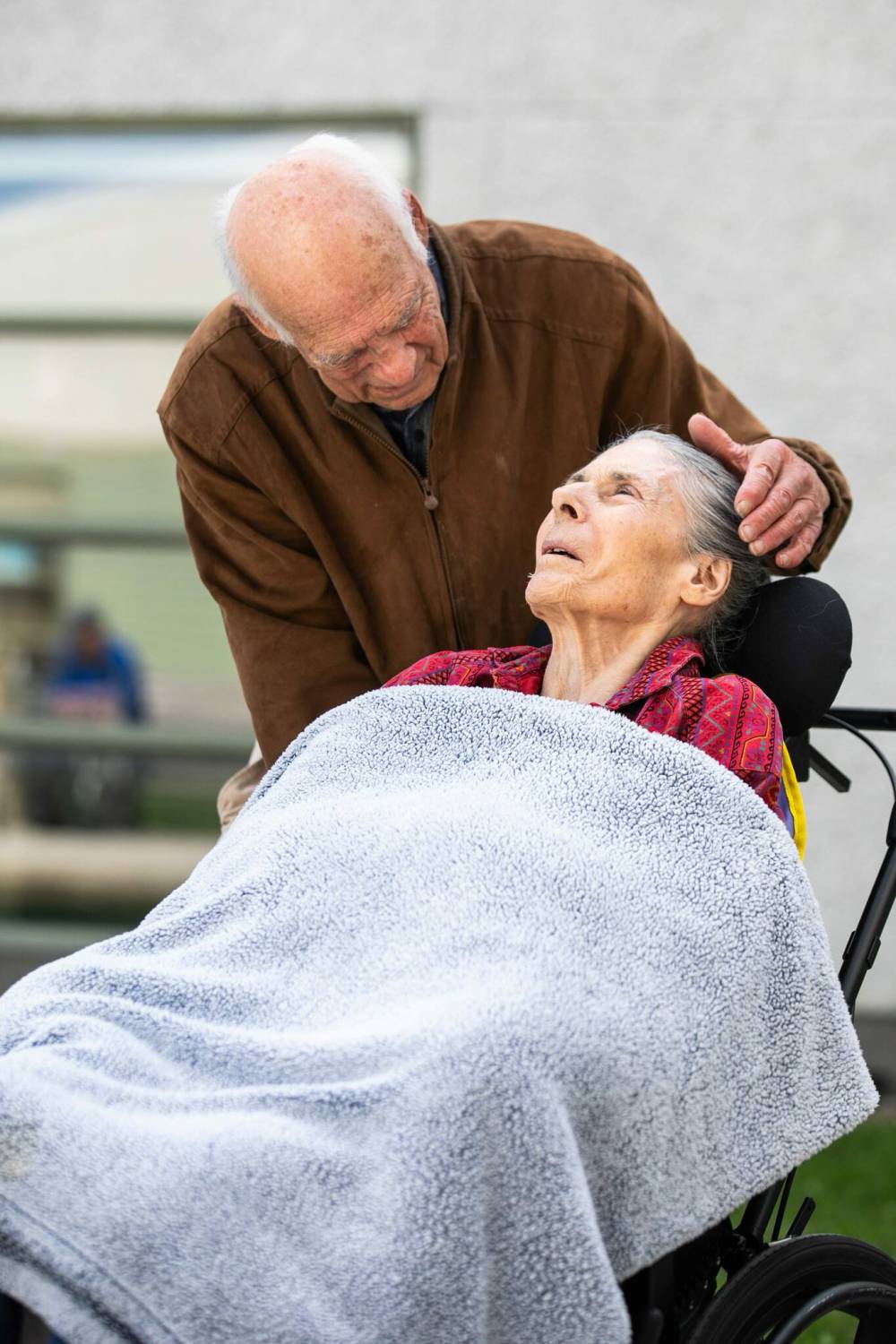
“The ideal would be for Carol to be in a wonderful place, a personal care home where she gets a lot of attention, the ability to see other people — close enough that I can visit; a place that doesn’t use heavy-duty medication.”
For now, Chorney is satisfied with Radway’s temporary residence but hopes their story can guide others.
“I was naïve — I didn’t really know. I just knew that I can’t do this any longer. It might have killed me… the caregiver really needs to look after herself/himself. It’s very difficult and can be harmful,” he said about taking on that primary role.
Looking back at the journey with his wife, Chorney says he’s changed. “I’ve become much more loving, more heartful emotionally.”
Of primary importance for Chorney is that the health-care system and anyone connected to people with Alzheimer’s be reminded that those living with dementia deserve the same respect, consideration and compassion that is given to everyone else.
“Carol is a person. Anyone with Alzheimer’s is still a person.”
fpcity@freepress.mb.ca
The Alzheimer Society of Manitoba’s annual Walk for Alzheimer’s will be held May 30 with events in Winnipeg and throughout the province. The Winnipeg walk takes place at Assiniboine Park, beginning at 10 a.m.
Related Articles
Recent cases of missing Manitoba seniors revive calls for silver alert notification system