After refugee aid cuts, faith groups help Afghan women connect through sewing
Advertisement
Read this article for free:
or
Already have an account? Log in here »
To continue reading, please subscribe:

Digital Subscription
One year of digital access for only $205*
- Enjoy unlimited reading on winnipegfreepress.com
- Read the E-Edition, our digital replica newspaper
- Access News Break, our award-winning app
- Play interactive puzzles
*First annual payment billed as $205.00 + GST for one year. This annual subscription will automatically renew at $233.00 + GST every 52 weeks (10% off the regular annual price of $259.35). Offer available to new and qualified returning subscribers only. Cancel any time.
To continue reading, please subscribe:
Add Free Press access to your Brandon Sun subscription for only an additional
$1 for the first 4 weeks*
- Enjoy unlimited reading on winnipegfreepress.com
- Read the E-Edition, our digital replica newspaper
- Access News Break, our award-winning app
- Play interactive puzzles
*Your next Brandon Sun subscription payment will increase by $1.00 and you will be charged $17.95 plus GST for four weeks. After four weeks, your payment will increase to $24.95 plus GST every four weeks.
Read unlimited articles for free today:
or
Already have an account? Log in here »
DURHAM, N.C. (RNS) — The Refugee Community Partnership, a mutual aid organization that supports immigrants, used to offer a sewing circle for Afghan women whose families had recently been resettled in the Triangle region of North Carolina.
But the Trump administration’s sweeping cuts to refugee admissions as well as refugee-support organizations meant the partnership no longer had the resources or staff to run the program, which included transportation for the women, many of whom do not drive, and daycare for their young kids.
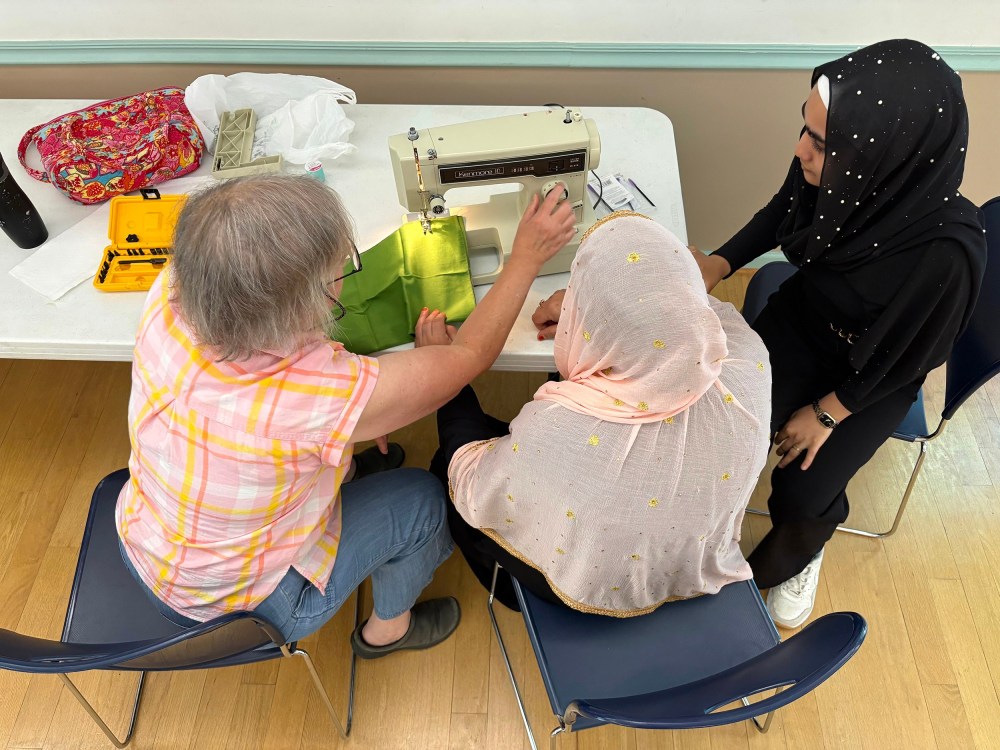
Now, two Durham-based congregations have stepped in to fill the gap. The Eno River Unitarian Universalist Fellowship and Judea Reform Congregation raised money and sought volunteers to offer these new immigrants a place to improve their sewing skills, meet fellow Afghans and pick up some English skills. Volunteers from the congregations drove the women from their homes to the UU fellowship, where the class has been meeting; arranged for an Afghan class instructor and a translator; and looked after the children. The two congregations also arranged for donations of at least a dozen new and used sewing machines.
___
This content is written and produced by Religion News Service and distributed by The Associated Press. RNS and AP partner on some religion news content. RNS is solely responsible for this story.
___
At a time when the Trump administration is engaged in an agenda of detentions and deportations of immigrants — even legal ones — religious congregations are picking up the slack and providing resources to help newcomers and compensate for lack of government support.
“One of the big goals of this program, equal to, if not larger than learning to sew, is for the women to have time with other women,” said Audrey Green, the class coordinator and a member of the Unitarian Universalist congregation. “They live such isolated lives, and there’s such hard stories they tell that they’ve experienced. Nobody else can really understand.”
Last week, for the final class of “Stitching for Hope,” nine women brought not only their sewing machines, but a traditional dish to celebrate and thank the volunteers who put the class together.
For the past seven weeks, these women — some skilled with years of experience and others beginners — sewed headscarves, tunics, dresses and other traditional garments. At the beginning of the final class, they took turns at folding tables in each corner of the multipurpose room with four volunteer sewing machine technicians to help them clean, repair and troubleshoot problems with their machines so they could keep up with the craft afterward.
This week, the Trump administration proposed raising its record-low refugee admissions cap from 7,500 to 17,500, with the additional openings reserved only for white Afrikaners from South Africa. Meanwhile, the administration is reportedly considering a plan to relocate over 1,100 Afghan allies who aided U.S. forces to Congo. The U.S. evacuated them to a camp in Qatar a year ago over safety concerns.
And last week, the administration announced that foreigners in the U.S. who want a green card, or permanent residency, will need to leave and apply in their home country. For an Afghan immigrant, that would be impossible. Not only is it not safe for them to go back, there is no U.S. Embassy in Afghanistan where they could apply. It has been closed since 2021.
But across the U.S. and even in the more conservative South, many religious congregations have been continuing the work of helping immigrants.
“As institutions are failing us, as the government is attacking immigrant and refugee folks, this community is using the tools that we have to take care of each other,” said Ash Nuckols, development and communications manager for the Refugee Community Partnership.
The partnership is still the fiscal sponsor of the sewing class and provided the instructor and a translator, though all the costs and the venue were provided by the congregations.
About 200,000 Afghans were admitted to the U.S. since President Joe Biden ordered the withdrawal from Afghanistan in 2021. Of those, 4,369 were resettled in North Carolina, according to the North Carolina State Refugee Office.
Afghan women have had a more difficult time adjusting to life in the U.S. Many have little education and don’t speak English, which they are now studying so they can pass written driving tests. Without the ability to drive, many have not been able to find jobs, organizers said.
The Refugee Community Partnership has worked with the Afghan community in three North Carolina counties, providing women’s support groups, accompanying refugees to medical appointments, mediating with landlords and drafting resumes. Last year, it began talking to religious congregations in the hopes they could pick up the sewing circle.
The two congregations have helped resettle refugee families alongside refugee agencies and have ministries devoted to immigrant justice.
Green, the Unitarian Universalist who stepped forward to organize the sewing circle, had plenty of experience in community organizing — and sewing projects. In the early days of the COVID-19 pandemic, she brought together a team of sewers to create 25,000 cloth masks for the larger Durham community.
In addition to volunteers from her own congregation, Green reached out to Judea Reform, a synagogue about three miles away. The synagogue has helped resettle 13 refugee families over the past five years and its refugee advocates were happy to help.
Together, they fielded volunteers to pick up the women and their kids and drive them to the sewing class. They also arranged for volunteers to care for the children while the women were in class. Members from both congregations donated about a dozen sewing machines.

Green is now planning another sewing circle in the fall. She wants to double the number of participants, and she has other big plans.
“Maybe a little cottage industry could come out of this program, where the women could find markets to sell things,” she said. “Some of them are exceptional seamstresses, and there aren’t a lot of shops where you can go buy the tunics and the covers and the headdresses that they wear.”
Several Afghan women, speaking through an interpreter, said they loved the program and would continue. They lingered over the potluck meal they assembled of chicken, rice and baklava for dessert, and said they looked forward to more.
So did the volunteers. Jane Weinberger, a volunteer from Judea Reform Congregation who has helped resettle an Afghan family in the past, said she will gladly sign up to help with another sewing circle in the fall.
“It was delightful meeting the women and their children, and joyful to see the women engaging with each other because I know what an isolated life many of them lead — especially those who don’t speak English, don’t drive or have jobs outside the home,” Weinberger said. “This is really a lifeline for many.”
The Free Press acknowledges the financial support it receives from members of the city’s faith community, which makes our coverage of religion possible.