WHO chief lands in Congo, saying Ebola outbreak ‘can be stopped’
Advertisement
Read this article for free:
or
Already have an account? Log in here »
To continue reading, please subscribe:

Digital Subscription
One year of digital access for only $205*
- Enjoy unlimited reading on winnipegfreepress.com
- Read the E-Edition, our digital replica newspaper
- Access News Break, our award-winning app
- Play interactive puzzles
*First annual payment billed as $205.00 + GST for one year. This annual subscription will automatically renew at $233.00 + GST every 52 weeks (10% off the regular annual price of $259.35). Offer available to new and qualified returning subscribers only. Cancel any time.
To continue reading, please subscribe:
Add Free Press access to your Brandon Sun subscription for only an additional
$1 for the first 4 weeks*
- Enjoy unlimited reading on winnipegfreepress.com
- Read the E-Edition, our digital replica newspaper
- Access News Break, our award-winning app
- Play interactive puzzles
*Your next Brandon Sun subscription payment will increase by $1.00 and you will be charged $17.95 plus GST for four weeks. After four weeks, your payment will increase to $24.95 plus GST every four weeks.
Read unlimited articles for free today:
or
Already have an account? Log in here »
KINSHASA, Congo (AP) — The head of the World Health Organization has arrived in Congo’s capital, Kinshasa, to support efforts against an outbreak of a rare type of Ebola virus, where he called on the international health body to work with the local community to stop the spread.
The WHO said Friday authorities have reported 125 confirmed cases in Congo, including 17 confirmed deaths. Additionally, there are 906 suspected cases and 223 suspected deaths.
Neighboring Uganda has confirmed nine cases and one death, the Ugandan ministry of health said Friday.
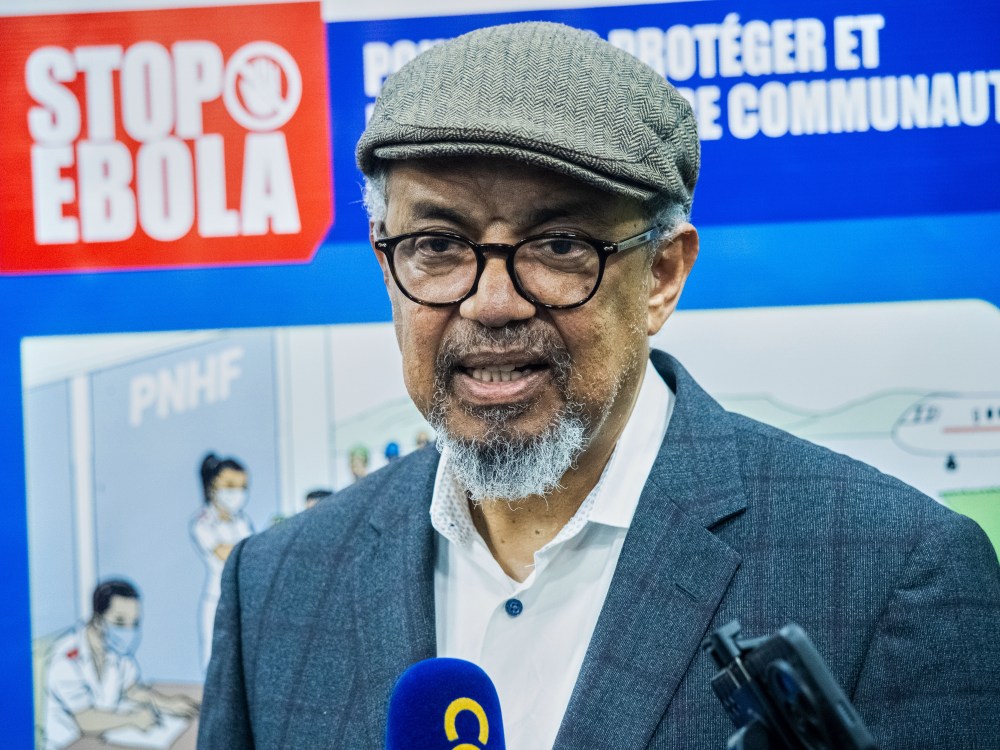
“To come here is to really show to the community that they’re not alone,” WHO Director-General Tedros Adhanom Ghebreyesus told reporters at the airport in Kinshasa late Thursday.
“Pushing orders from my comfortable office in Geneva is easy, but I’m asking my colleagues to work with the community and I am asking communities to protect themselves,” he added.
The outbreak “can be stopped,” he said, but is “very complex.”
Challenges like the high number of people displaced by armed conflict in the region and food insecurity are complicating efforts, Tedros said. Aid supplies reached the heart of the outbreak this week but medical personnel continue to struggle with a lack of equipment, a distrustful population and armed groups in the volatile region.
Containment has been particularly difficult because the disease likely spread for weeks before it was first identified in mid-May.
Outbreak spreading faster than response
The outbreak continues to spread faster than the response, despite health facilities becoming more organized and more equipment arriving.
The Bundibugyo virus, the current kind of Ebola, has no approved treatment or vaccine.
Anaïs Legand, a researcher in the WHO emergencies program, cited a patient discharged Wednesday as a “positive development” since it is the only documented recovery of a confirmed Ebola patient during the current outbreak.
Legand said at a U.N. briefing in Geneva Friday that five other infected people were also likely to recover.
The average fatality rate of Bundibugyo virus is around 30 to 50%, she said.
Medical aid donated by the European Union arrived in Ituri, the heart of Congo’s Ebola outbreak, on Thursday, with more shipments expected over the next eight days. The U.S. announced $80 million in additional aid on the same day, bringing its total commitment to more than $112 million.
At Rwampara Hospital, where a treatment center has been established, the response looks far more organized than in previous days, with more staff deployed, stronger prevention measures and teams in protective gear visible across units — though patients continue to arrive around the clock, according to an Associated Press reporter in Bunia, the provincial capital.
The same progress was noted at Bunia General Hospital, where new medical kits, support personnel and emergency funding appear to be reinvigorating operations.
David Munkley, the eastern Congo director of World Vision, said more equipment and supplies are still needed.
“We know what is required in terms of personal protective equipment, in terms of supporting communities and ensuring proper sanitation hygiene practices,” Munkley told the AP. “So the moment of truth is, are we going to fund it or not?”
Congo’s Health Minister Samuel Roger Kamba told reporters Thursday night they are exploring more drugs “that can help save even more lives, because … this disease initially presents just like any other infectious disease we’re familiar with: dizziness, headache, fever, vomiting and diarrhea.”
The continent’s top public health body will “ensure that we have a vaccine and a treatment for Bundibugyo” by the end of the year, Africa CDC chief Jean Kaseya said Thursday.
Distrust, travel bans could complicate response
Dangers faced by health workers have been heightened by anger among residents over the stringent medical protocols for handling the victims’ bodies, which clash with local burial rites. Residents have launched at least three attacks against health centers.
Attacks in Ituri by the Allied Democratic Force, a rebel group allied with the Islamic State group, and a coalition of ethnic militias have also hindered the response.
The illness also has been reported in the Congolese provinces of North Kivu and South Kivu, south of Ituri, where the Rwanda-backed M23 rebel group controls many key cities, including Goma and Bukavu. The rebels have reported two cases.
After Uganda closed its border with Congo, the WHO chief said Thursday he discourages countries from imposing travel bans. “There are ways to manage workers and to manage cases without having a strong, restricted travel ban,” Tedros said.
The Trump administration last week announced a temporary ban on the entry of people without U.S. passports who have visited Congo, Uganda or South Sudan in the past 21 days. A Kenyan court Friday suspended a U.S. plan to house Ebola-exposed Americans at a facility in Kenya rather than flying them home, following backlash from medical workers and activists.

More than 230 U.S. Centers for Disease Control and Prevention staff are working on the Ebola response, including screeners at four U.S. airports and personnel deployed to Congo and Uganda, the agency said Friday.
But current and former staffers say many have unaddressed safety concerns, particularly over whether the Trump administration would repatriate infected personnel.
“The U.S. government refusing to repatriate first responders who may contract Ebola would be an abandonment of our government’s duty,” said the National Public Health Coalition, a group of current and former CDC workers.
___
Kabumba reported from Bunia, Congo, and Banchereau from Dakar, Senegal. Associated Press writers Jamey Keaten in Geneva and Monika Pronczuk in Dakar and Mike Stobbe in New York contributed to this report.