

3 astronauts from China return to Earth after nearly 7 months in space, a record for a Chinese crew
Advertisement
Read this article for free:
or
Already have an account? Log in here »
To continue reading, please subscribe:
Digital Subscription
One year of digital access for only $1.44 a week*
- Enjoy unlimited reading on winnipegfreepress.com
- Read the E-Edition, our digital replica newspaper
- Access News Break, our award-winning app
- Play interactive puzzles
*Billed as $5.77 plus GST every four weeks. After 52 weeks, price increases to the regular rate of $19.95 plus GST every four weeks. Offer available to new and qualified returning subscribers only. Cancel any time.
To continue reading, please subscribe:
Add Free Press access to your Brandon Sun subscription for only an additional
$1 for the first 4 weeks*
- Enjoy unlimited reading on winnipegfreepress.com
- Read the E-Edition, our digital replica newspaper
- Access News Break, our award-winning app
- Play interactive puzzles
*Your next Brandon Sun subscription payment will increase by $1.00 and you will be charged $17.95 plus GST for four weeks. After four weeks, your payment will increase to $24.95 plus GST every four weeks.
Read unlimited articles for free today:
or
Already have an account? Log in here »
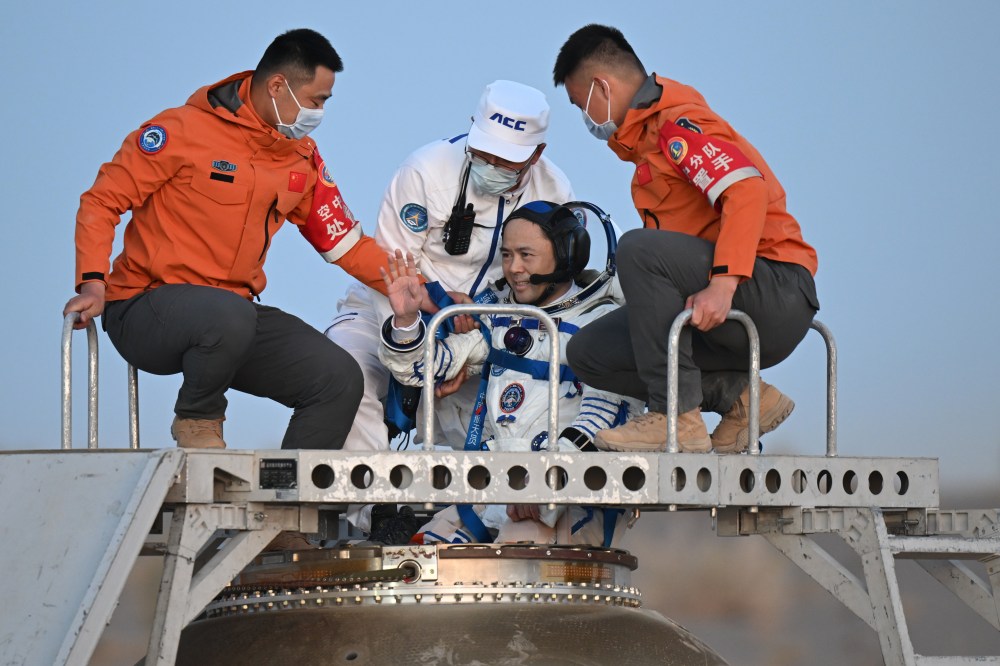
HONG KONG (AP) — Three Chinese astronauts returned to Earth on Friday after spending nearly seven months in space, setting a record for the longest on-orbit stay by a Chinese crew.
The craft carrying Zhang Lu, Wu Fei and Zhang Hongzhang of the Shenzhou 21 crew touched down at the Dongfeng landing site in north China’s Inner Mongolia region in the evening. Their return came as China prepares for its first lunar landing by 2030.
The crew had completed various tasks, from processing and transmitting experimental data to transferring remaining supplies, the official Xinhua News Agency quoted the China Manned Space Agency as saying. They also shared their experience with the Shenzhou 23 crew who arrived at the space station on Monday, Xinhua said.
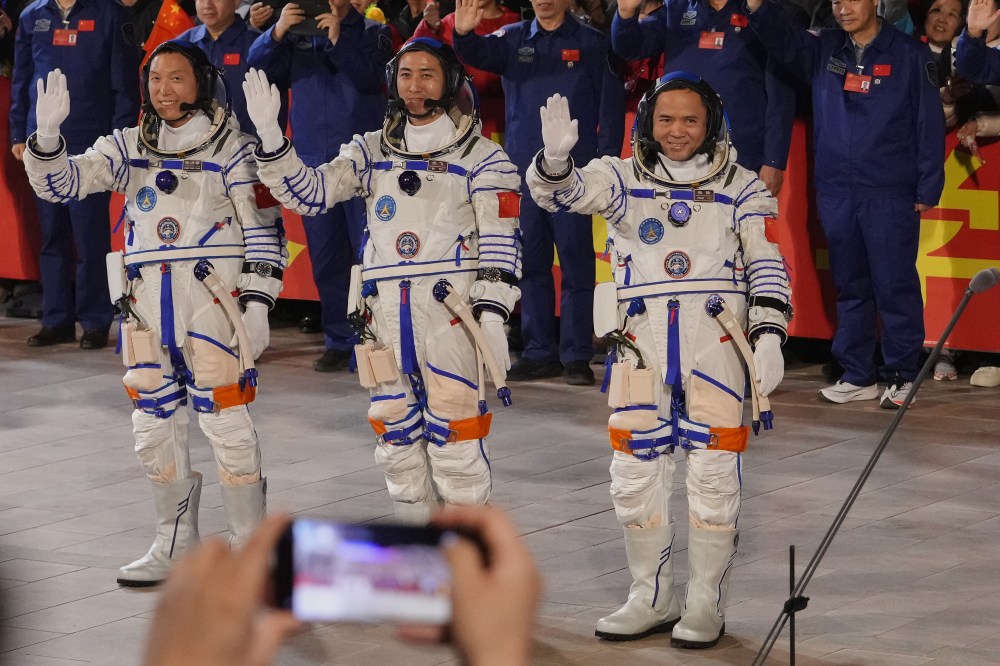
Xinhua reported earlier that the crew had completed three spacewalk activities. Zhang Jingbo, the space agency’s spokesperson, said that Zhang Lu, who was also on an earlier Shenzhou 15 mission to the space station, had completed seven such operations in total — becoming the Chinese astronaut with the most spacewalks, the report said.
Zhang Lu said he felt extremely emotional when he returned to China. He said at the astronauts’ mission wouldn’t have been possible without the care and support from their families and comrades, as well as the the backing of leaders and those involved in the project.
Zhang Hongzhang recalled his time away from the planet.
“Looking at Earth from space, I really felt that humanity is an indivisible community with a shared future,” he said.
One of the three astronauts who arrived at the Tiangong space station with the Shenzhou 23 craft is set to stay for a year. Tiangong means “Heavenly Palace” in Chinese.
The astronauts are Zhu Yangzhu, the commander, Zhang Zhiyuan and Lai Ka-ying, also identified by Chinese authorities as Li Jiaying, using the Mandarin transliteration of her name. Lai, who was born and raised in Hong Kong, is the first astronaut from the city on a space mission.
As China steps up its space program, its astronauts have carried out multiple missions to the Tiangong space station, developed after China was effectively excluded from the International Space Station on U.S. concerns over national security.
The U.S. is seen as China’s top space rival, with NASA aiming to land astronauts on the lunar surface in 2028.
___
Liu Zheng contributed to this report from Beijing.