Congolese Montrealers have plans upended by Canada’s Ebola travel restrictions
Advertisement
Read this article for free:
or
Already have an account? Log in here »
To continue reading, please subscribe:

Digital Subscription
One year of digital access for only $205*
- Enjoy unlimited reading on winnipegfreepress.com
- Read the E-Edition, our digital replica newspaper
- Access News Break, our award-winning app
- Play interactive puzzles
*First annual payment billed as $205.00 + GST for one year. This annual subscription will automatically renew at $233.00 + GST every 52 weeks (10% off the regular annual price of $259.35). Offer available to new and qualified returning subscribers only. Cancel any time.
To continue reading, please subscribe:
Add Free Press access to your Brandon Sun subscription for only an additional
$1 for the first 4 weeks*
- Enjoy unlimited reading on winnipegfreepress.com
- Read the E-Edition, our digital replica newspaper
- Access News Break, our award-winning app
- Play interactive puzzles
*Your next Brandon Sun subscription payment will increase by $1.00 and you will be charged $17.95 plus GST for four weeks. After four weeks, your payment will increase to $24.95 plus GST every four weeks.
Read unlimited articles for free today:
or
Already have an account? Log in here »
MONTREAL – An international student from the Democratic Republic of Congo says she was blocked from returning to Montreal because of Ebola-related travel restrictions — despite the fact she hasn’t visited her home country in almost a year.
Merdie Sanga was vacationing in France when she received a letter from Canada’s Immigration Department saying it was suspending travel documents for foreign nationals from Congo due to concerns over the virus.
“I told myself, this doesn’t concern me because I’m not coming from Kinshasa, I’m coming from Paris,” the 23-year-old Université du Québec à Montréal student said in a phone interview.
To her surprise, she was not allowed to board her Air France flight on Sunday after airline workers made a call to officials at Montreal’s airport.
Sanga is one of several members of Montreal’s Congolese community who say the new restrictions have upended their plans in expensive and sometimes heartbreaking ways.
Last week, the Canadian government announced a 90-day suspension of a variety of immigration and travel documents, such as resident visas and electronic travel authorizations, for people in Congo, South Sudan and Uganda. More than 24,000 travel documents could be suspended, including more than 12,600 belonging to Congo residents.
The federal government said it is taking these actions “out of an abundance of caution” as health-care workers in Africa struggle to contain an outbreak of Bundibugyo virus, a rare form of Ebola. Authorities have reported 134 confirmed cases in Congo and neighbouring Uganda, including 18 confirmed deaths as of May 29.
Sanga says she has submitted paperwork to the government showing why she falls outside the scope of the measures, and is hopeful she’ll be allowed to return to Montreal soon. She understands that the restrictions are needed to protect the population from Ebola. “However, we need to look at the specific cases because the virus, the epidemic, is not linked to nationality,” she said.
The federal Immigration Department said the measures are necessary to prevent the spread of Ebola, and anyone who believes their application was wrongly suspended should submit a web form with supporting documentation.
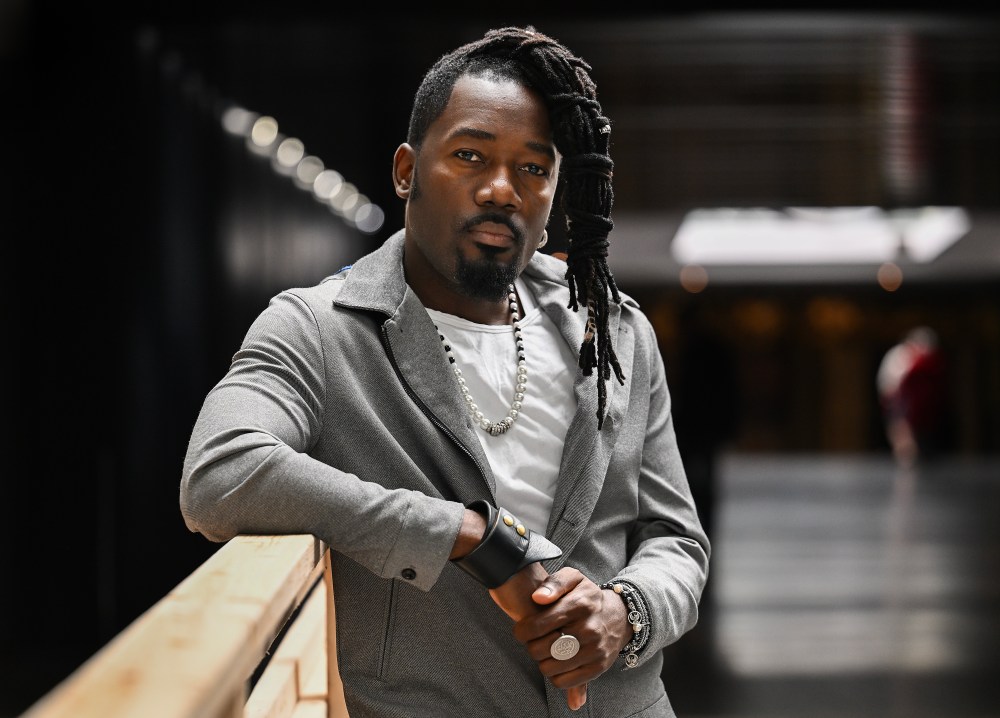
Another Montrealer affected by the travel restrictions is musician Kizaba, who says he spent $2,500 on a plane ticket to Kinshasa for his brother’s wedding, which he can no longer attend.
“I was really frustrated,” said the artist, whose full name is Lionel Kizaba. “It really hurt my brother, he practically cried when I told him — his wife too,” he said.
While Kizaba is a Canadian citizen, he can’t attend the event because of the Canadian government’s requirement that he isolate for 21 days upon his return. He says it’s something that’s impossible for a musician during the busy summer concert and festival season.
“I would be putting my career in danger,” said Kizaba, who is trying to get a refund or credit for his ticket.
Karla Kinkela, a Belgian citizen living in Montreal, had been looking forward to showing her Congolese mother her new country, from Halifax to Calgary. She says she cried when she learned that the summer visit wouldn’t happen.
While the cost of the plane ticket was reimbursed, she said it had taken her mother between one and two years to get approved for a visitor’s visa. That visa expires at the end of August, and she worries it could take a long time to get another.
Kinkela and Kizaba both say they understand the need for measures to prevent the spread of Ebola. But both of their families live in the capital of Kinshasa, which is more than 1,500 kilometres from the eastern and northeastern Congolese provinces hit by the virus, and they believe a blanket travel restriction on the whole country goes too far.
It’s a common feeling in Montreal’s Congolese community, says Christian Lehani, an administrator with Congolese diaspora group Réseau Mayele. He believes the restrictions are discriminatory and would not have been applied in such a sweeping way to a non-African country.
“When it comes to sub-Saharan African countries, or countries with a large Black population, quickly the decisions become broad, brutal and lacking in nuance,” he said. “Often, African and Black populations are perceived as an indistinct entity, so we no longer look at regional realities, distances, precise data or human impacts.”
Lehani says his parents, who also live in Kinshasa, can no longer come to Canada for his brother’s wedding this summer.
A spokesperson for the World Health Organization told The Canadian Press that the organization isn’t recommending travel restrictions to manage the Ebola outbreak. “Such measures are usually implemented out of fear and have no basis in science,” Tarik Jašarević wrote last week.
However, the Public Health Agency of Canada has defended the measures as necessary, especially when the FIFA World Cup is expected to attract spectators from all over the world in June and July to Toronto and Vancouver.
Lehani believes Canada was pressured to act after the United States imposed its own restrictions, which resulted in a U.S.-bound Air France flight being diverted to Montreal last month after a passenger from Congo was allowed to board “in error.”
But he believes the Trump administration isn’t the model to follow, and is instead urging Canada to adopt an approach that is “more human, more proportionate and better founded in concrete realities.”
This report by The Canadian Press was first published June 1, 2026.
— With files from The Associated Press, David Baxter in Ottawa and Nicole Ireland in Toronto