

N.B. power company risked millions of dollars taking shortcuts on gas plant: auditor
Advertisement
Read this article for free:
or
Already have an account? Log in here »
To continue reading, please subscribe:
Digital Subscription
One year of digital access for only $1.44 a week*
- Enjoy unlimited reading on winnipegfreepress.com
- Read the E-Edition, our digital replica newspaper
- Access News Break, our award-winning app
- Play interactive puzzles
*Billed as $5.77 plus GST every four weeks. After 52 weeks, price increases to the regular rate of $19.95 plus GST every four weeks. Offer available to new and qualified returning subscribers only. Cancel any time.
To continue reading, please subscribe:
Add Free Press access to your Brandon Sun subscription for only an additional
$1 for the first 4 weeks*
- Enjoy unlimited reading on winnipegfreepress.com
- Read the E-Edition, our digital replica newspaper
- Access News Break, our award-winning app
- Play interactive puzzles
*Your next Brandon Sun subscription payment will increase by $1.00 and you will be charged $17.95 plus GST for four weeks. After four weeks, your payment will increase to $24.95 plus GST every four weeks.
Read unlimited articles for free today:
or
Already have an account? Log in here »
FREDERICTON – New Brunswick’s provincially owned energy corporation made a series of poor choices with its planned natural gas power plant that exposed taxpayers to millions of dollars worth of risk, the public auditor says.
The utility entered into a long-term agreement without regulatory approval and selected equipment without studying alternatives, among other missteps, auditor general Paul Martin said in his report released Tuesday.
While the need for a new natural gas plant is valid, Martin told lawmakers, NB Power “did not proceed in the clearest or most disciplined order, increasing governance, financial and regulatory risk for New Brunswick power and energy customers.”
The Renewable Integration and Grid Security project is a 500-Megawatt natural gas power plant proposed for rural southeastern New Brunswick. It received approval from the provincial energy regulator last week, but still requires a green light from the Liberal government after the results of an environmental assessment.
The auditor’s report comes on the heels of an independent review of the debt-straddled NB Power earlier this year. That review prompted the Liberal government to unveil an action plan last week, part of which vowed to improve accountability at the organization.
NB Power has pitched the natural gas plant as an urgent response to prevent future energy shortages caused by retiring coal and oil facilities. The Crown corporation says the future plant will also provide a backstop when renewable energy sources are impacted by weather.
In a statement following the auditor’s report, Andrew MacGillivray, chair of the utility’s board, and president and CEO Lori Clark said the corporation had to make complex decisions about the potential power plant during “a period of heightened system risk.”
That risk, they said, involved “increasing pressure on the system, including the potential for winter peak shortfalls during extreme weather conditions.” The proposed plant is crucial to the utility’s primary goal of providing stable electricity to its nearly half a million customers, they said.
However, Martin writes that NB Power moved ahead with the project over the last few years making “critical choices … without addressing significant risks.”
In one example, Martin wrote that NB Power last year signed a 25-year deal with U.S. firm ProEnergy to run the plant before the project received regulatory approval. That decision, the auditor said, was a misstep that exposed NB Power to tens of millions of dollars in potential penalties.
NB Power signed the deal in July 2025 for the plant, which Martin says will have a final price tag of $2.8 billion. But the province’s Energy and Utilities Board in October 2025 determined the corporation first needed its approval for the capital project.
If the regulator had denied the project, the utility could’ve been forced to compensate ProEnergy for $55.1 million in early construction costs, Martin said.
In response, MacGillivray and Clark said the utility had confirmed with the energy board before signing the contract that the project could only move ahead after regulatory approval.
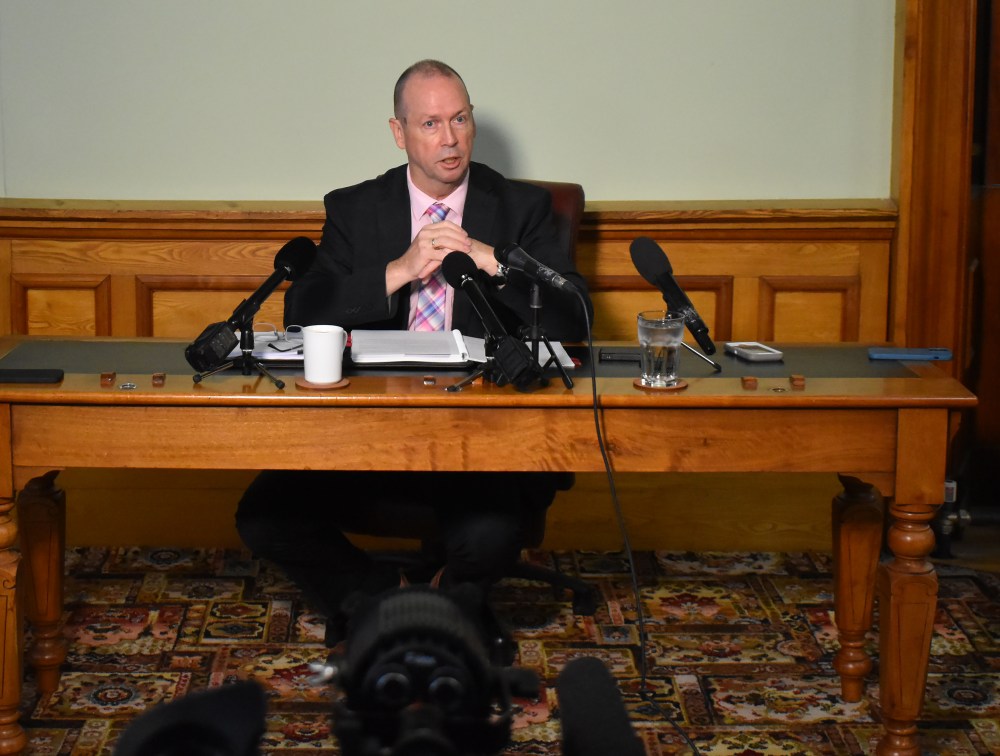
Later in the day, Martin told reporters he stood by the risk the deal posed, saying the utility didn’t do its homework before signing the deal. “I’m not seeing sufficient documentation for a $2.8-billion cost that I would expect in this process. And I think they need to be accountable for that.”
He said there were other failures, too. NB Power selected dual-fuel combustion turbines — which can switch from gas to diesel if needed — for the plant before looking into alternatives, Martin wrote.
Martin also criticized NB Power for assuming most of the risk by being the sole owner of the plant, which he said negated the benefits of entering into a partnership deal with ProEnergy. For example, NB Power must pay for the fuel it produces regardless of whether it’s consumed, and the corporation has assumed responsibility for emissions-related costs.
Added to the project’s risks, Martin said, is an unfulfilled requirement of Indigenous participation in the proposal gas plant. Under the deal, ProEnergy must establish an “equity partnership” with First Nations.
Martin says utility board documents indicate the U.S. company had entered into an agreement with the North Shore Mi’kmaq Tribal Council in November 2024, but the auditor said the deal had not been formalized by the time of his review.
NB Power did not immediately respond to a request for a status update on the required First Nations equity partnership agreement.

The natural gas plant project is scheduled to be in operation by August 2028.
Martin told reporters it’s now up to the public accounts committee to hold NB Power to account — and even recommended that the legislature mandate a corrective action plan.
Government whip Jacques LeBlanc told reporters that representatives with NB Power need to come before legislators and answer questions, calling it “a serious matter.”
Green Party deputy leader Megan Mitton called for the project to be cancelled. “I’m extremely concerned with the irresponsible way in which they have gone about really ramming this gas and diesel plant through,” Mitton said at the legislature Tuesday.
This report by The Canadian Press was first published June 2, 2026.