

General Mills agrees to sell Häagen-Dazs shops in China to investor group
Advertisement
Read this article for free:
or
Already have an account? Log in here »
To continue reading, please subscribe:
Digital Subscription
One year of digital access for only $1.44 a week*
- Enjoy unlimited reading on winnipegfreepress.com
- Read the E-Edition, our digital replica newspaper
- Access News Break, our award-winning app
- Play interactive puzzles
*Billed as $5.77 plus GST every four weeks. After 52 weeks, price increases to the regular rate of $19.95 plus GST every four weeks. Offer available to new and qualified returning subscribers only. Cancel any time.
To continue reading, please subscribe:
Add Free Press access to your Brandon Sun subscription for only an additional
$1 for the first 4 weeks*
- Enjoy unlimited reading on winnipegfreepress.com
- Read the E-Edition, our digital replica newspaper
- Access News Break, our award-winning app
- Play interactive puzzles
*Your next Brandon Sun subscription payment will increase by $1.00 and you will be charged $17.95 plus GST for four weeks. After four weeks, your payment will increase to $24.95 plus GST every four weeks.
Read unlimited articles for free today:
or
Already have an account? Log in here »
HONG KONG (AP) — General Mills is selling its Häagen-Dazs ice-cream shops in mainland China to an investor group that includes Chinese tea brand Ningji.
Minneapolis-based General Mills said in a statement late Monday that the deal will allow the buyers to exclusively sell the Häagen-Dazs brand in ice cream shops and gifting businesses across mainland China. General Mills will continue to sell Häagen-Dazs ice cream to Chinese retail and food service operations.
Financial terms of the deal weren’t disclosed. The deal is expected to close by the end of this year.
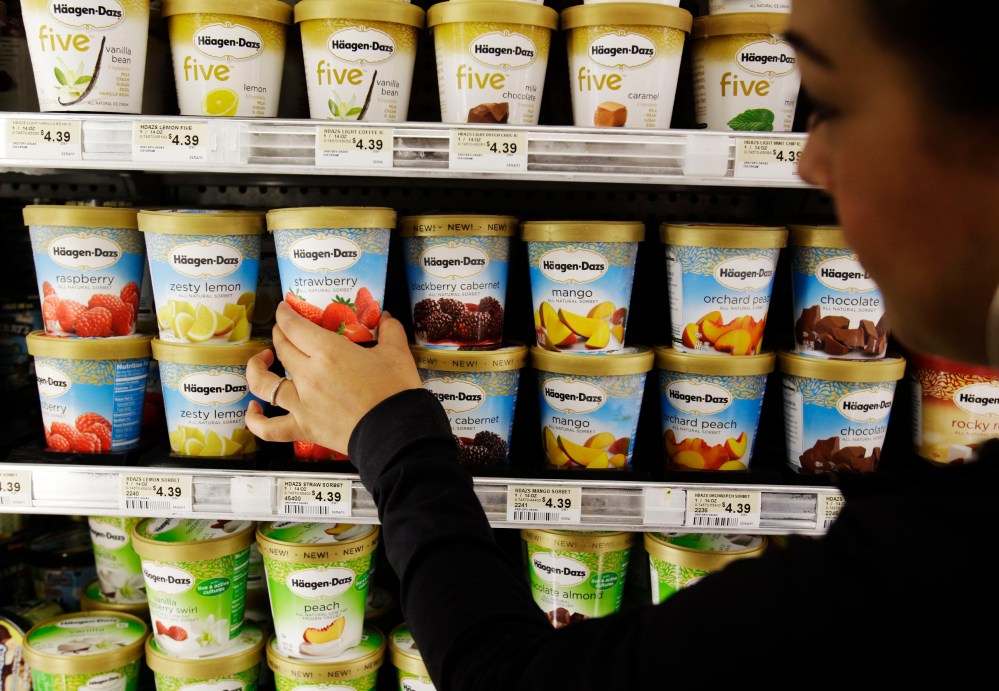
General Mills didn’t immediately respond Tuesday when asked how many Häagen-Dazs stores it has in China. In its latest annual report, General Mills said it operated 332 ice cream parlors worldwide.
Ningji operates around 3,000 retail tea outlets in China. It opened its chain of stores in 2021 and has received funding from ByteDance, the Beijing-headquartered creator of TikTok, and Shunwei Capital.
Yaling Jiang, an independent Chinese consumer analyst, said Häagen-Dazs has been charging premium prices in China “without delivering sufficient product value or cultural relevance.”

Its line of products — traditional ice cream with higher fat content — has “passed its peak” in China at a time when low-fat, airy gelato options are becoming more common, she said.
Foreign businesses have also been shifting ownership of their operations toward Chinese investors as Chinese consumer confidence has stagnated and economic growth has slowed.
Starbucks said in November that it would form a joint venture with Chinese private equity firm Boyu Capital in a deal worth about $4 billion that allows Boyu to hold up to a 60% stake in its operations in China.
In February, Toronto-based Restaurant Brands International — the parent of U.S. fast food chain Burger King — said it had formed a joint venture with Chinese investment firm CPE to operate and expand the Burger King restaurant chain in China.
CPE invested about $350 million into the joint venture under the deal terms, and owns approximately 83% of the business.