
‘We’re still behind’ in Congo’s Ebola outbreak even as testing improves, WHO chief says

Advertisement

Advertise with us

LAGOS, Nigeria (AP) — Congo’s Ebola outbreak “had a big head start, and we’re still behind,” the head of the World Health Organization said Wednesday, adding that the medical community was “catching up” even as militant attacks plague the stricken region.

Read this article for free:


or

Already have an account? Log in here »

To continue reading, please subscribe:

Subscribe and receive a limited-edition Free Press branded hat or tote.

Digital Subscription

One year of digital access for only $205*

  • Enjoy unlimited reading on winnipegfreepress.com
  • Read the E-Edition, our digital replica newspaper
  • Access News Break, our award-winning app
  • Play interactive puzzles

*First annual payment billed as $205.00 + GST for one year. This annual subscription will automatically renew at $233.00 + GST every 52 weeks (10% off the regular annual price of $259.35). Offer available to new and qualified returning subscribers only. Cancel any time.

To continue reading, please subscribe:

Add Free Press access to your Brandon Sun subscription for only an additional

$1 for the first 4 weeks*

  • Enjoy unlimited reading on winnipegfreepress.com
  • Read the E-Edition, our digital replica newspaper
  • Access News Break, our award-winning app
  • Play interactive puzzles
Start now

*Your next Brandon Sun subscription payment will increase by $1.00 and you will be charged $17.95 plus GST for four weeks. After four weeks, your payment will increase to $24.95 plus GST every four weeks.

LAGOS, Nigeria (AP) — Congo’s Ebola outbreak “had a big head start, and we’re still behind,” the head of the World Health Organization said Wednesday, adding that the medical community was “catching up” even as militant attacks plague the stricken region.

Congo’s military said an attack late on Tuesday by an Islamic State affiliate — a group known as the Allied Democratic Forces — killed 16 people in the Beni territory in North Kivu province.

The militants struck in response for a joint operation of Congolese and Ugandan armies, which have been battling the group that operates in the border regions of the two countries. Last month, the group attacked Congolese villages near the Ugandan border, killing at least 40 people and burning and looting homes.
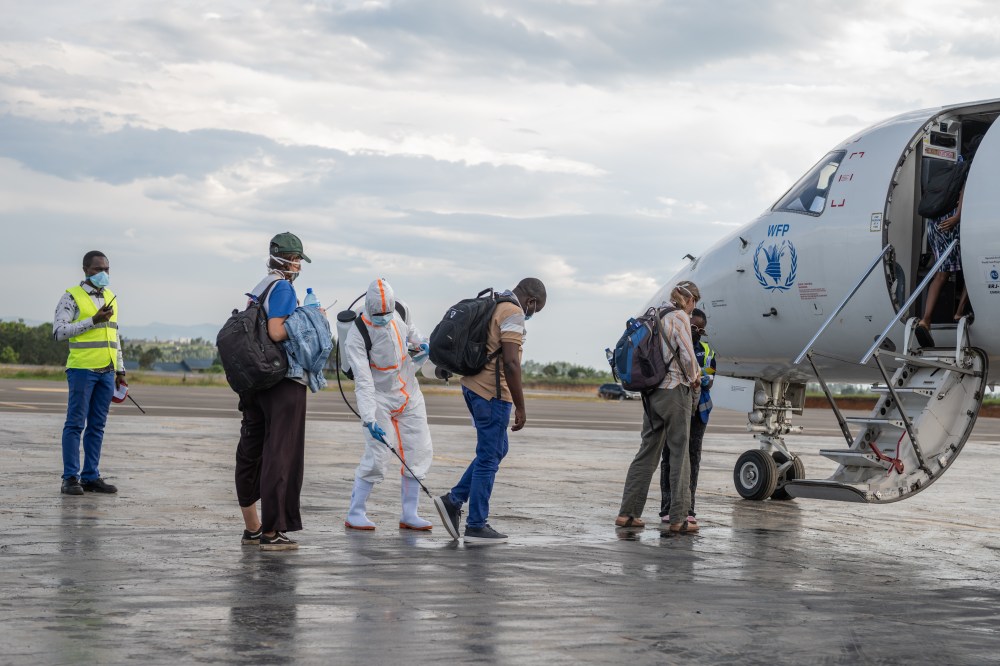
A health worker disinfects passengers prior to their boarding of the World Food Programme's (WFP) aircraft following the government's announcement of Bunia National Airport's reopening in Bunia, Congo, Tuesday, June 2, 2026. (AP Photo/Moses Sawasawa)

The violence has hampered efforts to combat the outbreak of the rare Bundibugyo type of Ebola, which was announced in mid-May in eastern Congo’s provinces of Ituri, North Kivu, and South Kivu.

Since then, Congolese authorities have confirmed 60 deaths in the outbreak out of 344 cases. The number of suspected cases has gone down from 906 to 116. Neighboring Uganda has 15 confirmed cases, including one death, its health ministry said Tuesday.

WHO chief offers some hope for the outbreak

The agency’s Director-General Tedros Adhanom Ghebreyesus said Wednesday that testing is improving in the struggle against Ebola, with scaled-up laboratory and diagnostic capacity though contact tracing in Congo “is not yet where it needs to be.”

“The outbreak had a big head start, and we’re still behind,” he said. But “we are catching up.”

Tedros spoke a day after returning to Geneva from Congo, where he visited the epicenter of the outbreak. “What I saw gave me hope, although challenges remain.”

He also said that blanket travel restrictions imposed by some countries “are disrupting supply chains and hindering the response,” and asked for them to be lifted. He stressed that WHO recommends exit screening at airports, ports and border crossings.

He avoided a reporter’s question about a U.S. quarantine center in Kenya where American Ebola patients would be quarantined, which has drawn protests.

“I think based on their risk assessment … they (the United States) can do whatever they think is right for them,” the WHO chief said.

The outbreak struck in an extremely vulnerable region

Experts have said the virus spread for weeks in one of the world’s most vulnerable regions before lab testing confirmed it. Resources, including protective gear, have been rushed to the outbreak for a type of Ebola with no approved medicine or vaccine.

At least five people have recovered from the virus, rare signs of hope.

“The true extent of the outbreak remains difficult to assess. Extremely limited testing capacity and difficulties accessing certain areas necessitate interpreting these figures with caution,” Doctors Without Borders, said Monday about the case numbers.

Getting a potential vaccine to the region could take months.

“It’s difficult to have an effective vaccine that adheres to the scientific protocol available quickly,” Dr. Aruna Abedi, a Congolese epidemiologist who has managed previous outbreaks in the country, told The Associated Press.

While laboratory and diagnostic resources improve for the outbreak, Tedros said the tracing of people who had contact with infected people in Congo is still behind.

“Only about 45% of contacts have been followed up, and to get ahead of the outbreak we need to get that number up to above 90%,” he said. “Insecurity, displacement and mobile populations make contact tracing especially difficult.”

Congo has long struggled with a multitude of security crises and insecurity has over the years created a huge and vulnerable displaced population. Eastern Congo, where the latest Ebola outbreak is taking place, has several active armed groups, including the Rwanda-backed M23 rebel group that seized key cities Goma and Bukavu over a year ago, and the IS affiliate.

Wary residents have attacked health centers in the outbreak, at times demanding the bodies of loved ones. Health workers also have been battling mistaken beliefs among some residents that Ebola isn’t real, which has kept some from seeking care.

___

Moulson reported from Berlin. Associated Press writer Jean Yves Kamale in Kinshasa, Congo, contributed to this report.
Report Error Submit a Tip

More Stories

Puzzles Palace

1 minute read Monday, Jul. 27, 2026

To solve our puzzles, please subscribe with this special offer: |

Former Gilbert Plains CAO forged doc’s note to get out of court: RCMP

Erik Pindera 4 minute read Preview

Former Gilbert Plains CAO forged doc’s note to get out of court: RCMP

Erik Pindera 4 minute read Updated: Yesterday at 4:10 PM CDT

A former rural municipal official awaiting sentencing for stealing more than $500,000 from community coffers has been accused of forging a fake doctor’s note to get out of attending court.

Amber Fisher, the former chief administrative officer for the Rural Municipality of Gilbert Plains, pleaded guilty to one count of theft over $5,000 last year.

Dauphin RCMP say investigators learned Fisher, 42, had submitted the note indicating she would be unable to attend court for her Sept. 2 sentencing, after she was seriously injured in a vehicle collision on July 22.

Fisher’s lawyer submitted the note to the court and the judge adjourned her sentencing to a later date.

Read
Updated: Yesterday at 4:10 PM CDT

The symptom and the disease

Alan H. Menkis 5 minute read 2:00 AM CDT

On the same morning, the Free Press carried two pieces written from opposite vantage points, arriving at the same locked door.

Charles Bernstein, writing as a gastroenterologist, described a nurse-practitioner program at Health Sciences Centre that gave patients with inflammatory bowel disease somewhere to turn before their illness forced them to an emergency room. It was then not funded to continue, and it ended. A service that had been approved, put in place, and shown to work was allowed to lapse.

Tom Brodbeck, writing as a columnist, described Shared Health, an organization created eight years ago as a fourth layer of administration added to the three the system already had — Manitoba Health, the regional authorities, and hospital administrations. He asked what this layer has done for patient care that those three could not, found no one able to answer, and concluded that the province should either make the case or let the structure go.

One writer watched something that worked disappear. The other watched something no one can justify persist. Their accounts are two symptoms of one disease.

Woman who saved child, father from Red River uncomfortable with hero label

Scott Billeck 5 minute read Preview

Woman who saved child, father from Red River uncomfortable with hero label

Scott Billeck 5 minute read Wednesday, Sep. 2, 2026

A Winnipeg woman who’s been hailed as a hero by police for saving a father and his young child from the Red River says she doesn’t feel like one.

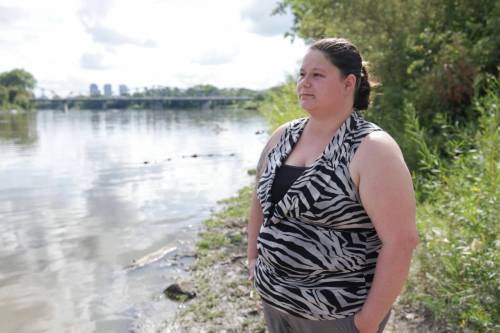
“I’m a mom… and I would do it again,” said Jayclyn Morrissette, who was walking with her neighbour through St. John’s Park on Aug. 24 when they spotted a young girl flailing in the nearby river. “I was meant to be there and that was supposed to happen.”

Morrissette, who spoke to the Free Press Wednesday after police released details about the rescue, said she and her neighbour began looking for the child’s parents and found them at the nearby playground searching for her.

Morrissette waved them over. The father, who she said could not swim, jumped into the river first and immediately began to sink.

Read
Wednesday, Sep. 2, 2026

Manitoba’s next power plant already under construction

Colleen Kuruluk 4 minute read 2:00 AM CDT

Across Manitoba, we’re rapidly moving toward a more electrified future, as homes, businesses, industries, and transportation increasingly turn to electricity. This transition offers a significant opportunity to reduce greenhouse gas emissions, but it also requires us to rethink how we plan for and participate in our energy future.

Manitoba Hydro’s 2025 integrated resource plan (IRP), currently under review with the Public Utilities Board, projects that our province will need significant additional capacity over the next decade to meet growing electricity demand. Much of the public discussion following the IRP has focused on how to meet that growing demand and what new generation sources may need to be built.

These are important conversations, but I believe there’s another question that deserves just as much attention.

How much of that growing demand can we address by using energy more efficiently?

Letters, Sept. 4

7 minute read 2:00 AM CDT

Adult ed can be the future — now

Re: Reimagining education in Manitoba (Think Tank, Sept. 2)

In an increasingly mad world, where decency and humanity are at risk, driven by the endless din from the leader of the free world, Canada is reimagining itself. Our federal government is expediting dozens of nation-building projects valued at a reported $192 billion.

The goal of nation building is to strengthen Canada’s economic resilience and independence. We all want peace, a good home, a secure income and hope for a stable future for our children and grandchildren. Nation-building projects are a hopeful means to this end.