

Grey-list effectiveness dissipates
Advertisement
Read this article for free:
or
Already have an account? Log in here »
To continue reading, please subscribe:

Digital Subscription
One year of digital access for only $205*
- Enjoy unlimited reading on winnipegfreepress.com
- Read the E-Edition, our digital replica newspaper
- Access News Break, our award-winning app
- Play interactive puzzles
*First annual payment billed as $205.00 + GST for one year. This annual subscription will automatically renew at $233.00 + GST every 52 weeks (10% off the regular annual price of $259.35). Offer available to new and qualified returning subscribers only. Cancel any time.
To continue reading, please subscribe:
Add Free Press access to your Brandon Sun subscription for only an additional
$1 for the first 4 weeks*
- Enjoy unlimited reading on winnipegfreepress.com
- Read the E-Edition, our digital replica newspaper
- Access News Break, our award-winning app
- Play interactive puzzles
*Your next Brandon Sun subscription payment will increase by $1.00 and you will be charged $17.95 plus GST for four weeks. After four weeks, your payment will increase to $24.95 plus GST every four weeks.
Read unlimited articles for free today:
or
Already have an account? Log in here »
In casual parlance, the law of diminishing returns refers to the idea that the more you use something, the less value you derive from it.
With its recent decision to have its members vote on the possibility of imposing a “grey list” designation on Seven Oaks General Hospital, the Manitoba Nurses Union may have run head-on into a diminishing-returns situation regarding what was once its most powerful administrative and public-relations weapon.
According to the union, MNU members at Seven Oaks voted 98 per cent in favour of grey-listing the facility, over growing frustration with the province’s inadequate response to violence, gaps in security, unsafe staffing levels and insufficient communication between management and staff.
FREE PRESS FILES
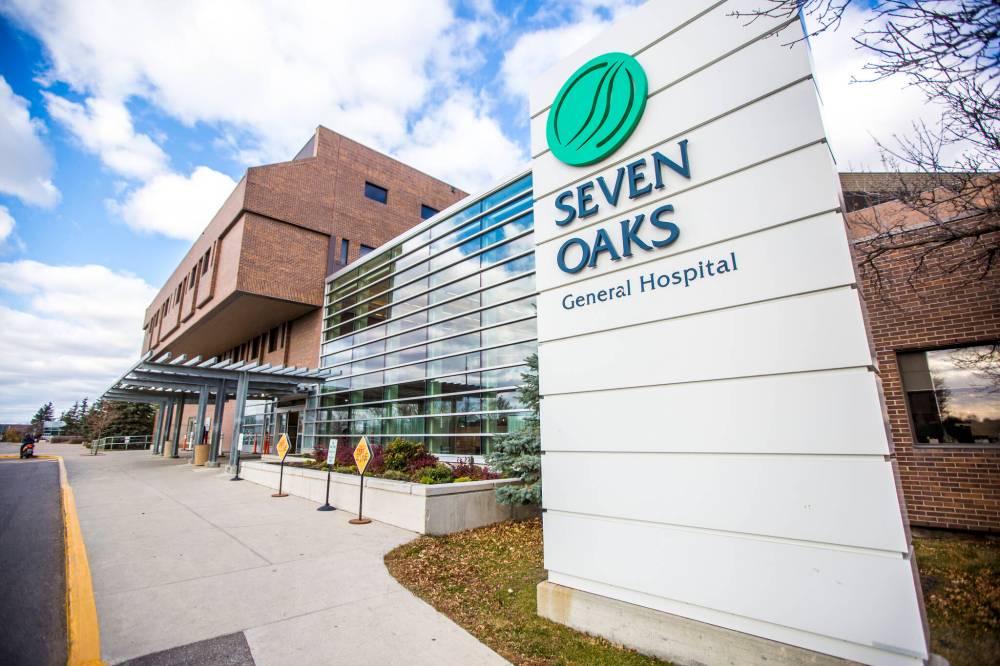
Seven Oaks General Hospital is the latest medical facility to be grey-listed by the Manitoba Nurses Union.
Grey listing is a pressure tactic employed by the union which results in nurses being advised not to seek work at a location deemed unsafe; such a designation also serves as a warning to the public that the facility in question is not a safe environment.
Despite the overwhelming result, the union’s local executive had not, as of last weekend, formally proceeded with the grey listing, opting instead to allow the hospital and the regional health authority that oversees it to address the union’s safety demands — including increased staffing levels, heightened access controls, improved emergency communication and enhanced support following critical incidents — to avoid actual imposition of the measure.
“This is a time period where the employer has the ability to make good on those promises — put things in writing, with a time and a date that we can expect to see things happen — to avoid enacting grey-listing,” said union president Darlene Jackson.
The province, for its part, says steps have been taken to increase security at all hospitals, pointing to the addition of 130 institutional safety officers at facilities throughout Manitoba, at a cost of $18 million annually. ISOs are trained in various de-escalation techniques, use of force, officer safety and mental-health awareness, as well as enforcement of provincial laws, arrests and court preparation. And remember, the NDP’s 2023 election campaign focused almost solely on fixing a health-care system left in tatters by the previous Progressive Conservative administration’s botched restructuring effort.
Despite those security improvements and ongoing efforts to recruit and retain nurses and other health-care workers, the nurses union clearly feels its members’ concerns are not being met and the imposition of grey-list status is a justified response.

At a certain point, however — and perhaps that point has been reached — grey listing will cease to be a strategy so startling that it drives immediate action and instead become a news-cycle footnote that neither shocks the system nor surprises the public.
When the union grey-listed the Health Sciences Centre last August, the tactic had only been employed five times in the province’s history, the most recent being at the Dauphin Regional Health Centre in 2007.
Since the HSC’s grey-listing, two other facilities — Thompson Hospital and St. Boniface Hospital — have also been targeted; proceeding with the designation for Seven Oaks would mean four hospitals have been grey-listed by the nurses union in less than a year.
Grey-listing no longer feels like exercising a last-resort option. It seems like a business-as- usual approach which reflects the sad reality that the NDP government has failed to deliver in a way that satisfies the nurses whose tireless and too-long-frustrated efforts are the backbone of the system.
By invoking it with such frequency, the union has dulled the impact of grey listing. But the lessening of its tactical effect is by no means an indication the crises that prompted its use have been effectively addressed.