

Significance of soil, water management

Advertisement
Read this article for free:
or
Already have an account? Log in here »
To continue reading, please subscribe:
Digital Subscription
One year of digital access for only $1.44 a week*
- Enjoy unlimited reading on winnipegfreepress.com
- Read the E-Edition, our digital replica newspaper
- Access News Break, our award-winning app
- Play interactive puzzles
*Billed as $5.77 plus GST every four weeks. After 52 weeks, price increases to the regular rate of $19.95 plus GST every four weeks. Offer available to new and qualified returning subscribers only. Cancel any time.
To continue reading, please subscribe:
Add Free Press access to your Brandon Sun subscription for only an additional
$1 for the first 4 weeks*
- Enjoy unlimited reading on winnipegfreepress.com
- Read the E-Edition, our digital replica newspaper
- Access News Break, our award-winning app
- Play interactive puzzles
*Your next Brandon Sun subscription payment will increase by $1.00 and you will be charged $17.95 plus GST for four weeks. After four weeks, your payment will increase to $24.95 plus GST every four weeks.
Read unlimited articles for free today:
or
Already have an account? Log in here »
The day six inches of rain fell one early July afternoon is etched in my memories of growing up on a southern Manitoba grain farm in the mid-1960s.
While we merrily played in the overflowing ditches, our parents watched helplessly as the surrounding fields went under. Within days, it became clear that the crop of 1966 was a write-off.
Rather than watching it rot, Dad went to work retrofitting the family van so all six of us could sleep in it, and we set off on an extended camping trip to the mountains. We didn’t see much of him that winter, however. He commuted 50 kilometres to Winnipeg with the grain truck to make department store deliveries to help pay the bills.
Laura Rance-Unger
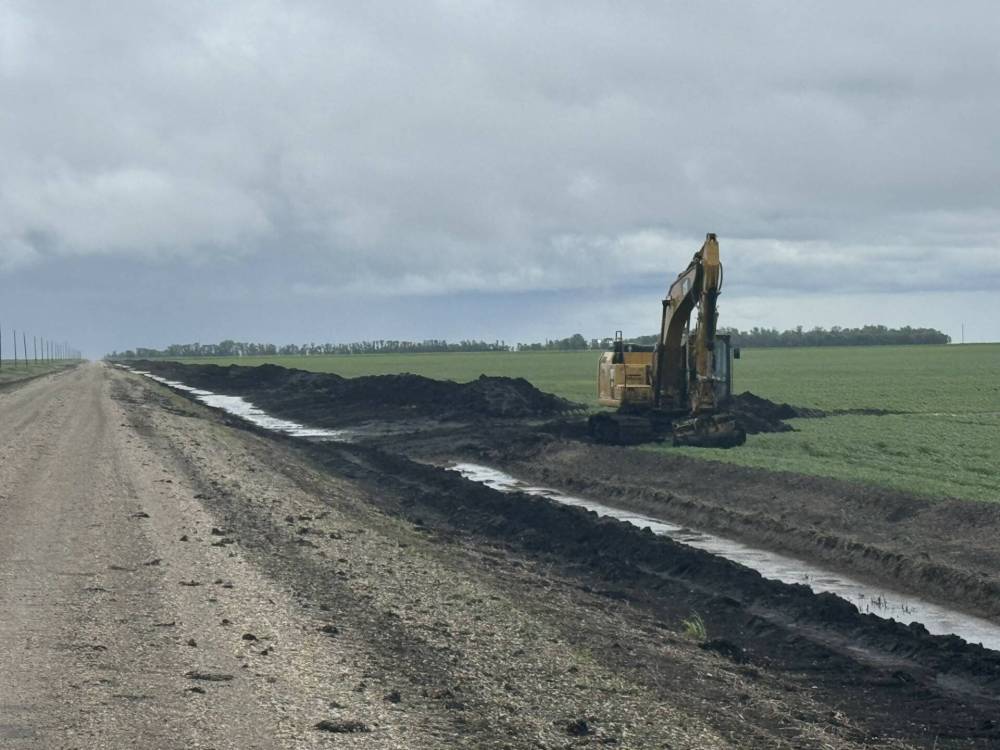
Municipalities across southern Manitoba are spending millions clearing wind-eroded soils from drainage systems.
Excess rainfall of that magnitude happened once in their 40 years of farming, but it informed lasting changes to how fields were drained and soil was managed.
That event pales in comparison to the hangover from the multiple violent bursts of weather that swept across Manitoba this spring — wind and rainfall events the climate change models warn will happen with increasing frequency.
Farms today are much bigger. Costs are higher — and so are the debts. Recovery for those most affected will take years of expense and perhaps more importantly, sweat equity, which is becoming harder to find in rural areas all the time.
Flooded pastures create pressing problems feeding herds, damaged fence lines must be repaired, washed-out municipal roads and bridges must be rebuilt — not to mention the task of reclaiming tens of thousands of acres of cropland that is now either flooded or too waterlogged to work, partly because hundreds of kilometres of drainage ditches are filled with soil that blew off the fields.
Municipal officials have been quoted as saying clearing dirt out of ditches has become an annual chore, adding millions of dollars to their maintenance budgets. While farmers pay the consequences of lost soil through lower productivity, the cost of restoring the drainage system is shared with other ratepayers.
Cattle living in wet, muddy conditions are at higher risk of diseases, such as foot rot and scours, which causes diarrhea and death in young cattle if not treated promptly. Conception rates are lower in herds stressed by weather and environmental conditions, so next year’s production could be compromised as well.
June 20 is the last day farmers can plant annual crops, other than cereal mixes to be harvested for livestock feed, and still qualify for crop insurance. Seeding was 96 per cent completed across the province as of this week. But today’s deadline means there is zero chance for fields that are still waterlogged to be reseeded.
Empty fields still need to be managed.
More than 90 per cent of farmers in Manitoba buy crop insurance, which provides coverage for unseeded acres and acres lost due to weather conditions after seeding. If there is surviving crop in the field, farmers and their crop insurance agent must decide whether its production potential is worth carrying it through to harvest.
Farmers can also buy insurance against lost revenue and insurance that protects them if they have forward-contracted their crop but suffer a crop failure — if they chose to subscribe.

Weeds rapidly take over when crops are thin, but farmers can’t spray in the mud. Health Canada recently granted interim permission for farmers to use drones to apply herbicides that have already been cleared for aerial application. However, it’s doubtful there is enough industry capacity at this stage to replace ground applications.
Soggy soil in warmer temperatures is also conducive to losing nitrogen fertilizer, which means it won’t be there for the crop to use.
Tallying the seemingly endless direct and hidden costs and debating who should pay for what is top of mind right now. But it presumes this spring’s ferocious weather was an anomaly, despite the models that say it is becoming the norm.
It’s time to look beyond compensation for better ways to keep the soil at home and excess water moving in an orderly fashion. It won’t stop Mother Nature from throwing another hissy fit, but it might curtail future damage.
Laura Rance-Unger is editor emeritus for Glacier FarmMedia. She can be reached at lrance@farmmedia.com.
Laura Rance is editorial director at Farm Business Communications.
Our newsroom depends on a growing audience of readers to power our journalism. If you are not a paid reader, please consider becoming a subscriber.
Our newsroom depends on its audience of readers to power our journalism. Thank you for your support.
Laura Rance is editorial director at Farm Business Communications.
Our newsroom depends on a growing audience of readers to power our journalism. If you are not a paid reader, please consider becoming a subscriber.
Our newsroom depends on its audience of readers to power our journalism. Thank you for your support.
Advertisement Advertise With Us
Advertisement Advertise With Us