Anthropic’s Mythos model found vulnerabilities in classified US government systems, official says

Advertisement

Advertise with us

WASHINGTON (AP) — A U.S. official told The Associated Press on Tuesday that one of Anthropic's artificial intelligence models had identified vulnerabilities in highly sensitive and secure U.S. government computer systems during a testing exercise.

Read this article for free:


By clicking the button above, an account will be created and you will begin to receive some of our recommended newsletters. You may opt out of any newsletter by visiting your Email and Communication Preferences page or by clicking "unsubscribe" at the bottom of any email.

or

Already have an account? Log in here »

To continue reading, please subscribe:

Digital Subscription

One year of digital access for only $1.44 a week*

  • Enjoy unlimited reading on winnipegfreepress.com
  • Read the E-Edition, our digital replica newspaper
  • Access News Break, our award-winning app
  • Play interactive puzzles

*Billed as $5.77 plus GST every four weeks. After 52 weeks, price increases to the regular rate of $19.95 plus GST every four weeks. Offer available to new and qualified returning subscribers only. Cancel any time.

To continue reading, please subscribe:

Add Free Press access to your Brandon Sun subscription for only an additional

$1 for the first 4 weeks*

  • Enjoy unlimited reading on winnipegfreepress.com
  • Read the E-Edition, our digital replica newspaper
  • Access News Break, our award-winning app
  • Play interactive puzzles
Start now

*Your next Brandon Sun subscription payment will increase by $1.00 and you will be charged $17.95 plus GST for four weeks. After four weeks, your payment will increase to $24.95 plus GST every four weeks.

WASHINGTON (AP) — A U.S. official told The Associated Press on Tuesday that one of Anthropic’s artificial intelligence models had identified vulnerabilities in highly sensitive and secure U.S. government computer systems during a testing exercise.

The official, who spoke on the condition of anonymity to discuss the matter, said Anthropic had teamed up with U.S. intelligence agencies to conduct tests using the company’s Mythos model. It had identified certain vulnerabilities within hours, but that does not mean the model was able to exploit them within that time, the official said.

The official said the testing was done through an Anthropic initiative called Project Glasswing, which brought together tech giants and other companies in hopes of securing the world’s critical software from “severe” fallout that the Mythos model could pose to public safety, national security and the economy.
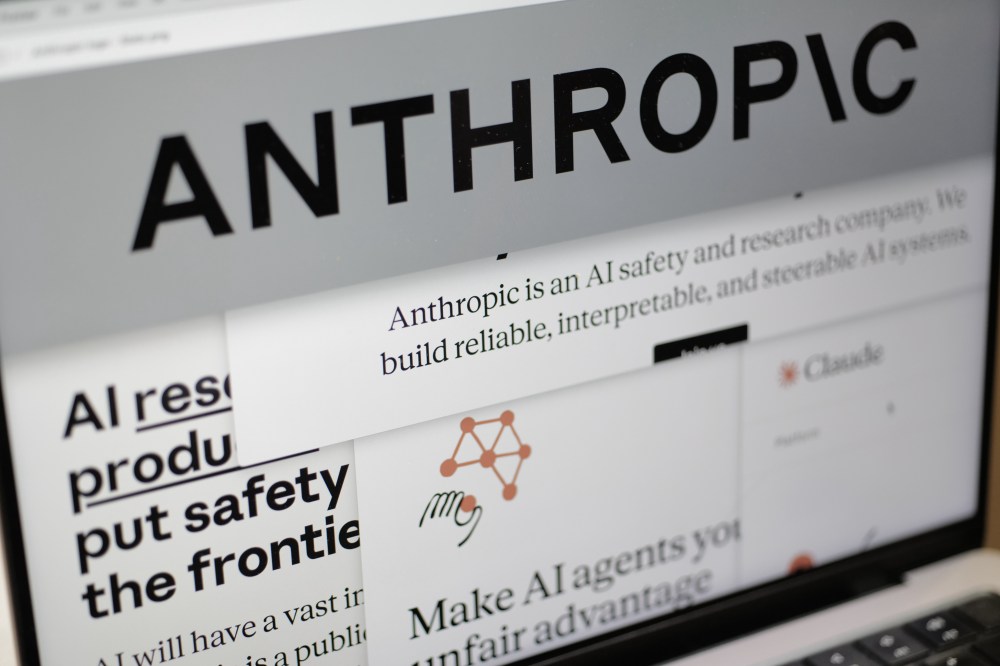
FILE - Pages from the Anthropic website and the company's logo are displayed on a computer screen in New York, Feb. 26, 2026. (AP Photo/Patrick Sison, File)

Democratic Sen. Mark Warner of Virginia had briefly mentioned the testing during a June 11 hearing before the Senate Committee on Banking, Housing, and Urban Affairs. Warner had said, “This tool broke into almost all of our classified systems, not in weeks but in hours.” He attributed the information to the head of the National Security Agency and U.S. Cyber Command, who is Gen. Joshua Rudd.

The NSA declined to comment on the matter in an email. An Anthropic spokesman also declined to comment.

Despite the recent cooperation between Anthropic and U.S. agencies to test for vulnerabilities, tensions between the California company and the Trump administration have been growing. Anthropic has raised concerns over how the U.S. military would use its AI, while the administration has restricted the use of some of Anthropic’s models.

The administration issued a directive earlier this month requiring Anthropic to prevent foreign nationals from using its latest artificial intelligence models, known as Fable 5 and Mythos 5. Anthropic released Fable widely earlier this month. That model is a limited version of the more advanced Mythos, to which the company has tightly limited access due to cybersecurity fears.

The directive came 10 days after President Donald Trump signed an executive order to establish a framework for the federal government to vet the national security risks of the most advanced AI systems for up to a month before their public release. Participation by AI developers would be voluntary, the order said.

Anthropic said it disabled the models for all of its customers to comply with the administration’s directive. The AI giant said it did not believe the steps taken by the government were warranted by the concern it flagged about a potential security issue.

A group of cybersecurity executives has also asked the Trump administration to lift its directive, saying the move could help U.S. adversaries more than it hurts them. More than 100 cybersecurity experts and leaders from companies including Adobe and Nvidia told the government in a letter that Anthropic’s Mythos models are “quite good” at finding flaws in software and weaponizing exploits — but they are ”not uniquely good at these tasks.”

Many of the letter’s signatories said they regularly use other foundation and open-source models for security audits and training. The letter said it is dangerous to take away the best cyber defense capabilities “without a good reason” when America’s adversaries are rapidly advancing.

Report Error Submit a Tip

More Stories

Letters, Oct. 20

7 minute read Preview

Letters, Oct. 20

7 minute read Updated: 8:57 AM CDT

I attended the Winnipeg Symphony Orchestra’s 60 Years of Star Trek & Beyond concert on Oct. 15 with my brother, a devoted fan who had eagerly anticipated the evening. Despite moments of brilliance, we left disappointed.

Read
Updated: 8:57 AM CDT

Winnipeg: Home of IG’s past and future

Damon Murchison 4 minute read Preview

Winnipeg: Home of IG’s past and future

Damon Murchison 4 minute read Yesterday at 2:00 AM CDT

Shortly after IG Wealth Management was established in Canada, our founders chose Winnipeg as the home of our young, ambitious company.

Read
Yesterday at 2:00 AM CDT

Addressing homelessness and toxic drug use

Kate Kehler and Molly McCracken 5 minute read 2:00 AM CDT

Winnipeg is facing a housing and toxic drug crisis that is not going away. Every day, we see the consequences — people living without safe homes, encampments in neighbourhoods and public spaces, increasingly toxic drugs, overdoses and emergency services stretched to their limits.

These are symptoms of a deeper crisis of inter-generational trauma related to colonization of the original peoples of these lands, compounded by a crisis in housing, income security, mental health and addictions services and the availability of community based supports.

Winnipeg’s next city council must decide whether it is prepared to invest in solutions that address the root causes.

Weaving a Better Winnipeg: The Alternative Municipal Budget 2026, proposes a five-point action plan that would put housing, outreach, human rights and Indigenous leadership at the centre of Winnipeg’s response.

Empty desks: Advocates talk chronic school absenteeism

Maggie Macintosh 5 minute read Preview

Empty desks: Advocates talk chronic school absenteeism

Maggie Macintosh 5 minute read 6:00 AM CDT

Concerned school and government leaders are downplaying the state of student absenteeism, as community organizers are strategizing to create urgency around who’s regularly missing class — and why — in Winnipeg.

The inaugural Youth at Risk in Winnipeg Symposium, held over the weekend at the Canadian Mennonite University, drew roughly 100 people to discuss barriers to attendance and brainstorm ways to remove them.

Nearly 20 years after he began calling attention to the issue, first as a volunteer with the Point Douglas Residents Committee, Sel Burrows gave an impassioned speech about the lack of political will to take meaningful action to help students from “dysfunctional homes.”

“I’ve dealt with nine cabinet ministers, Conservative and NDP, and five deputy ministers, and the issue has not gotten any better,” Burrows told teachers, reseachers and community support workers gathered Saturday on CMU’s Shaftesbury campus.

Read
6:00 AM CDT

Salvation Army calls on Winnipeggers to donate merchandise as sales soar

Kelly-Anne Riess 4 minute read Preview

Salvation Army calls on Winnipeggers to donate merchandise as sales soar

Kelly-Anne Riess 4 minute read Yesterday at 2:01 AM CDT

The Salvation Army is taking donated merchandise from other regions to stock its Winnipeg thrift stores as increasing sales outpace local donations.

Retail activity at the charity’s eight Winnipeg locations grew more than 10 per cent year over year during several months, from January through April, and again in June.

Although local donations remain strong, they haven’t kept pace with demand, prompting the organization to supplement inventory with merchandise from elsewhere.

Ted Troughton, managing director of the Salvation Army’s thrift store operations, said rising living costs are bringing in new customers.

Read
Yesterday at 2:01 AM CDT

Reviving democracy requires engagement

John R. Wiens 5 minute read 2:00 AM CDT

Democracy is on the ropes everywhere in the world as politics have become extreme, divisive, virulent — just plain toxic.