Takeaways from AP/’FRONTLINE’ investigation into how US tech is abused for global scams
Advertisement
Read this article for free:
or
Already have an account? Log in here »
To continue reading, please subscribe:
Digital Subscription
One year of digital access for only $1.44 a week*
- Enjoy unlimited reading on winnipegfreepress.com
- Read the E-Edition, our digital replica newspaper
- Access News Break, our award-winning app
- Play interactive puzzles
*Billed as $5.77 plus GST every four weeks. After 52 weeks, price increases to the regular rate of $19.95 plus GST every four weeks. Offer available to new and qualified returning subscribers only. Cancel any time.
To continue reading, please subscribe:
Add Free Press access to your Brandon Sun subscription for only an additional
$1 for the first 4 weeks*
- Enjoy unlimited reading on winnipegfreepress.com
- Read the E-Edition, our digital replica newspaper
- Access News Break, our award-winning app
- Play interactive puzzles
*Your next Brandon Sun subscription payment will increase by $1.00 and you will be charged $17.95 plus GST for four weeks. After four weeks, your payment will increase to $24.95 plus GST every four weeks.
Read unlimited articles for free today:
or
Already have an account? Log in here »
American technology and American companies are being used to power a revolution in the cyberscam industry, playing key roles in the industrialization and globalization of fraud in ways that have not been clear until now, an AP/”FRONTLINE” investigation has found.
Most public scrutiny of the technology that fuels scams has focused on the social media platforms victims see, but the infrastructure exploited to commit fraud begins much farther upstream, the investigation showed.
Watchdogs say satellite internet, AI and internet infrastructure companies along the digital supply chains that fraudsters abuse have the technical capacity to do more to protect consumers but lack the legal, regulatory and business incentives to crack down on a crime the Federal Trade Commission estimates cost Americans nearly $200 billion in 2024.
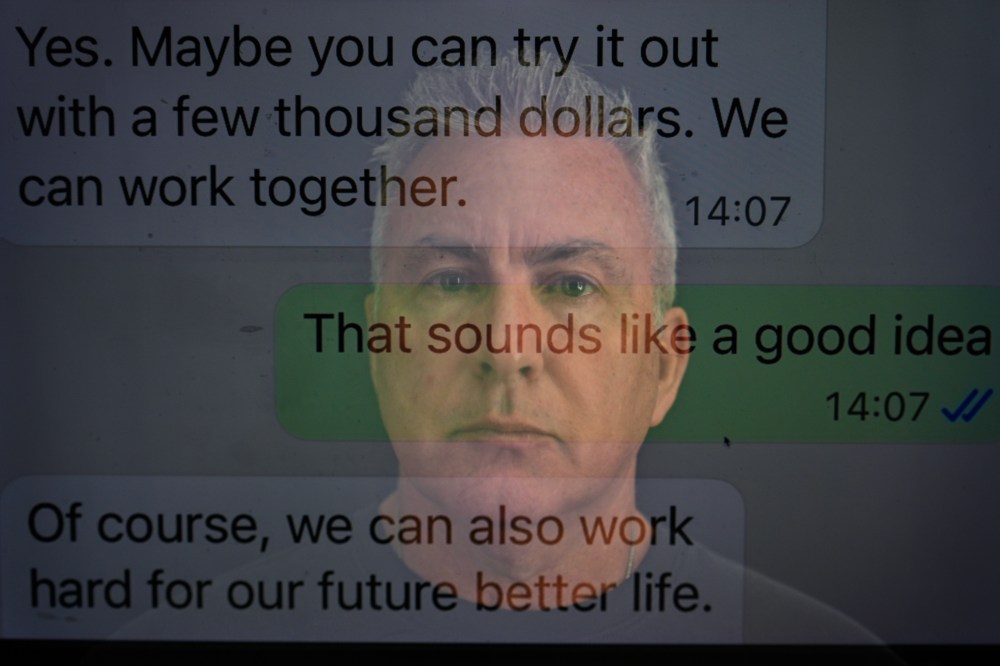
The AP found no evidence to suggest these companies were doing anything illegal. However, the patterns of abuse AP identified raise questions about how vigorously they are enforcing their own terms of service, which prohibit illegal activity.
Here are key findings:
American AI is being used to scam at industrial scale in SE Asia
The AP identified two suites of software used by scammers at compounds in Southeast Asia. OpenAI’s ChatGPT played the most prominent role in these tools, along with Google’s Gemini, though the software incorporated other AI models as well, according to an analysis with security nonprofit C4ADS.
The software, which has legitimate and illegitimate uses, allows scammers to work across dozens of languages, generate automated replies, develop credible characters, and track employee performance. Scammers who purchased these tools took in tens of millions of dollars, according to blockchain analysis by TRM Labs at the request of AP/”FRONTLINE.”
OpenAI and Google both said they have robust programs in place to proactively disrupt scammers from abusing their tools. OpenAI said that based on the information AP shared, it banned three accounts that had been using its models to support online scams.
US internet service providers play outsized role in carrying scam center traffic
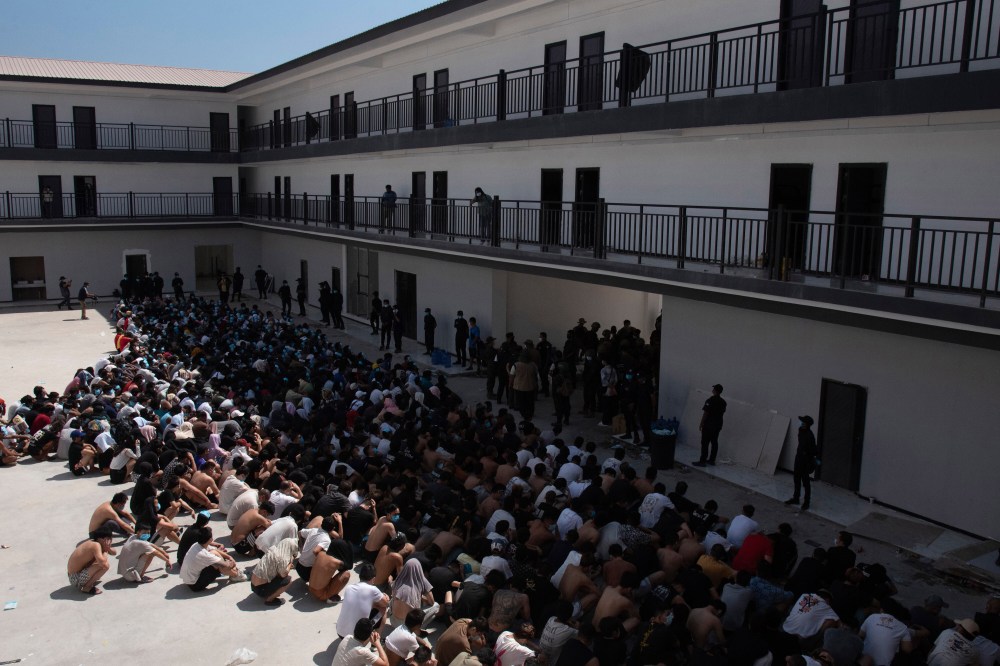
One in five signals from devices at four scam compounds linked to sanctioned entities in Myanmar was carried by a U.S.-registered company, according to an AP analysis of more than 200,000 device connections provided by International Justice Mission, an anti-trafficking non-profit. No other non-regional country came close.
Among them were Cogent Communications, Oracle, AT&T and DigitalOcean. Companies outside the U.S. — including UpCloud, in Finland, and GlobalTeleHost, in Canada — also had servers in the U.S. that hosted high-risk traffic from scam centers.
These companies all emphasized they can’t see the content their networks carry or what end users are doing online — privacy by design that constrains their ability to monitor for abuse. All said they respond to valid abuse reports and cooperate with law enforcement.
Oracle said it was “diligently working with law enforcement” on the material shared by AP. UpCloud said AP’s query had prompted an internal review and refinement of its risk assessment processes.
Starlink is the number one internet service provider in Myanmar and scammers have been a big part of its customer base, data shows
Elon Musk’s satellite internet service, Starlink, is still the number one internet service provider in Myanmar, including to scam centers, according to device data, public records and interviews — despite Congressional scrutiny and a widely publicized crackdown last fall, when the company said it cut off 2,500 kits near scam compounds.
But scammers are still using Starlink, including from a proliferation of new sites that have grown inside Myanmar since then, satellite imagery and device data International Justice Mission shared with AP show. At least 25 new sites have been constructed, and at least 13 of them have used Starlink to get online, device data shows. That data covers only a sample and may not capture all Starlink activity at these locations.
Starlink declined to respond to detailed questions, but has publicly said they cooperate with law enforcement – including a crackdown in May with the Department of Justice’s Scam Center Strike Force and other companies – and are committed to ensuring the service remains “a force for good.”
Critics say that in the US the cost of facilitating scamming is zero
Tech companies have access to a trove of data that could be used to minimize illicit activity, but doing so requires significant investment, cybersecurity analysts say.
“If there’s no disincentive to continuing this, if there’s no cost to actually facilitating scamming, then why would I spend a dollar to prevent scamming?” said Sascha Meinrath, the Palmer chair in telecommunications at Penn State University. “This is the problem. It’s identifiable, it’s addressable — at least somewhat — but it costs something. And right now the cost of facilitating scamming is zero.”
Outside the United States, that cost is starting to rise. The United Kingdom, the European Union, Australia and Singapore have introduced regulations that require companies to do more to prevent scams — or face financial penalties.
Meanwhile, in Washington, lawmakers and government officials have been asking American tech companies to cooperate to cut scammers off from U.S. infrastructure, but on a voluntary basis.
“The amazing part of this tragedy is that the criminals use our own infrastructure to commit the crime,” U.S. Attorney Jeanine Pirro, who leads a new Scam Center Strike Force that has sought to forge partnerships with industry, said at a recent conference. “When fraud is detected, industry must be ready, willing and able to stop it.”
—-
This story is part of an ongoing collaboration between The Associated Press and “FRONTLINE” (PBS) that includes an upcoming documentary.
—-
Kinetz reported from Rome, Washington, London and Lisbon, Portugal. AP journalists Juliet Linderman in Washington and Raynham, Mass, Ope Adetayo in Lagos, Nigeria, Larry Fenn in New York, Huizhong Wu in Bangkok and Michael Reo in Washington contributed to this story. Freelance reporter Rejimon Kuttappan in Thiruvananthapuram, India, and Anthony DeLorenzo, Martha Mendoza and Peter Klein from “FRONTLINE” (PBS) also contributed.
—-
The Associated Press receives financial support from multiple private foundations. AP is solely responsible for all content. Find AP’s standards for working with philanthropies, a list of supporters and funded coverage areas at AP.org.
—-
Contact AP’s global investigative team at Investigative@ap.org or https://www.ap.org/tips/