

Ontario jail guards ask for help after coroner’s report on suicides in corrections
Advertisement
Read this article for free:
or
Already have an account? Log in here »
To continue reading, please subscribe:

Digital Subscription
One year of digital access for only $205*
- Enjoy unlimited reading on winnipegfreepress.com
- Read the E-Edition, our digital replica newspaper
- Access News Break, our award-winning app
- Play interactive puzzles
*First annual payment billed as $205.00 + GST for one year. This annual subscription will automatically renew at $233.00 + GST every 52 weeks (10% off the regular annual price of $259.35). Offer available to new and qualified returning subscribers only. Cancel any time.
To continue reading, please subscribe:
Add Free Press access to your Brandon Sun subscription for only an additional
$1 for the first 4 weeks*
- Enjoy unlimited reading on winnipegfreepress.com
- Read the E-Edition, our digital replica newspaper
- Access News Break, our award-winning app
- Play interactive puzzles
*Your next Brandon Sun subscription payment will increase by $1.00 and you will be charged $17.95 plus GST for four weeks. After four weeks, your payment will increase to $24.95 plus GST every four weeks.
Read unlimited articles for free today:
or
Already have an account? Log in here »
TORONTO – Ontario’s jail guards are asking for more help after a coroner’s report detailed a suicide crisis among correctional workers and made more than two dozen recommendations to the provincial government.
Thirty-four correctional workers have died by suicide over the past 15 years, according to a report by the Office of the Chief Coroner, titled In the Light of Day.
The report was led by Dr. Reuven Jhirad, Ontario’s deputy chief coroner, and Rose Jumarang, who along with a team reviewed death investigations, spoke to more than 90 people and made 28 recommendations meant to improve the health of workers at both provincial and federal institutions.
There have been more suicides among Ontario correctional workers in recent years, the report found. Half of the deaths took place between 2010 and 2019 and the other half between 2020 and 2024, doubling the rate, it said.
“We have an emergency happening among correctional workers and we need the resources in place to actually address this emergency,” said Chad Oldfield, chair of the corrections division of the Ontario Public Service Employees Union.
Correctional workers currently have access to a maximum of $2,500 per year for psychological or social work treatment, the union said. That represents about 15-20 sessions a year with a mental health professional — far too few when someone is in crisis, Oldfield said.
The workers want support on par with what’s offered to Ontario Provincial Police, whose benefits cover unlimited outpatient and in-patient mental health treatment. The coroner’s recommendations include expanded mental health coverage and dealing with psychological hazards in the workplace.
“What we hear is the most frustrating thing is they look across the aisle and they say, ‘Hey, the OPP, who are under the same ministry and funded like us across the province, they have unlimited mental health benefits,'” Oldfield said.
“They can get the help they need immediately by picking up the phone and not have to pay for it.”
The cost of mental health supports is largely unaffordable for correctional workers, he said.
A spokesperson for the Ministry of the Solicitor General said it has taken several steps to improve mental health awareness, training and supports for correctional employees and their families.
The province is investing up to $45.2 million in the Mental Health Supports for Public Safety Personnel program, which provides access to supports for correctional employees, police officers, firefighters and others in the public safety sector, Saddam Khussain said in an email.
The ministry also implemented an employee wellness strategy in collaboration with the union in 2019, he said. The strategy includes a number of initiatives for correctional staff, including mandatory suicide prevention training, a corrections-specific peer support program and a therapy phone line available 24/7 that launched last month, he said. Mandatory trauma resiliency training is set to be added this year, he said.
The ministry is reviewing the report and its recommendations and will respond to the chief coroner’s office, Khussain said.
“Our thoughts are with the families, friends and colleagues of those who have tragically died by suicide,” he said.
“We recognize the unique challenges of working in the correctional system. Corrections employees see, experience, and are exposed to situations on a regular basis that can have serious and long-lasting impacts on their mental health and well-being.”
Oldfield and his colleagues at OPSEU noticed a cluster of three suicides in 2023 that gave them pause and drove them to seek to better understand what was happening on the front lines of correctional work, he said. They turned to a wide variety of government bodies for help and eventually found a welcoming ear in the coroner’s office.
Jhirad said he took on a deputy minister’s review, believing it would allow for the work to be done much faster than an inquest, which are often years in the making. It also allowed him to have a greater look at systemic issues, he said.
Research has shown the widespread devastation one suicide can have, and the report notes an average of 135 people are “impacted directly by a specific death by suicide.”
In an interview, the deputy chief coroner said his top recommendation is recognition: that correctional officers work in difficult environments, that they face many challenges and that they are a part of the public safety community.
Correctional workers are often overlooked when compared to police officers, paramedics and firefighters, Jhirad said. “Often not being seen to the same degree can sometimes cause the challenges,” he said.
The report also listed a series of more practical recommendations, including a range of training that includes work to build up resiliency.
Other recommendations include enhanced mental health support teams, access to peer support workers who understand the unique nature of the job, and multiple initiatives to better inform the government, correctional staff and the public.
Jhirad also said much needs to be done to confront the stigma surrounding mental health issues among correctional workers.
“There is no crying in corrections” is a saying Jhirad and his team heard several times during the review, he said.
Correctional workers had higher rates of mental health disorders such as major depressive disorder, PTSD, anxiety, substance-use disorders and suicidal ideation than the general population, he and his team found.
The review found a workplace culture marked by stigma, mistrust, emotional repression and “toxic masculinity,” all of which hinder those looking for help.
Correctional officers and paramedics have been found to have higher odds of suicidal behaviour compared to municipal and provincial police officers, the report found.
The review dealt only with the 34 deaths that were confirmed suicides, but Jhirad said he believes the real number is higher because they were limited to some degree by the data available. The vast majority of the confirmed suicides were men, with an average age of 50.
Overcrowding across Ontario’s jails has also affected correctional staff, the report found. Data obtained by The Canadian Press through freedom-of-information laws showed Ontario’s jails operated, on average, at 113 per cent capacity in 2023, a problem that worsened to 127 per cent capacity in 2025.
There were, on average, 11,058 inmates in Ontario’s jails last year, far greater than the 8,676 average capacity in the system.
“When you have more people in a confined space that can lead to more violence and that’s what we’re seeing,” said Adam Cygler, co-chair of the occupational stress injury subcommittee for the union.
Correctional workers are also dealing with a rise in moral injuries, he said.
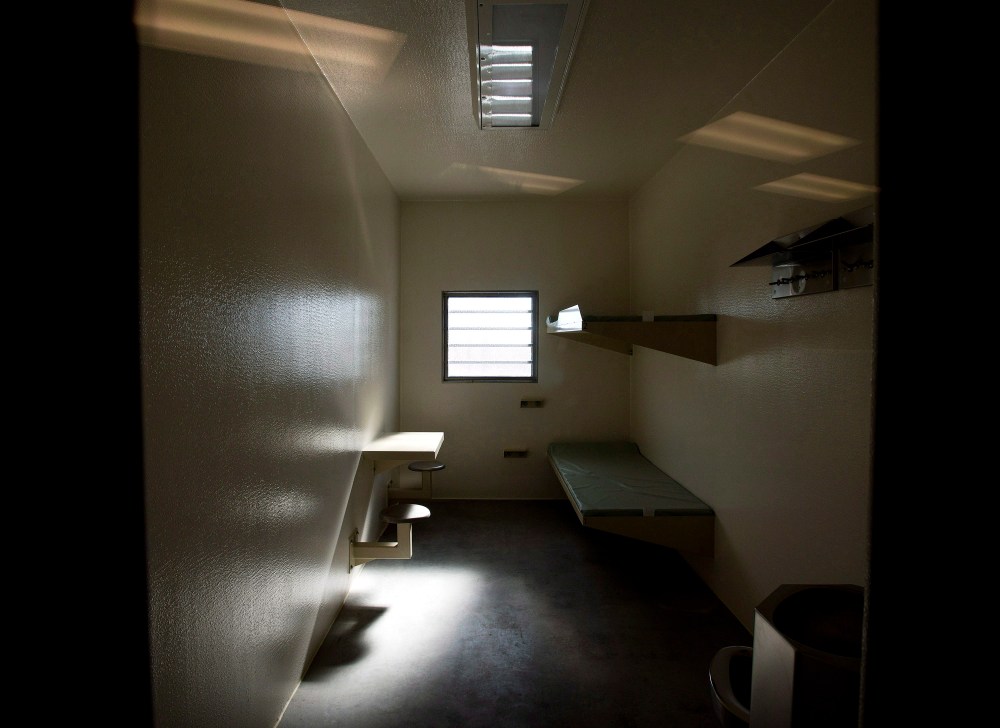
“Our members are working in these conditions, seeing things that they’re not OK with,” Cygler said. “Because of the capacity issues, it’s difficult for our members to see four people crammed into these small cells.”
Ministry data collected by the union show violence is up significantly across the board over the past decade or so. There were 7,307 inmate-on-inmate assaults in 2025, up from 2,880 such assaults in 2015. And there were 1,249 inmate-on-staff assaults in 2025, compared to 545 similar incidents in 2017.
Premier Doug Ford, in response to The Canadian Press’s reporting on jail overcrowding, pledged to build more facilities and hire more correctional workers.

The province has since announced several hiring initiatives and has plans to increase jail capacity by nearly 6,000 beds by 2050, with about 2,500 to be online within a decade.
—
If you or someone you know is thinking about suicide, support is available 24/7 by calling or texting 988, Canada’s national suicide prevention helpline.
—
This report by The Canadian Press was first published June 30, 2026.



