A ‘secular religion’
Soccer game days treated as religious events by some

Advertisement
Read this article for free:
or
Already have an account? Log in here »
To continue reading, please subscribe:

Digital Subscription
One year of digital access for only $205*
- Enjoy unlimited reading on winnipegfreepress.com
- Read the E-Edition, our digital replica newspaper
- Access News Break, our award-winning app
- Play interactive puzzles
*First annual payment billed as $205.00 + GST for one year. This annual subscription will automatically renew at $233.00 + GST every 52 weeks (10% off the regular annual price of $259.35). Offer available to new and qualified returning subscribers only. Cancel any time.
To continue reading, please subscribe:
Add Free Press access to your Brandon Sun subscription for only an additional
$1 for the first 4 weeks*
- Enjoy unlimited reading on winnipegfreepress.com
- Read the E-Edition, our digital replica newspaper
- Access News Break, our award-winning app
- Play interactive puzzles
*Your next Brandon Sun subscription payment will increase by $1.00 and you will be charged $17.95 plus GST for four weeks. After four weeks, your payment will increase to $24.95 plus GST every four weeks.
Read unlimited articles for free today:
or
Already have an account? Log in here »
The World Cup concludes Sunday with the final match to determine the winner. It’s not a religious event, but it has religion-like elements. This includes things like pilgrimages to matches, shared songs and rituals, “saints” like Messi and Ronaldo and, for many, a deep devotion to a team.
Religion has been evident during games, too. Some players from the Christian tradition crossed themselves after scoring goals. After Germany’s win over Curaçao, players from both teams stood together on the field in a prayer circle after the final whistle. Some Muslim players performed sujood, the Islamic act of bowing down in submission and gratitude to God, after scoring, while others did dua, raising their hands in grateful prayer.
Outside of the World Cup, football has even been used as a way to explain faith. Pope Francis, an avid football fan, did that in his homilies and speeches. Football, he said, can teach Christian virtues such as community, cooperation and teamwork over individualism.
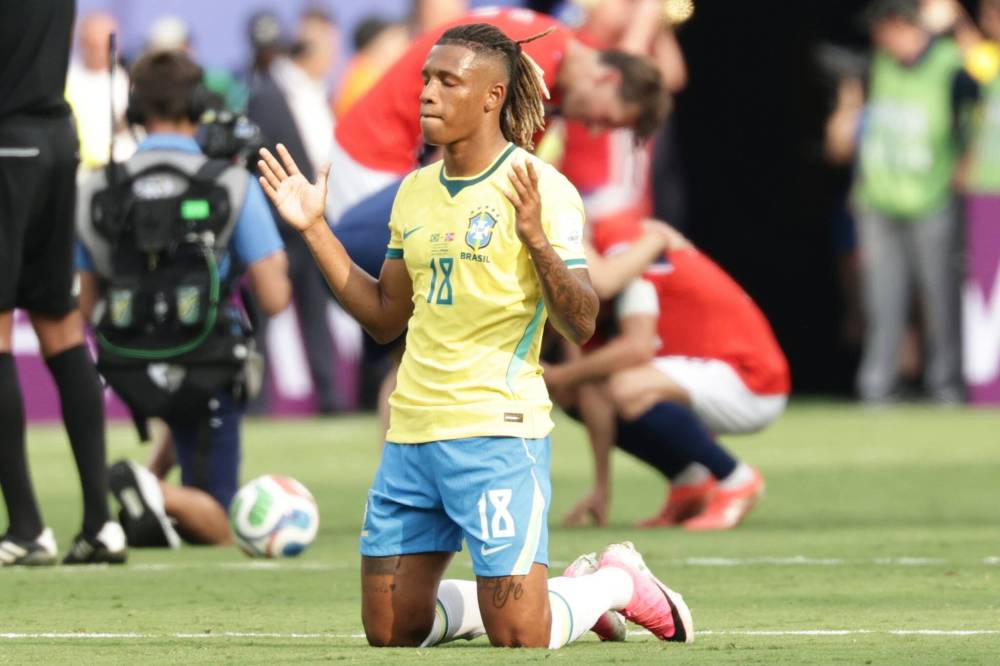
Adam Hunger / The Associated Press files
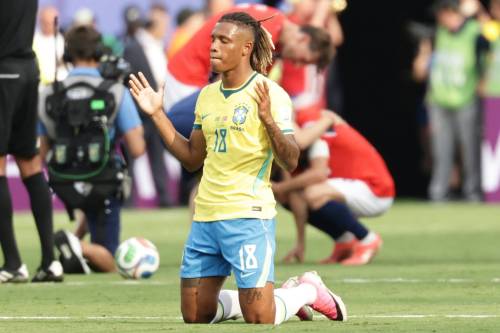
Brazil’s Danilo Santos prays as he reacts at the end of the World Cup match between Brazil and Norway in East Rutherford, N.J., on July 5.
Pope Leo XIV feels the same way. “Soccer reminds us of something we must not forget,” he said before the World Cup kicked off. “Life is not a race to show off on our own, but a path we learn to walk together. Anyone who does not know how to pass the ball, even if they have talent, has not yet understood the game. Anyone who does not know how to live with and for others has not yet understood life.”
Before he died, Spanish journalist and essayist Manuel Vázquez Montalbán observed that football has actually become a “secular religion” in some countries.
At a time when people were leaving traditional religion, football creates communities of belonging, he said, providing rituals and symbols, heroes like the saints of old and a sense of shared identity.
Game days, he added, are similar to religious events in the liturgical calendar like Easter, Christmas and saint’s days.
While I was not surprised to find religion in the World Cup, I did not expect to see it blamed by some for a team’s loss. That’s what happened in Brazil following that country’s defeat by Norway.
In an article in the Times of London, some Brazilians were quoted as blaming the loss on the growing presence of evangelicalism in that traditionally Catholic country.
“Brazil was better when their players were womanisers, drunkards and slightly out of shape. In other words, when they were behaving like Catholics,” argued one person on X.
The poster went to say that “evangelical Protestant sterilisation has flattened their ball, ruined their samba and obliterated their swag.”
Responders agreed, with one many suggesting that born-again Christianity, which is largely imported from the U.S., is the root of the problem. “Pray like a gringo, play like a gringo” was how one person put it.
The debate is loosely based on some truths, the Times article said, noting that since Brazil’s last World Cup victory in 2002, the country has undergone a significant religious shift from being 80 per cent Roman Catholic to being just 56 per cent in the latest census.
In the same time period, evangelicals in that country have grown from 15 per cent of the population to about 27 per cent.
That growth is visible on the Brazilian team, where around 20 out of 26 players say they are evangelical Christians. This includes striker Neymar da Silva Santos Jr, who the Times said had a playboy reputation before he was baptised and born again in 2017.
Another striker who identifies as an evangelical is Endrick Felipe Moreira de Sousa. When he missed a crucial goal opportunity at the end of the first half of the Norway game, he said he knew God was on his side despite that miss. “It was a moment when I could have done better. I didn’t, but I thank God for the opportunity,” he said.
That take did not go down well with Pedro Rosano, a Brazilian football journalist: “I wish so much that the players of the Brazilian national team had Catholic guilt: remission of sins, repentance, penance … the evangelical guilt is too conformist and permissive; they outsource everything to God and take responsibility for nothing.”
Some observers note that the evangelicalism that permeates much of that faith in Brazil focuses on an individual experience of salvation, versus the more traditional Roman Catholic understanding of faith as something that is more collective and communal.

Some commentators made that connection, observing that the country’s golden age of football —it has won five World Cups from 1958 to 2002 — emerged from a culture that prized the idea that the team was bigger than any one player, said Andre Pagliarini, a Brazilian historian at Louisiana State University.
That community sense eroded across Brazil in tandem with the rise of the evangelical faith and its focus on individualism, he told the Times.
Of course, evangelicalism isn’t to blame for Brazil’s loss; the good play of the Norwegian team, and players like Erling Haaland, had a lot to do with it.
But it revealed another way of seeing how religion impacts the “beautiful game.”
Jdl562000@yahoo.com
The Free Press is committed to covering faith in Manitoba through our Religion in the News project. This reporting continues because readers like you step forward to fund it.
Donate now to support our reporting on religion.
Your donation is eligible for a charitable tax receipt.
BECOME A FAITH JOURNALISM SUPPORTER
Our newsroom depends on a growing audience of readers to power our journalism. If you are not a paid reader, please consider becoming a subscriber.
Our newsroom depends on its audience of readers to power our journalism. Thank you for your support.
The Free Press is committed to covering faith in Manitoba through our Religion in the News project. This reporting continues because readers like you step forward to fund it.
Donate now to support our reporting on religion.
Your donation is eligible for a charitable tax receipt.
BECOME A FAITH JOURNALISM SUPPORTER
Our newsroom depends on a growing audience of readers to power our journalism. If you are not a paid reader, please consider becoming a subscriber.
Our newsroom depends on its audience of readers to power our journalism. Thank you for your support.
Related Articles
Rudd, Rodman score for the Spirit in 2-1 victory over the Legacy


Advertisement Advertise With Us
Advertisement Advertise With Us
The Free Press acknowledges the financial support it receives from members of the city’s faith community, which makes our coverage of religion possible.