Aerial photos show devastation of Ontario First Nation as wildfires burn across north

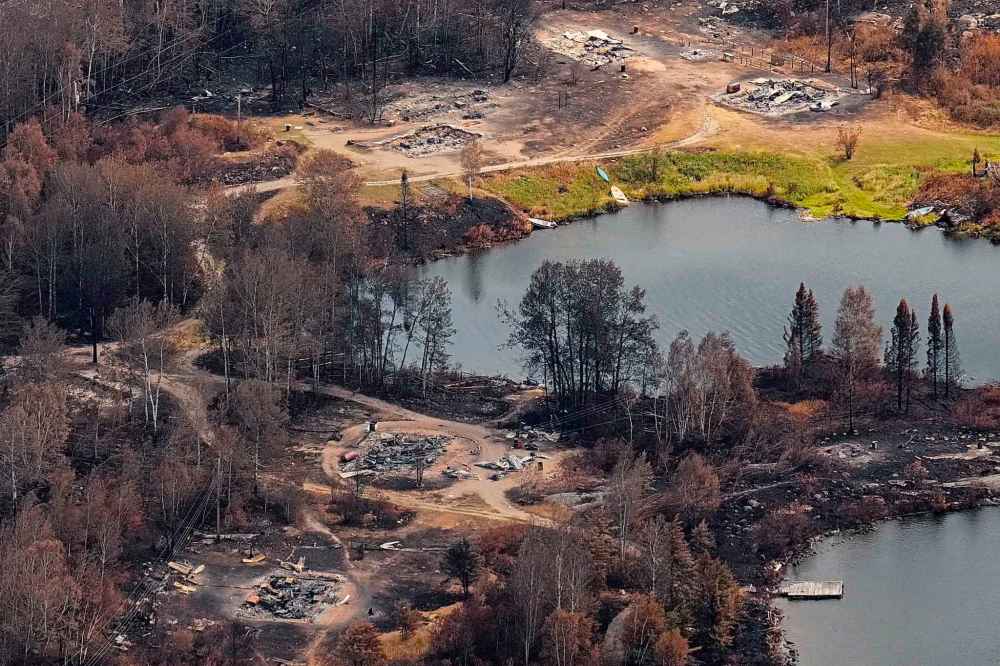
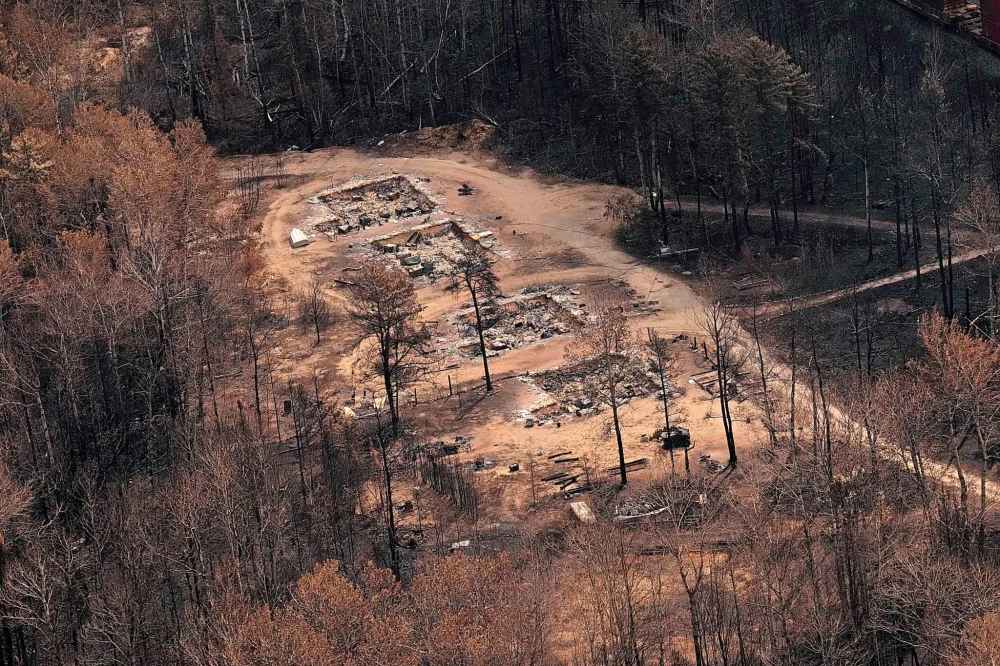
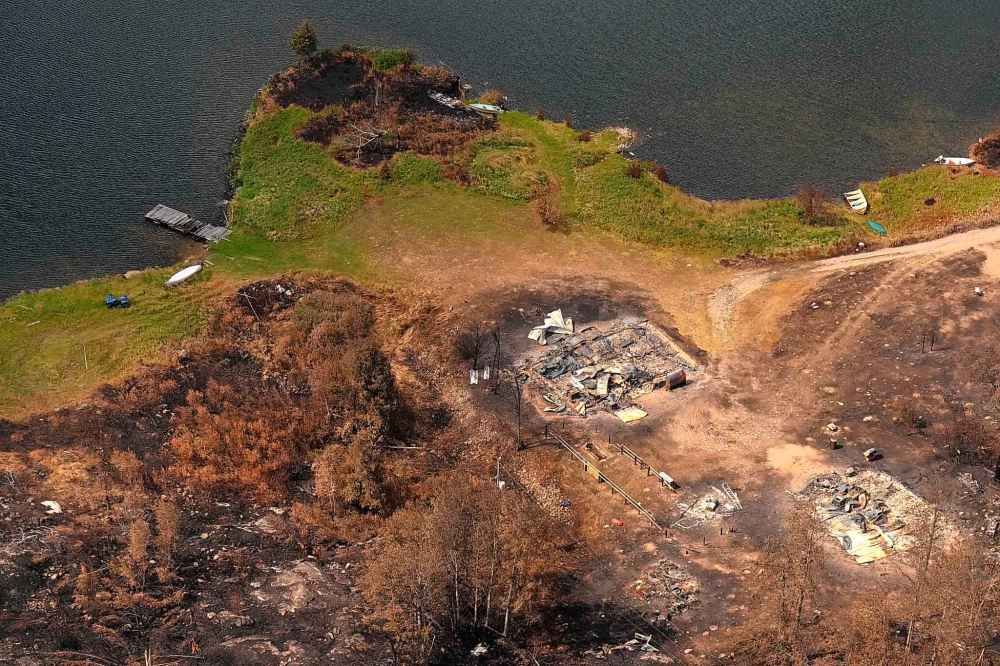
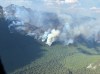
Aerial photographs taken above Namaygoosisagagun First Nation show the devastation wrought by a fast-moving wildfire that forced residents to flee last week as flames closed in on their northern Ontario community.

Read this article for free:


or

Already have an account? Log in here »

To continue reading, please subscribe:

Subscribe and receive a limited-edition Free Press branded hat or tote.

Digital Subscription

One year of digital access for only $205*

  • Enjoy unlimited reading on winnipegfreepress.com
  • Read the E-Edition, our digital replica newspaper
  • Access News Break, our award-winning app
  • Play interactive puzzles

*First annual payment billed as $205.00 + GST for one year. This annual subscription will automatically renew at $233.00 + GST every 52 weeks (10% off the regular annual price of $259.35). Offer available to new and qualified returning subscribers only. Cancel any time.

To continue reading, please subscribe:

Add Free Press access to your Brandon Sun subscription for only an additional

$1 for the first 4 weeks*

  • Enjoy unlimited reading on winnipegfreepress.com
  • Read the E-Edition, our digital replica newspaper
  • Access News Break, our award-winning app
  • Play interactive puzzles
Start now

*Your next Brandon Sun subscription payment will increase by $1.00 and you will be charged $17.95 plus GST for four weeks. After four weeks, your payment will increase to $24.95 plus GST every four weeks.

Aerial photographs taken above Namaygoosisagagun First Nation show the devastation wrought by a fast-moving wildfire that forced residents to flee last week as flames closed in on their northern Ontario community.

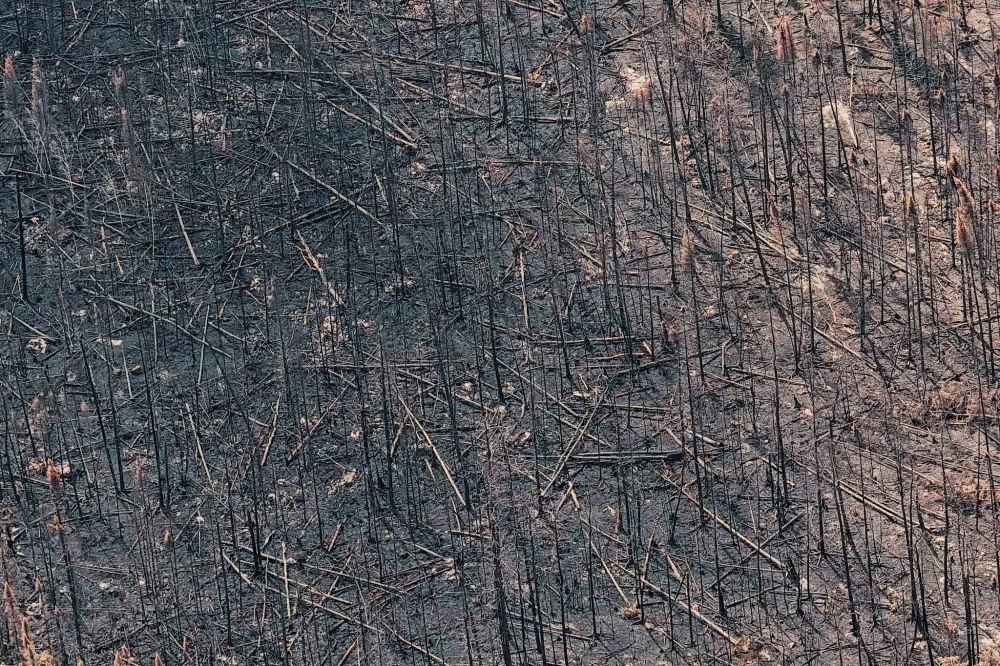
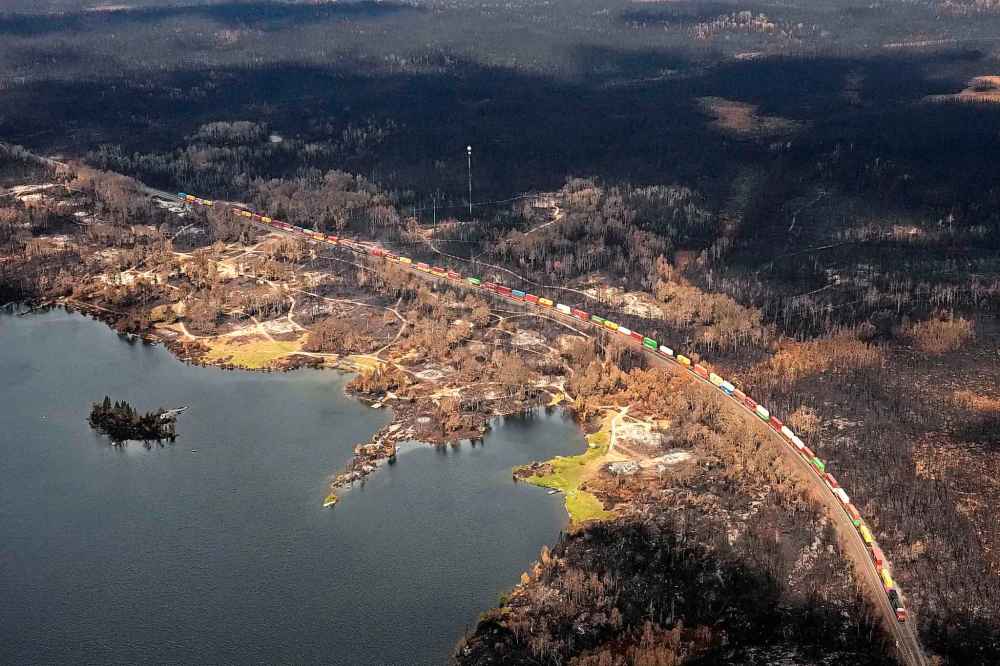
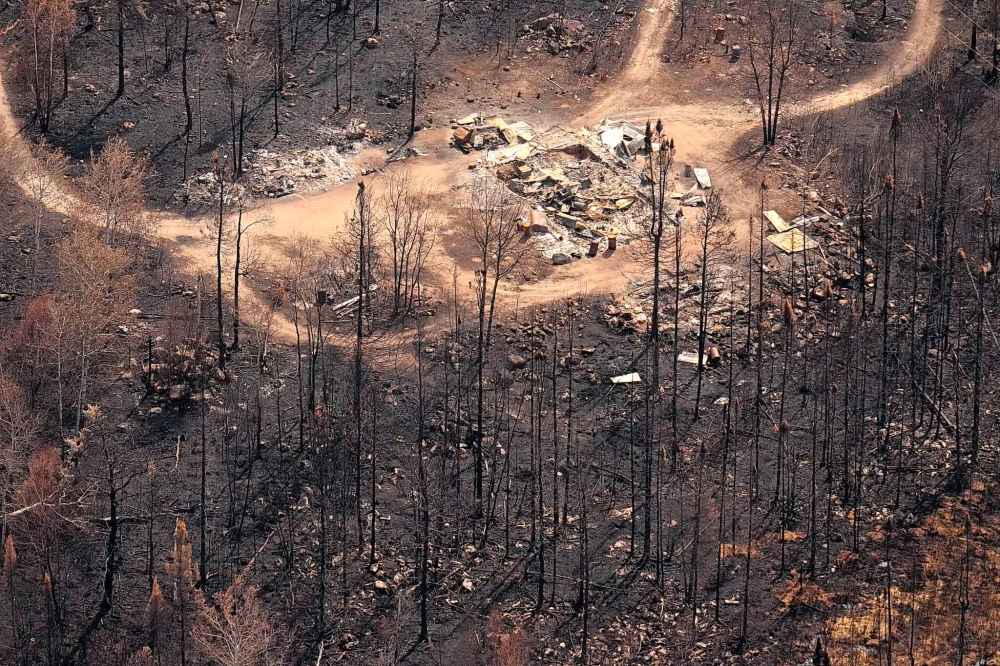
The photos show scorched earth and debris where buildings once stood, and the charred remnants of trees.

Anishinabek Nation Grand Council Chief Linda Debassige said last week that more than 30 homes, a school and community centres were reduced to ashes as Namaygoosisagagun, also known as Collins First Nation, was swallowed by fire.

The residents fled without help from the province. Dramatic photos and videos of their evacuation showed people escaping on boats as a huge wall of smoke and flames rose behind them.

“My members barely escaped with the clothes on their backs. My community was left to evacuate without notice and support,” said Collins First Nation Chief Helen Paavola at a news conference on Tuesday, during which First Nations leaders demanded a public inquiry into Ontario’s wildfire response.

The First Nations leaders said the province left communities to fend for themselves without timely support for evacuations.

Premier Doug Ford said Tuesday his government did “everything we possibly can” to respond to the wildfires. Some of the fires spread so fast they were only spotted once they were dangerously close to First Nations, the government has said.

Another First Nation, Whitewater Lake, has also reported destruction from wildfire. Twelve of the 13 communities evacuated so far due to the forest fires are First Nations.
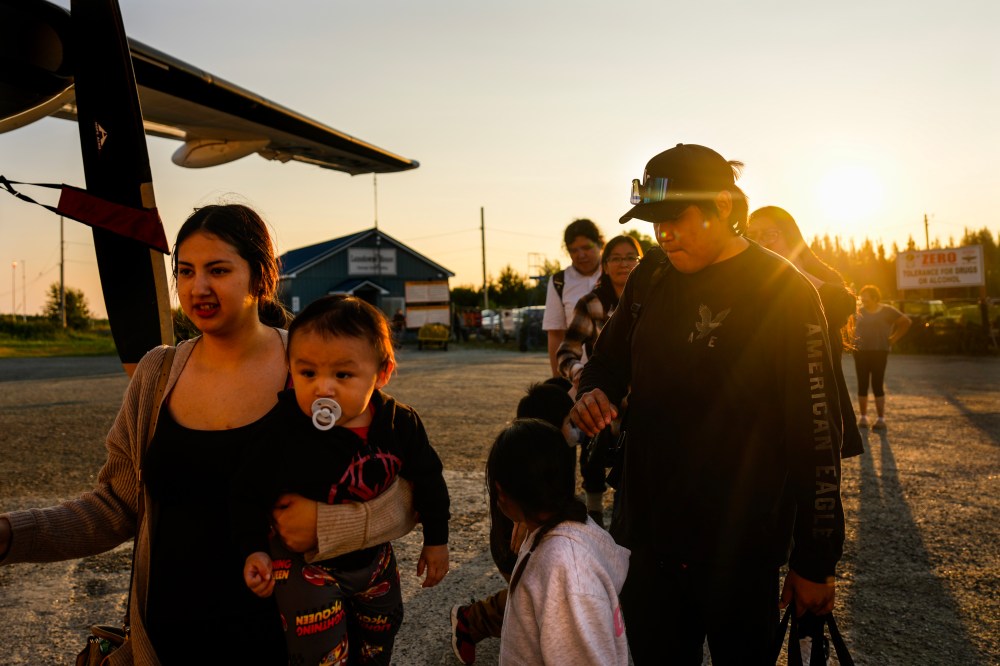
A young family boards a plane as they are evacuated from Neskantaga First Nation, on Saturday, July 18, 2026. The community of Neskantaga has been put under a state of emergency by the Chief and Council in response to the threat of wildfires and weather conditions impacting the community. THE CANADIAN PRESS/Chris Young

More than 180 active wildfires continue to rage in Ontario’s north, including 12 that had been sparked in the last 24 hours.

Ontario Provincial Police said Wednesday that anyone found in areas under closure orders can face an $880 fine, as well as an additional $110 fine and three driver’s licence demerit points for failing to obey road signs.

The OPP warning comes after Ford told wildfire evacuees not to return to their homes.

The premier said at a news conference in Thunder Bay, Ont., on Saturday that returning to closed areas could jeopardize firefighting efforts, since waterbombers won’t drop water on areas where pilots spot people on the ground.

An official with one evacuated community said last week that 26 residents returned to the area of Whitesand First Nation and the neighbouring town of Armstrong over concerns the province wasn’t doing enough to protect their homes.
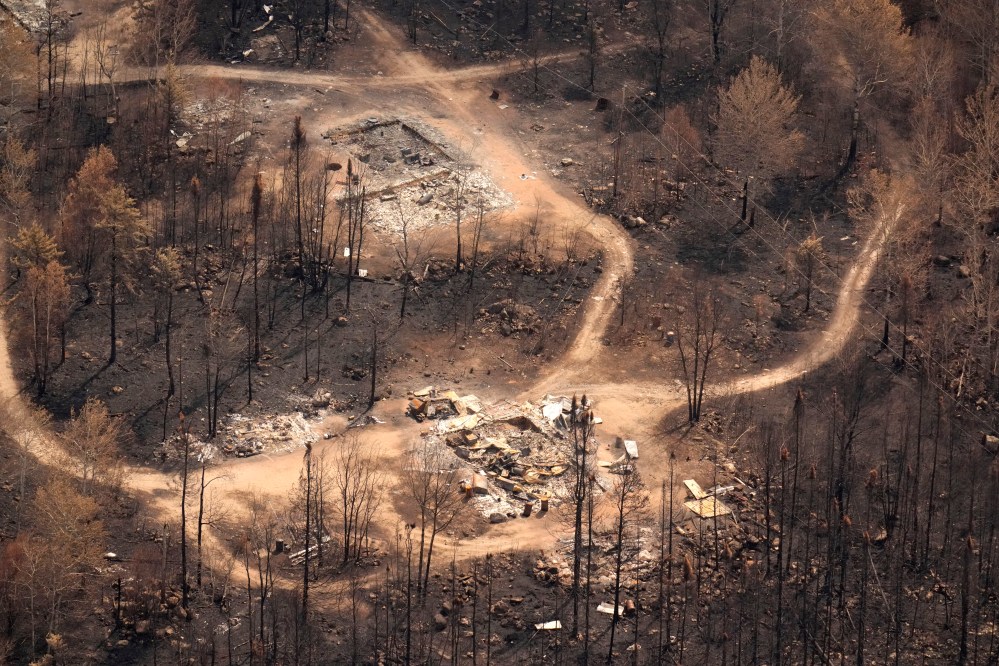
Wildfire damage is pictured from the air in Collins First Nation, a small, remote Ojibwa community located in northwestern Ontario, about 250 km north of Thunder Bay, Ont., on Wednesday, July 22, 2026. THE CANADIAN PRESS/Chris Young

Whitesand First Nation emergency response manager Devon Wanakamik said the people who returned were helping to dig a firebreak with heavy machinery, as well as laying sprinkler lines, in violation of the evacuation order. Wanakamik also urged residents not to return to the area.

Natural Resources Minister Mike Harris has said that the province has teams to protect infrastructure from wildfires but they’re “spread pretty thin” across the province.

Early estimates suggest the flames have ravaged more of the province’s forests this season than any previous year on record, burning through more than 7,250 square kilometres so far.

Most of the fires in the province have burned in the last 10 days, and forced more than 1,800 people from their homes.

This report by The Canadian Press was first published July 22, 2026.
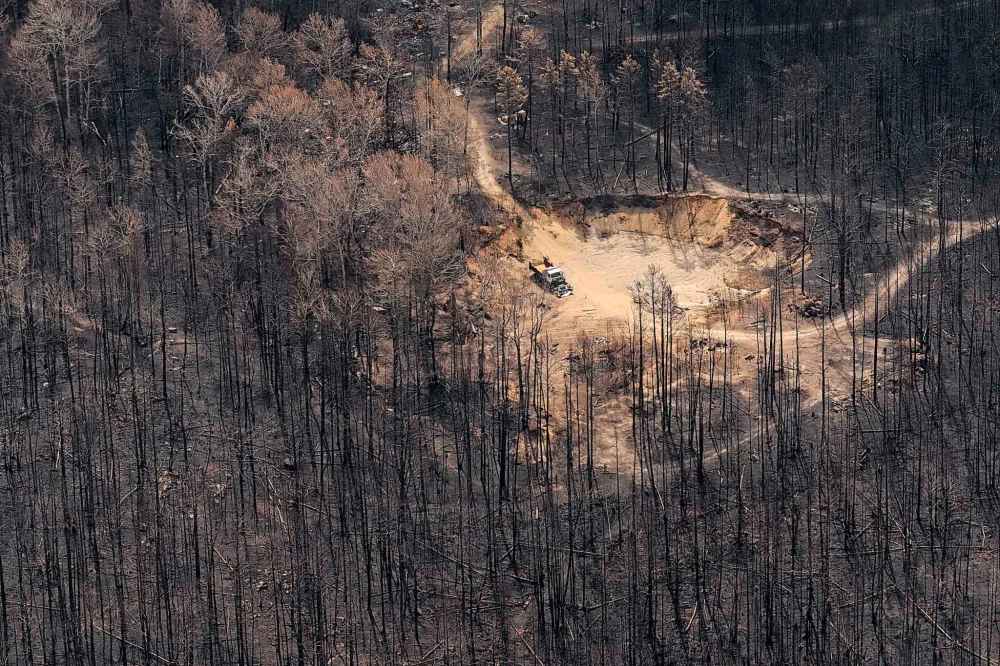
Wildfire damage is pictured from the air in the immediate area surrounding Collins First Nation, a small, remote Ojibwa community located in northwestern Ontario, about 250 km north of Thunder Bay, Ont., on Wednesday, July 22, 2026. THE CANADIAN PRESS/Chris Young

–With files from Jordan Omstead
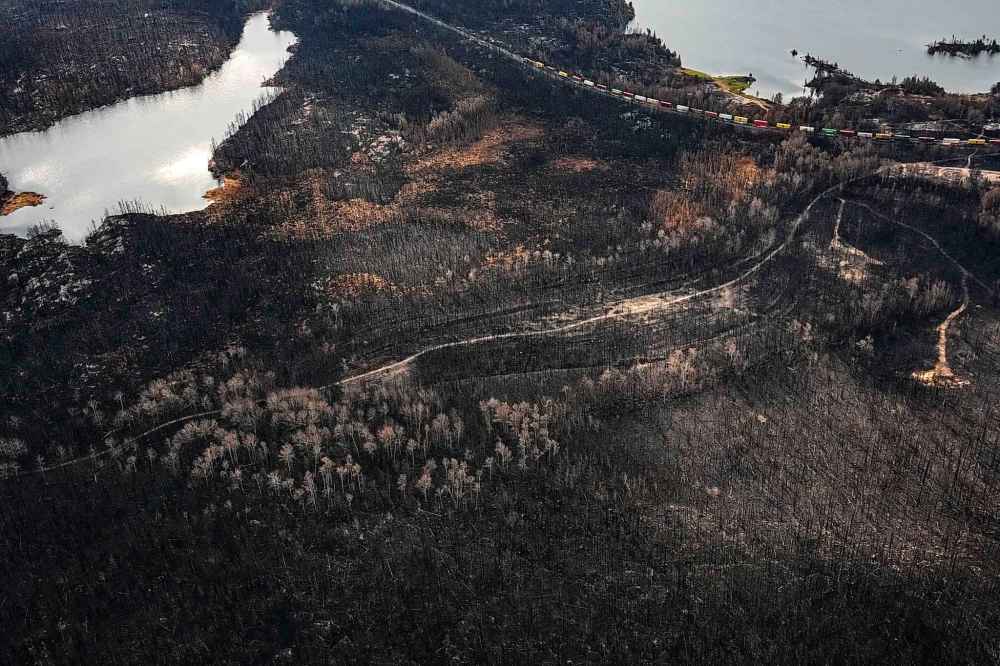
Wildfire damage is pictured from the air in Collins First Nation, a small, remote Ojibwa community located in northwestern Ontario, about 250 km north of Thunder Bay, Ont., on Wednesday, July 22, 2026. THE CANADIAN PRESS/Chris Young
Wildfire damage is pictured from the air in the immediate area surrounding Collins First Nation, a small, remote Ojibwa community located in northwestern Ontario, about 250 km north of Thunder Bay, Ont., on Wednesday, July 22, 2026. THE CANADIAN PRESS/Chris Young
Wildfire damage is pictured from the air in Collins First Nation, a small, remote Ojibwa community located in northwestern Ontario, about 250 km north of Thunder Bay, Ont., on Wednesday, July 22, 2026. THE CANADIAN PRESS/Chris Young
Wildfire damage is pictured from the air in the immediate area surrounding Collins First Nation, a small, remote Ojibwa community located in northwestern Ontario, about 250 km north of Thunder Bay, Ont., on Wednesday, July 22, 2026. THE CANADIAN PRESS/Chris Young
Report Error Submit a Tip

More Stories

All that glitters … could work here

Editorial 4 minute read Preview

All that glitters … could work here

Editorial 4 minute read 2:00 AM CDT

Sometimes, it’s hard to even suggest a change, because it seems there is always a plethora of people ready to tell you that your idea just won’t work.

But a unique program is working in Portland, Ore. and some version of that program could work in Winnipeg as well. Something that glitters may just be a small nugget of gold.

G.L.I.T.T.E.R. stands for Ground Score Leading Inclusivity Together Through Environmental Recovery.

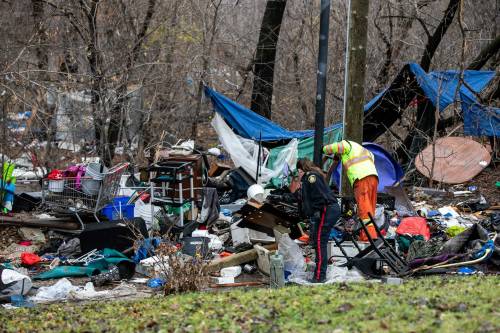
It’s a long handle for a simple concept. Launched in 2021, the program hires people who are either unhoused or have recently been unhoused to do litter collection and tentside garbage collection for homeless encampments in the Portland region.

Read
2:00 AM CDT

Enrolment up at alternative schools

Maggie Macintosh 6 minute read Preview

Enrolment up at alternative schools

Maggie Macintosh 6 minute read Yesterday at 10:02 AM CDT

Independent schools are preparing to welcome a record number of students as more families pay for faith-based instruction and secular alternatives.

The overwhelming majority of Manitoba children — 200,000 — are starting in the public school system this fall. Since 2000, the percentage of students enrolled elsewhere — in homeschools, funded and non-funded independent schools — has nearly doubled, to 12 per cent from seven per cent.

“If money was no object, we could fill dozens and dozens more classrooms with the demand for independent education,” said Andrew Micklefield, executive director of the Manitoba Federation of Independent Schools, who is a former Tory government house leader.

The King’s School, Dasmesh School, Springs Christian Academy, Beautiful Saviour Lutheran School, Steinbach Christian School and IQRA Islamic School have all either upscaled at some point over the last five years or are actively in the process of expanding their footprint.

Read
Yesterday at 10:02 AM CDT

Canadians do not want to sacrifice nature for development

Emily McMillan and Akaash Maharaj 4 minute read 2:00 AM CDT

Prime Minister Mark Carney’s pledge to build faster — “Build, baby, build” — helped propel the Liberals to victory, but his government’s push to fast-track major development projects by cutting environmental oversight is sharply out of step with Canadians’ priorities.

It is a political miscalculation that could come back to haunt the Liberals at the ballot box.

New polling, commissioned by Nature Canada and conducted by EKOS Research Associates, shows strong support among Canadians for protecting nature and endangered species while building the economy.

Canadians soundly reject the notion that they must sacrifice conservation protections for economic development.

Parts of River Heights hammered by storm

Melissa Martin 5 minute read Preview

Parts of River Heights hammered by storm

Melissa Martin 5 minute read Yesterday at 5:54 PM CDT

A powerful storm cut a swath of destruction through River Heights on Sunday, leaving much of the area without power.

Nobody was hurt in the storm.

By the time it subsided, parts of the quiet neighbourhood, especially Borebank and Lindsay streets between Grant and Taylor, had been ravaged: power lines downed, Manitoba Hydro poles toppled, trees splintered and crashed down on vehicles and homes.

In one case, a vehicle was flipped into a yard and sat under a partially downed tree. Shingles were stripped from roofs. Some residents described looking out during the storm and seeing power lines ablaze and the blue glow of electricity arcing over their backyards.

Read
Yesterday at 5:54 PM CDT

Dauphin ER reopening ‘monumental team effort’

Abiola Odutola 5 minute read Preview

Dauphin ER reopening ‘monumental team effort’

Abiola Odutola 5 minute read Yesterday at 9:55 PM CDT

DAUPHIN — The emergency department at Dauphin Regional Health Centre reopened Monday morning after a closure of just over two months, restoring 24-7 emergency services to Dauphin and surrounding communities.

Health Minister Uzoma Asagwara hailed the reopening as a major milestone.

“It’s been a monumental team effort to get to this point,” Asagwara told the Brandon Sun on Monday afternoon before embarking on a tour of the facility.

“We asked everyone to approach this as one team and that’s exactly what we’re seeing the results of now.”

Read
Yesterday at 9:55 PM CDT

Time to ditch role as ex’s emotional crutch

Maureen Scurfield 5 minute read 2:00 AM CDT

DEAR MISS LONELYHEARTS: I mourn the end of summer every fall, but this year it’s far worse. My partner (a man, like me) broke up with me and my menagerie of animals.

The hardest part is that he still calls me before he goes to sleep at night — to see if I’m OK, and to tell me essentially, to buck up! Nothing like losing somebody and being told to be happy about it by the exact person you’ve lost.

He goes on about his new life and the people he’s meeting, and sometimes I just have to hang up on him.

Why does he bother calling? It seems like he maybe doesn’t know if he’s completely through with me yet, so he’s using me as a crutch. (Do I sound bitter?) What can I do?