Long may you scamper, sweet little Jimothy

Advertisement
Read this article for free:
or
Already have an account? Log in here »
To continue reading, please subscribe:

Digital Subscription
One year of digital access for only $205*
- Enjoy unlimited reading on winnipegfreepress.com
- Read the E-Edition, our digital replica newspaper
- Access News Break, our award-winning app
- Play interactive puzzles
*First annual payment billed as $205.00 + GST for one year. This annual subscription will automatically renew at $233.00 + GST every 52 weeks (10% off the regular annual price of $259.35). Offer available to new and qualified returning subscribers only. Cancel any time.
To continue reading, please subscribe:
Add Free Press access to your Brandon Sun subscription for only an additional
$1 for the first 4 weeks*
- Enjoy unlimited reading on winnipegfreepress.com
- Read the E-Edition, our digital replica newspaper
- Access News Break, our award-winning app
- Play interactive puzzles
*Your next Brandon Sun subscription payment will increase by $1.00 and you will be charged $17.95 plus GST for four weeks. After four weeks, your payment will increase to $24.95 plus GST every four weeks.
Read unlimited articles for free today:
or
Already have an account? Log in here »
We desperately needed a folk hero this summer, with its wildfires and storms and diarrhea lettuce. Someone to unite us, to inspire us, to get us through.
Enter Jimothy.
Jimothy is an off-kilter raccoon with an appropriately off-kilter name from Seattle who has gone viral for his short, round body — likely the result of a congenital condition called short spine syndrome.
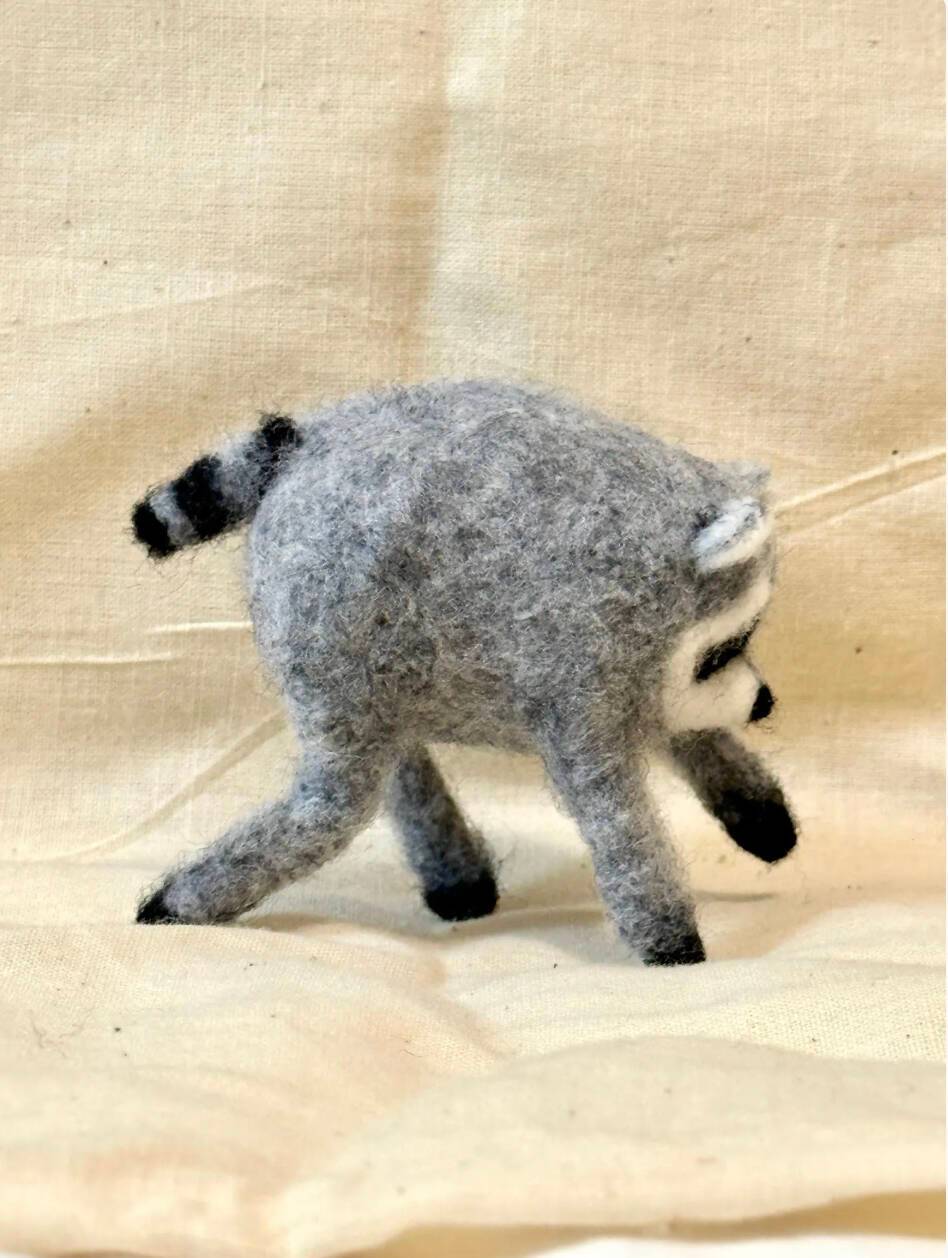
PassingcloudsCA/Etsy
This hand-felted ornament of Jimothy is for sale on Etsy for $56.
I have seen various creative descriptions of Jimothy online: “a child’s rendering come to life,” or “a raccoon drawn from memory,” or not a raccoon but a “rcn,” owing to his truncated spine.
To me, he’s almost mythological looking, especially when captured loping across the frame of a blurry photo with his disproportionately long legs. Like Bigfoot, but, you know, little.
Like the viral animals before him, Jimothy has become Seattle’s unofficial mascot, inspiring tattoos, art, crafts and even his own Google animation.
And who more deserving than an adorably misshapen little trash panda who has overcome all odds?
Perhaps it’s a sign of the times that, every few months, we have a new animal we collectively rally around. In February, it was Punch, the bullied baby Japanese macaque at the Ichikawa City Zoo who was given a monkey stuffie after his mom abandoned him.
In June, it was Neil the Seal, the unruly juvenile elephant seal from Tasmania (who has actually been a local legend since his birth in 2020), chest-bumping SUVs and generally menacing the town.
Neil reminds me of my girl Freya (RIP). Freya, you may recall, was the enormous Norwegian walrus who went viral in 2022 because she liked to sunbathe on people’s fancy boats in the Oslo Fjord and sink them in the process. Just an unbothered queen, trying to have a hot girl summer.
Well, after Freya went viral, she started drawing IRL crowds. Humans started acting in increasingly unhinged ways to get her attention and, in the end, she had to be euthanized.
Social media has changed how we view and interact with animals, especially wild ones. We give them names, we project personalities onto them and we delight in their antics because, how cool is it, really, that we can see an elephant seal in Tasmania and a raccoon with a rare congenital condition in Seattle? How incredible is it that so many different species inhabit this spinning ball in space?
Zoos and rehabilitation centres are often home to what are called “ambassador animals,” a representative of a species (typically a threatened one that cannot, for whatever reason, live in the wild anymore) that can help educate the public — particularly on the effect human behaviour has on that species. Think of the polar bears at Assiniboine Park Zoo, who we also name and think of as our own. Think of how seeing them might make you think about their changing habitats up north.
It would be great if their viral wild brethren could play the same role in raising awareness. But sometimes these parasocial online relationships with animals have deleterious effects on wildlife.
People, stars of their own Disney movies in their minds, start feeding them, getting too close to them, or, in the case of famous animals, trying to capture sightings for social media. And it’s often the animal who has to pay the ultimate price.

Peel back the layers of these viral stories and you’ll often find sadness. One expert interviewed by a media outlet says Jimothy is likely in pain. Neil butts with inanimate objects because he doesn’t have fellow juvenile seals to spar with. Freya just wanted to be left alone because walruses need a lot of rest, her lack of fear of humans mistaken for friendliness.
This is obviously a site of human projection, too; we don’t know how these animals feel, though the idea that Neil might be lonely or Jimothy might be hurting kills me.
But I hope our delight — and empathy — can translate into better care for our fellow living things and their habitats. Every news story about Jimothy ends the same way: a reminder for people to keep their distance and let him do his thing, undisturbed. Other cities, such as Toronto, are warning people not to touch raccoons “amid Jimothy craze,” to quote one headline.
Godspeed, Jimothy. I hope you survive your 15 minutes of fame and have a good long life.
jen.zoratti@winnipegfreepress.com
Jen Zoratti is a columnist and feature writer working in the Arts & Life department, as well as the author of the weekly newsletter NEXT. A National Newspaper Award finalist for arts and entertainment writing, Jen is a graduate of the Creative Communications program at RRC Polytech and was a music writer before joining the Free Press in 2013. Read more about Jen.
Every piece of reporting Jen produces is reviewed by an editing team before it is posted online or published in print – part of the Free Press‘s tradition, since 1872, of producing reliable independent journalism. Read more about Free Press’s history and mandate, and learn how our newsroom operates.
Our newsroom depends on a growing audience of readers to power our journalism. If you are not a paid reader, please consider becoming a subscriber.
Our newsroom depends on its audience of readers to power our journalism. Thank you for your support.
Jen Zoratti is a columnist and feature writer working in the Arts & Life department, as well as the author of the weekly newsletter NEXT. A National Newspaper Award finalist for arts and entertainment writing, Jen is a graduate of the Creative Communications program at RRC Polytech and was a music writer before joining the Free Press in 2013. Read more about Jen.
Every piece of reporting Jen produces is reviewed by an editing team before it is posted online or published in print – part of the Free Press‘s tradition, since 1872, of producing reliable independent journalism. Read more about Free Press’s history and mandate, and learn how our newsroom operates.
Our newsroom depends on a growing audience of readers to power our journalism. If you are not a paid reader, please consider becoming a subscriber.
Our newsroom depends on its audience of readers to power our journalism. Thank you for your support.
Advertisement Advertise With Us
Advertisement Advertise With Us