

Report urges Winnipeg to set up fourth emergency service for mental health calls
Advertisement
Read this article for free:
or
Already have an account? Log in here »
To continue reading, please subscribe:

Digital Subscription
One year of digital access for only $205*
- Enjoy unlimited reading on winnipegfreepress.com
- Read the E-Edition, our digital replica newspaper
- Access News Break, our award-winning app
- Play interactive puzzles
*First annual payment billed as $205.00 + GST for one year. This annual subscription will automatically renew at $233.00 + GST every 52 weeks (10% off the regular annual price of $259.35). Offer available to new and qualified returning subscribers only. Cancel any time.
To continue reading, please subscribe:
Add Free Press access to your Brandon Sun subscription for only an additional
$1 for the first 4 weeks*
- Enjoy unlimited reading on winnipegfreepress.com
- Read the E-Edition, our digital replica newspaper
- Access News Break, our award-winning app
- Play interactive puzzles
*Your next Brandon Sun subscription payment will increase by $1.00 and you will be charged $17.95 plus GST for four weeks. After four weeks, your payment will increase to $24.95 plus GST every four weeks.
Read unlimited articles for free today:
or
Already have an account? Log in here »
WINNIPEG – Thousands of calls could be diverted from Winnipeg’s emergency services with the development of a fourth response model dedicated to handling mental health crises, says a report.
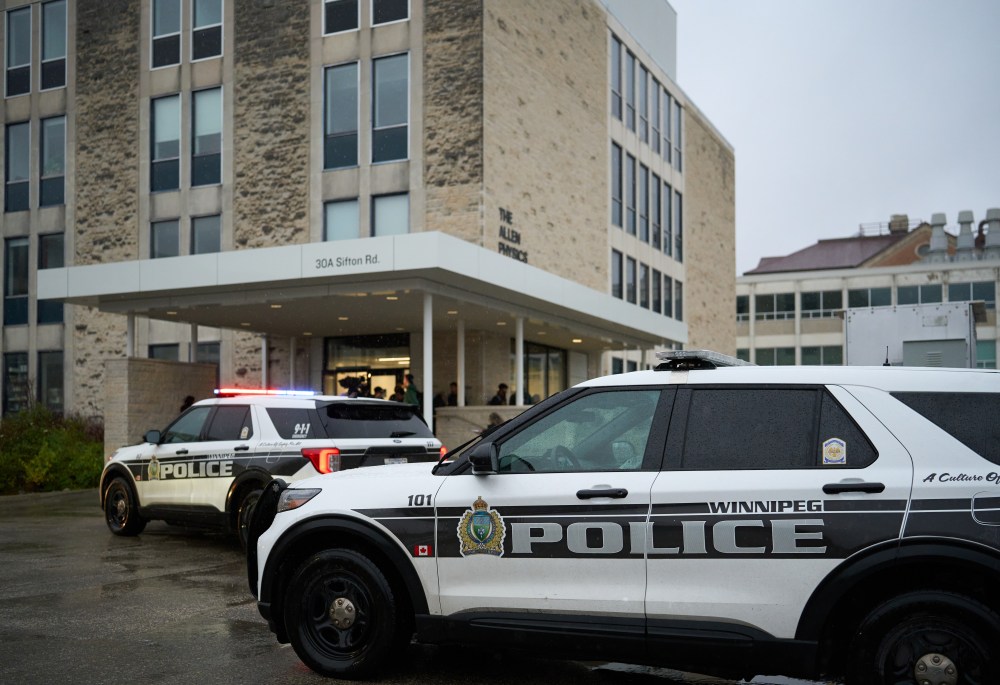
Police, fire and paramedic services are the current response options when someone dials 911.
The report, initiated last year by Mayor Scott Gillingham and released Tuesday, proposes that the city work with Indigenous organizations, community agencies, health-care providers and emergency services to determine who’s best to respond to a call.
“If we keep responding the same way we have been responding, we’re going to keep getting the same results. This is a different model. It disrupts the system in a very positive way,” said Gillingham.
“This is really about the people at the end of the call … let’s get them the response that they need to meet their crisis.”
Gillingham has long supported dispatch trained, trauma-informed responders, allowing police, fire and paramedics to focus on violent crime and health calls.
Elsewhere in Canada, cities including Toronto have implemented services that dispatch mental health workers and paramedics to calls that don’t pose safety concerns.
Gillingham’s office had a consulting firm outline how a proposed Winnipeg community response service could work with community partners, health supports and 911 operations.
The report says callers would still dial 911, and their case would be triaged and passed along to the appropriate responder.
If there’s no concern of violence, a mobile crisis response team would be dispatched. It could include youth-focused supports, an Indigenous-led team or specialized resources to address complex mental health and substance use disorders.
The report also makes a case for a direct crisis care line for mental health calls, which could be implemented at a later date.
It says that each year there are about 3,800 calls police respond to, and roughly 6,300 that fire and paramedics handle, that could be diverted to a new mental health model.
The majority of mental health calls are considered non-violent, said police Chief Gene Bowers.
He said his force has become the default responder to these types of calls, because police are the only 24-7 option.
“Police will always respond when there is potential for violence, an immediate threat to public safety or where there is criminality. But when a community-based response is the better option, we should have the ability to provide that across our city,” he said.
The Police Accountability Coalition has advocated for community-based crisis response since some wellness checks ended in fatal police shootings in Winnipeg.
In 2019, an officer responding to a call killed Machuar Madut. It was reported that the 43-year-old struggled with mental health issues.
In 2023, police fatally shot Afolabi Stephen Opaso, 19, during a wellness check at an apartment.
And earlier this month, police killed a 42-year-old man while responding to reports that the man was behaving erratically, had mental health issues and wasn’t taking his prescribed medication.
Lisa Forbes, the coalition’s co-chair, said a fourth response model has worked in others cities, “to reduce the numbers of Indigenous and people of colour who are harmed in situations with police involvement on mental health and other kinds of crises.”
“They’re trained in a different way than what is often needed.”
But Forbes criticized the report for not taking into account the experiences of newcomers.
She also has concerns that the proposed model seems weighted toward existing government services instead of supporting a partnership with community-based organizations.
The report says the fourth response would include a follow-up, directing individuals to supports. It also recommends launching a pilot in a designated area of Winnipeg.
It doesn’t provide a definitive cost but estimates an annual price tag of $2.5 million to $6 million.
Gillingham said there’s no concrete timeline for when the service could be up and running. He plans to bring the report to city council in September, with the hope of having members endorse it.
The proposal also requires buy-in from the provincial government.
Bernadette Smith, minister of housing, addictions and homelessness, said investing in more mental health supports is critical to helping people who are struggling and to making communities safer.
“We are committed to ongoing collaboration with the city, first responders, police and community partners to ensure our front line is well prepared to support the needs of Manitobans,” she said in a statement.
This report by The Canadian Press was first published July 28, 2026.