Wildfires are more extreme in Europe and North America, but global burning is oddly decreasing
Advertisement
Read this article for free:
or
Already have an account? Log in here »
To continue reading, please subscribe:

Digital Subscription
One year of digital access for only $205*
- Enjoy unlimited reading on winnipegfreepress.com
- Read the E-Edition, our digital replica newspaper
- Access News Break, our award-winning app
- Play interactive puzzles
*First annual payment billed as $205.00 + GST for one year. This annual subscription will automatically renew at $233.00 + GST every 52 weeks (10% off the regular annual price of $259.35). Offer available to new and qualified returning subscribers only. Cancel any time.
To continue reading, please subscribe:
Add Free Press access to your Brandon Sun subscription for only an additional
$1 for the first 4 weeks*
- Enjoy unlimited reading on winnipegfreepress.com
- Read the E-Edition, our digital replica newspaper
- Access News Break, our award-winning app
- Play interactive puzzles
*Your next Brandon Sun subscription payment will increase by $1.00 and you will be charged $17.95 plus GST for four weeks. After four weeks, your payment will increase to $24.95 plus GST every four weeks.
Read unlimited articles for free today:
or
Already have an account? Log in here »
It seems as if the world is afire this summer. But even as wildfires in Europe and North America grow more extreme, key worldwide burning statistics are at a record low largely because Africa and Asia are controlling fire more.
Experts say these seemingly opposite trends are happening at the same time because of what humanity is doing to the planet.
“It does seem like a paradox because we’re talking increases in fires, yet the global numbers have been going down and down. But they’re both true,” said fire scientist Mike Flannigan of Thompson Rivers University in Canada.
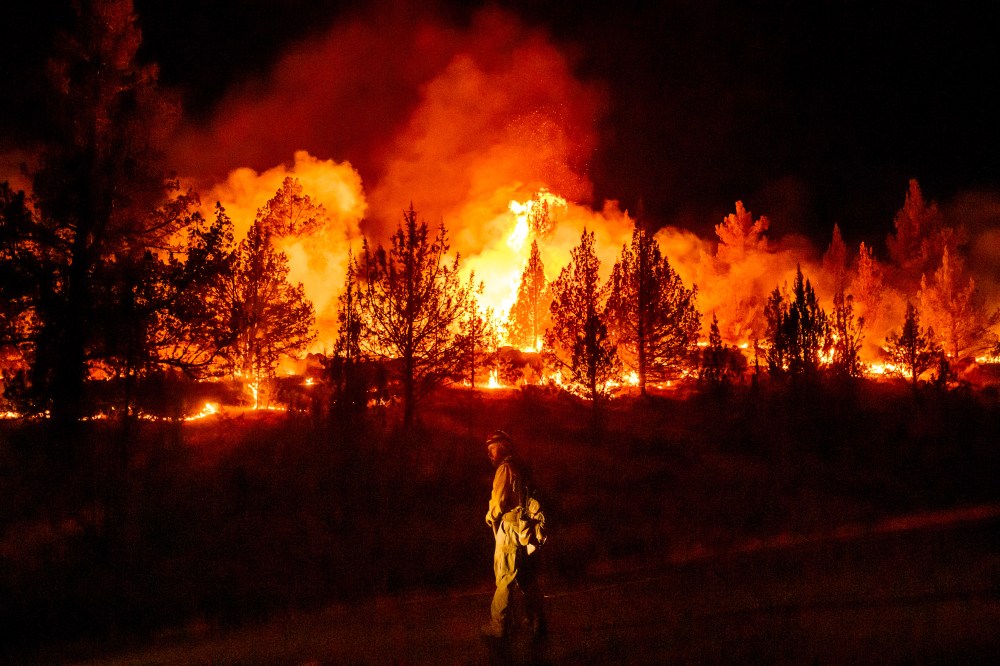
Spain’s wildfire is that country’s largest on record at more than 193 square miles (500 square kilometers) while wildfires in Europe have burned just a bit under 2025’s all-time high. In Canada and the United States this summer, land burned by wildfires is at least 25% higher than the 10-year average and more than double what it was decades ago, according to national wildfire centers. Entire chunks of the continent were choked by smoke, causing unhealthy air quality.
Fires are worsening in terms of size, intensity, speed and frequency, especially in the U.S., Canada and Europe, said University of Colorado fire scientist Jennifer Balch.
“Extreme wildfires are on the rise globally in different parts of the world. And that’s the piece that you know has us shaking in our boots,” Balch said.
Fires decrease in Africa, Asia
And yet the world went into July this year with record low global emissions from burning fires, a key measure of their prevalence, the European climate center Copernicus reported. That is because fires in Africa and Asia are way down due to changing agricultural practices, fire management and where people are moving to, said Mark Parrington, a senior scientist at Copernicus. Copernicus calculated that this year’s carbon emissions from burning are the lowest since satellites first measured nearly 25 years ago — about half what they were in the early 2000s.
“Africa dominates the global fire activity,” said UCLA water and fire scientist Park Williams. “So if there’s a trend in Africa, then that’s going to be the trend in the global fire activity. In sub-Saharan Africa, fire activity over the last 25 years has gone down pretty dramatically.”
On average, more than three-quarters of the global emissions from the burning of plant material comes from Africa and Asia, Copernicus statistics show. Less than one-eighth comes from North America and Europe.
Traditionally, huge grassland fires on the African savanna burned each year, compared to more intermittent forest fires in other regions, influencing worldwide fire totals, said John Abatzaglou, a fire scientist at the University of California Merced. But with more land being used for housing and farming, humans are limiting savanna fires, while also creating barriers to prevent fires from spreading, he said.
In Asia and the Amazon fires are often used to clear land for agriculture, experts said. So, Williams said, “it really is all driven by human demographic change.”
Human fingerprints on North American and European fire trends
In North America and Europe there are also “human fingerprints” on the more extreme fires dominating the news, but that is from climate change Abatzaglou said. Climate change from the burning of coal, oil and gas is making it hotter and drier — ideal fire weather — five different experts told The Associated Press.
Hotter temperatures mean humans “have our foot on the gas pedal” for bigger fires, “but we also have lost the brakes on fire” because warmer and drier nights don’t give forests — or firefighters — time to recover during darkness like they used to, Balch said.
When it gets hotter, the atmosphere sucks more moisture out of the ground, making it drier and easier to burn, Flannigan said. Climate change also increases the length of the burning season across North America and especially in northern forests where there used to be only a few days when the weather was conducive to wildfires, but now there are a lot more, he said.
And when climate change makes fire more extreme in places with larger populations, it tends to have a greater impact by burning more valuable property, Flannigan said.
Abatzaglou said that North America has long done a good job of fire suppression. But with climate change making fires more intense and frequent, “we’re losing our ability to do that,” he said.
El Nino will add to fires
Fire activity is likely to get worse in the coming months because of the developing super strong El Nino. The weather pattern usually triggers more dangerous fires in the tropics, less so in the United States because of more rain, experts said. South American governments are already getting prepared.
“The most predictable outcome of El Nino is going to be more tropical fire, specifically tropical forests,” Williams said.
Williams said El Nino could increase fires in the Amazon region, Southeast Asia and the Western Pacific.
While El Nino means more rain and fewer forest fires in the U.S. West, it can also mean more grass growth in deserts that adds fuel for eventual grass fires, Abatzaglou said. Examples of devastating grass fires include Los Angeles in 2025 and Hawaii in 2023.
Regardless of El Nino, scientists said areas in North America and Europe will have to improve planning and adaptation for worsening wildfires, including prescribed burns to thin excess trees and grasses.
“It’s not a question of whether our landscapes are going to burn, it’s the question of when they’re going to burn,” Balch said.
___
The Associated Press’ climate and environmental coverage receives financial support from multiple private foundations. AP is solely responsible for all content. Find AP’s standards for working with philanthropies, a list of supporters and funded coverage areas at AP.org.