

Critics call out Liberals for big-ticket spending outside budget framework
Advertisement
Read this article for free:
or
Already have an account? Log in here »
To continue reading, please subscribe:

Digital Subscription
One year of digital access for only $205*
- Enjoy unlimited reading on winnipegfreepress.com
- Read the E-Edition, our digital replica newspaper
- Access News Break, our award-winning app
- Play interactive puzzles
*First annual payment billed as $205.00 + GST for one year. This annual subscription will automatically renew at $233.00 + GST every 52 weeks (10% off the regular annual price of $259.35). Offer available to new and qualified returning subscribers only. Cancel any time.
To continue reading, please subscribe:
Add Free Press access to your Brandon Sun subscription for only an additional
$1 for the first 4 weeks*
- Enjoy unlimited reading on winnipegfreepress.com
- Read the E-Edition, our digital replica newspaper
- Access News Break, our award-winning app
- Play interactive puzzles
*Your next Brandon Sun subscription payment will increase by $1.00 and you will be charged $17.95 plus GST for four weeks. After four weeks, your payment will increase to $24.95 plus GST every four weeks.
Read unlimited articles for free today:
or
Already have an account? Log in here »
OTTAWA – A series of big-money announcements by the Liberal government this summer has critics and analysts calling out a lack of detail on Ottawa’s spending plans.
But the Liberals argue they need to move quickly to respond to global economic disruption — and that means new spending pledges can’t wait for the typical budget cycle.
Desjardins deputy chief economist Randall Bartlett published a note on July 16 adding up the federal government’s spending announcements since the spring economic update in April.
By his account, Ottawa has committed to more than $40 billion in new spending over the coming decade since the last fiscal update. That analysis was published before some recent announcements.
Bartlett also noted the nature of the spending — the timelines, how funding is split between the feds, provinces, Crown corporations and the private sector — isn’t always clear.
“All this raises reasonable concerns regarding the transparency of federal spending commitments. Indeed, Canadians likely won’t know until the fall budget what these recent announcements mean for the government of Canada’s bottom line,” he said.
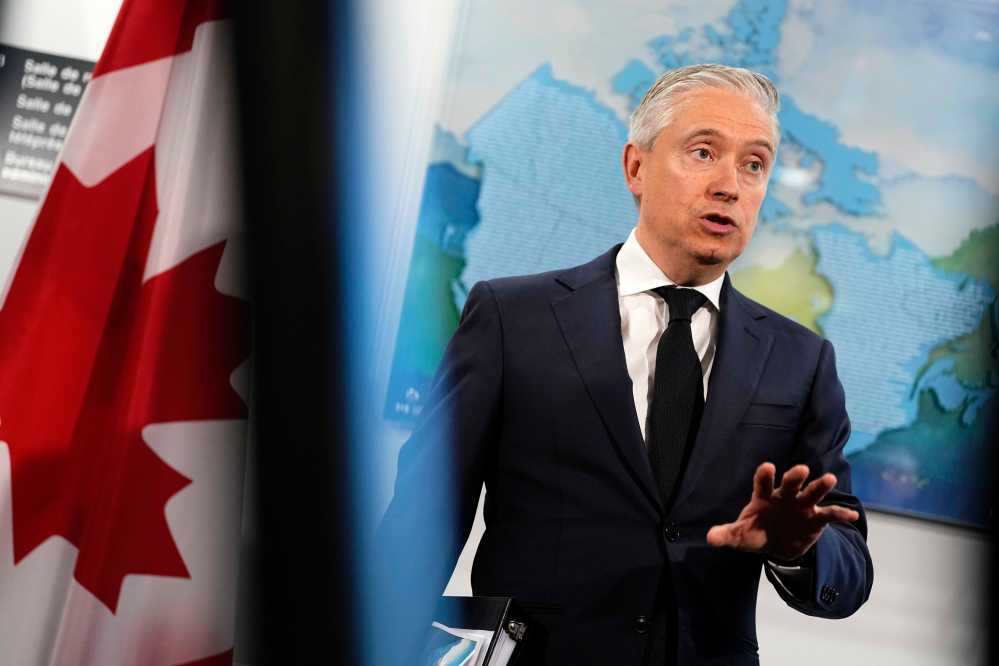
John Fragos, spokesman for Finance Minister François-Philippe Champagne, would not say whether Bartlett’s math is accurate in a media statement.
He defended the federal government’s reporting of fiscal plans in the fall budget and the spring economic statement. Those documents include detailed plans to support the economy and identify where the government intends to save $60 billion by trimming costs across the public service over the coming years, he said.
“Despite reporting to the contrary, the government … has provided detailed line-by-line spending analysis, reporting not only what the government has spent to support Canadians and sectors through this turbulent global economic environment, but likewise what the government has booked to spend in the years to come,” Fragos said.
Bartlett said he thinks seven of 10 recent announcements likely have funding allotted to them already in recent federal budget documents. Others — such as the federal artificial intelligence strategy and plans to publicly fund the construction of a proposed oil pipeline to the B.C. coast — likely were not accounted for in published documents, he said.
Bartlett warned that, by 2035, the federal debt-to-GDP ratio could rise nearly a percentage point higher than the projection in the spring economic update. The Liberals claim that by maintaining a declining deficit-to-GDP ratio and planning to balance the government’s operating budget by 2028-29, they ensure their fiscal strategy is stable.
Conservative finance critic Michael Chong said in an interview Wednesday that the Liberal government is the least transparent one Ottawa has seen in decades. He warned new spending will compound already rising deficits.
Chong alluded to Prime Minister Mark Carney’s past experience in the financial sector to call out the Liberals’ stewardship of the public purse.
“The government of Canada is not a private investment bank. It’s a government whose finances are to be public. And Mr. Carney needs to be a lot more transparent about the spending he’s announced in recent months,” he said.
Chong said that if the Liberals are proposing tens of billions of dollars in new spending, that should be tabled in the House of Commons for analysis by MPs and the parliamentary budget officer.
Fragos argued that the Liberal government must respond quickly to the current moment of global economic disruption and announcements can’t always wait until Parliament is sitting.
“It’s worth reiterating that Canada is moving at pace and with urgency to respond in real time to an unprecedented and ever volatile global economic challenge. This has necessitated advancing key proposals and measures in between fiscal documents,” he said.
Fragos also said the government has been very transparent and insists Ottawa’s new capital budget framework gives Canadians a clearer picture of how federal revenues are being invested to support the economy and workers.
The Office of the Parliamentary Budget Officer has flagged a lack of clarity on what constitutes capital versus operating spending in the government’s new framework.
Canada’s former parliamentary budget officer Kevin Page said in an email Thursday that he understands the Liberals’ push for deeper deficits to respond to economic uncertainty in the world. He also said there’s nothing inherently wrong with issuing spending announcements between budget updates.

But those spending pressures “should result in improvements in transparency that go beyond budgets and spring updates,” Page argued.
Most recent government spending announcements have come with press releases that highlight economic benefits like jobs and investment totals but lack analysis on the impact to public finances, he said.
Page said the federal government ought to consider publishing a monthly or quarterly fiscal monitor on new policy announcements to give observers a scorecard of spending and impacts on the budget balance.
“Increasing fiscal transparency could enhance fiscal credibility,” he said.
This report by The Canadian Press was first published July 30, 2026.