Little hope of compensation Provincial law meant to aid survivors of child sexual abuse imagery has never been put to the test
Read this article for free:
or
Already have an account? Log in here »
To continue reading, please subscribe:

Digital Subscription
One year of digital access for only $205*
- Enjoy unlimited reading on winnipegfreepress.com
- Read the E-Edition, our digital replica newspaper
- Access News Break, our award-winning app
- Play interactive puzzles
*First annual payment billed as $205.00 + GST for one year. This annual subscription will automatically renew at $233.00 + GST every 52 weeks (10% off the regular annual price of $259.35). Offer available to new and qualified returning subscribers only. Cancel any time.
To continue reading, please subscribe:
Add Free Press access to your Brandon Sun subscription for only an additional
$1 for the first 4 weeks*
- Enjoy unlimited reading on winnipegfreepress.com
- Read the E-Edition, our digital replica newspaper
- Access News Break, our award-winning app
- Play interactive puzzles
*Your next Brandon Sun subscription payment will increase by $1.00 and you will be charged $17.95 plus GST for four weeks. After four weeks, your payment will increase to $24.95 plus GST every four weeks.
Read unlimited articles for free today:
or
Already have an account? Log in here »
A Manitoba law meant to provide financial support to survivors of child sexual abuse that was recorded and distributed online has never once been used in its 15 years of existence, the Free Press has learned.
Passed in 2011, the Justice for Victims of Child Pornography Act allowed the province to seek court orders against people convicted of crimes involving child sexual abuse material.
If a court approved, offenders would be required to pay into a provincial fund meant to compensate individual victims, as well as to support the work of organizations and law enforcement agencies addressing child exploitation.
The idea was that the government — not victims — would take on the work of extracting damages from offenders.
Among the organizations that likely would have benefited is the Winnipeg-based Canadian Centre for Child Protection, a nationwide charity that facilitates the removal of child sexual abuse material from the Internet and supports survivors.
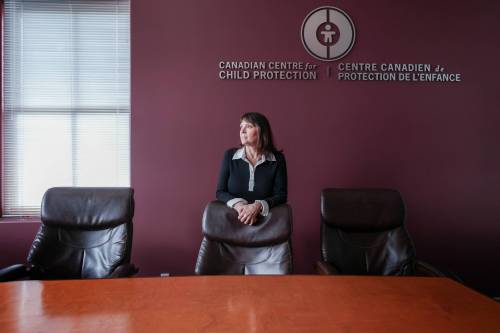
RUTH BONNEVILLE / FREE PRESS Monique St. Germain, general counsel for the Canadian Centre for Child Protection, says it’s disappointing the provincial government has never pursued restitution through the legislation.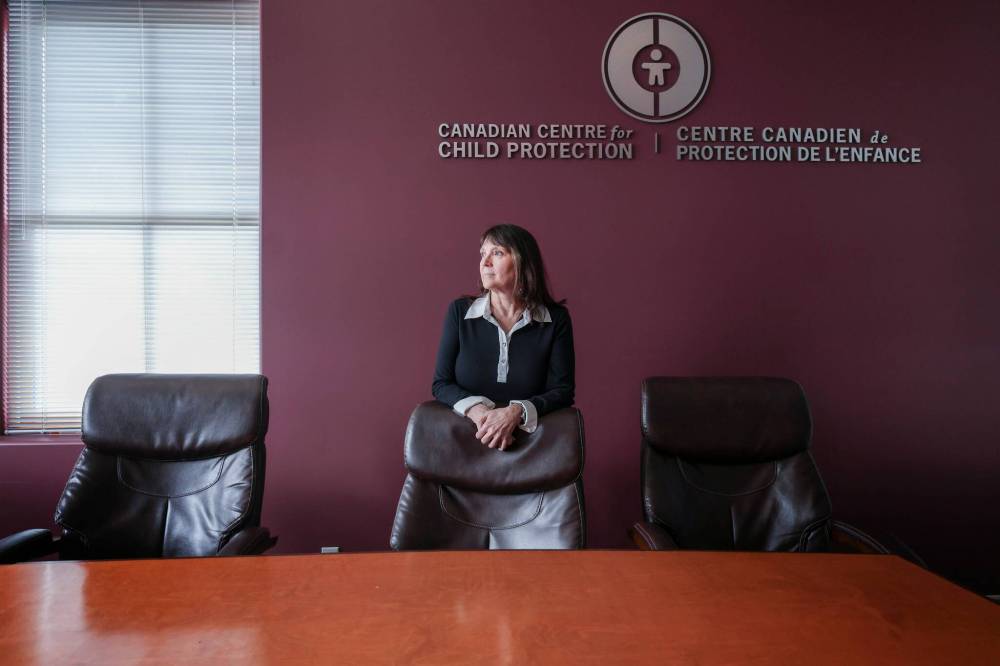
Monique St. Germain, the centre’s general counsel, told the Free Press it’s “disappointing” to see the law languish, particularly given Manitoba’s history of being an early adopter in child protection strategies, including by supporting the creation of the centre’s hotline, Cybertip.ca, and becoming the first province to mandate the reporting of suspected child sexual abuse material.
“We had really hoped when this legislation was introduced that it would be another one of those Manitoba firsts, and it just hasn’t been,” said St. Germain.
“It would be good to see something like this — and if this isn’t the legislation to do it, for whatever reason … let’s do something (similar).”
“We had really hoped when this legislation was introduced that it would be another one of those Manitoba firsts, and it just hasn’t been.”
The volume of child sexual abuse material — and the number of survivors — has exploded in recent years. These survivors are forced to contend not only with the trauma of the initial abuse, but also with knowing that offenders continue to seek out and watch imagery of their abuse.
In surveys, survivors have told the Canadian Centre for Child Protection they’ve developed post-traumatic stress disorder, struggled to sleep and been wracked with anxiety because of the existence of the imagery; have left jobs or schooling, fearful that strangers they encounter will recognize them; and described being stalked and harassed by offenders.
Working towards recovery can be costly: it often requires ongoing therapy, as well as digital and physical security services.
But there are also other costs — survivors miss out on everyday moments and professional opportunities, with some reporting they’ve been unable to have public-facing roles, hold social media accounts or even leave home without looking over their shoulder.
In a statement, NDP Justice Minister Matt Wiebe did not respond to a question about whether the victims act has ever been used, and instead focused on other avenues that he said his government is pursuing to punish perpetrators and support victims.
He cited amendments to the province’s pre-existing Non-Consensual Distribution of Intimate Images Act and “ensuring victims get the supports they need by providing dedicated service workers with specialized training, and by funding community programming.”
Wiebe also said the province is committed to updating the language in its laws. Manitoba recently replaced the outdated term “child pornography” — which falsely implies children can consent to sexual acts — with “child sexual abuse and exploitation material,” though the change has not been made fully in the act in question. (The federal government made this change last year.)
After further followup, an unnamed government spokesperson confirmed the victims act has never been used, though stated it’s “operational.”
The Justice for Victims of Child Pornography Act of 2011 was brought as a private member’s bill by opposition Conservative MLA Kelvin Goertzen, who would later become justice minister. In an recent email, Goertzen said that while he knew his bill was “breaking new ground,” he expected it would have been tested.
He noted that in the years since it was passed, governments have focused on initiatives making it easier for victims themselves to sue for damages in civil courts, such as with the Non-Consensual Distribution of Intimate Images Act of 2016.
MIKAELA MACKENZIE / FREE PRESS FILES 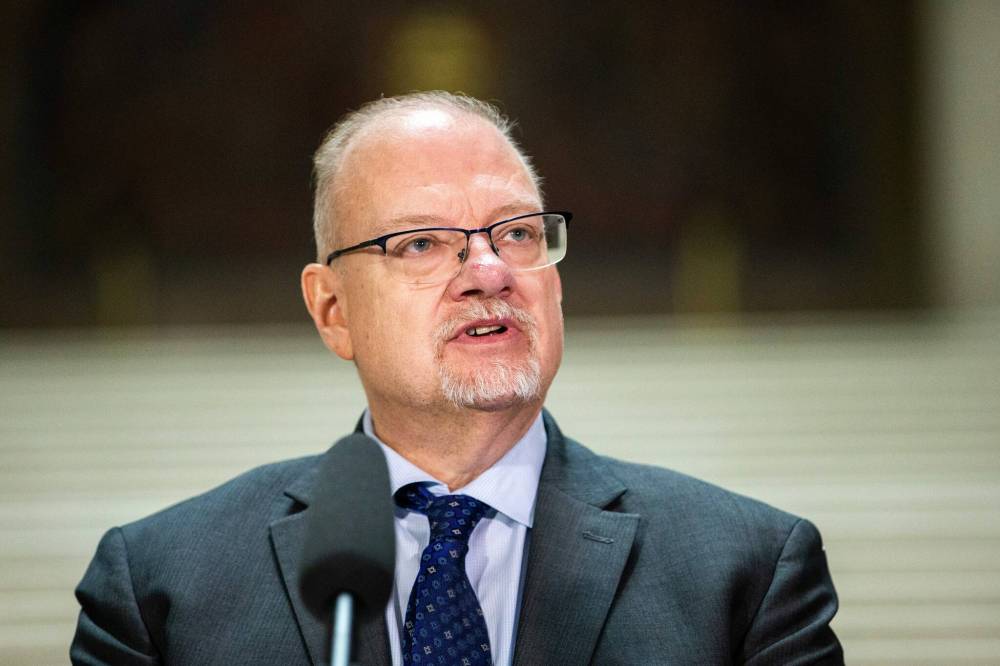
“However, my sense is that, to date, those acts have not been used significantly by victims,” Goertzen said.
“And if that is the case, then we need to look at why those avenues are not being used by the victims of these terrible crimes — stigma, cost, other barriers — and relook at whether the Justice for Victims of Child Pornography Act, which allows for the government itself to bring an action, should be tested and used.”
Survivors face several difficulties in suing an offender in civil court, St. Germain explained.
First, there are financial and logistical barriers, with the survivor needing to secure and pay for a lawyer to represent them; second, there’s a risk of their identity being inadvertently revealed during legal proceedings.
“We need to look at why those avenues are not being used by the victims of these terrible crimes.”
Survivors are technically eligible to receive restitution through Canada’s Criminal Code as part of a perpetrator’s sentencing, but St. Germain noted that in cases involving child sexual abuse material these decisions are rare.
“The problem with (restitution) is that it’s traditionally been applied in very simplistic circumstances. So, somebody robs my house and steals my TV. I can make a restitution claim for the cost of the new TV, right? It works,” she said.
“Where it doesn’t work well is where the damage — or what the person needs — for example, is access to long-term counselling.”
Arguing for restitution is the Crown’s responsibility, but this can create a “bit of a conflict,” St. Germain said. At times, restitution can lead to a lesser sentence, which prosecutors may be reluctant to risk.
In Manitoba, it appears there’s been just one case where an offender has been ordered to pay restitution to a survivor in a child sexual abuse material case.
Steve Suomu, a former teacher convicted of possessing child sexual abuse and exploitation material, was ordered to pay $5,000 to “Vicky,” a pseudonym for a child (now an adult) whose abuse imagery is traded rampantly online.
In his 2018 decision, Judge Robert Heinrichs, who had access to a review of Vicky’s medical records, a report from a clinical psychologist, a vocational report and a calculation of her lost wages, said the harm caused by the ongoing sharing of her imagery had cost her “in a significant way,” with medical and psychological expenses that are “readily ascertainable.”
Judges in Manitoba have denied at least two restitution requests in similar cases, saying the offender likely had no ability to pay.
Restitution for survivors of child sexual abuse material is more common in the U.S. than in Canada.
Margaret Mabie, a partner at Marsh Law Firm in New York, which has led efforts securing restitution for such survivors, explained to the Free Press that victims receive notifications when their abuse imagery is a part of a criminal case, allowing their lawyer to file a restitution packet, which would include a victim impact statement, psychological report and an estimate of the victim’s total damages, such as line items for therapy, home security and lost wages.
“Each of these victims have multi-million dollar damages reports and losses because their lives are incredibly hard. Not only do they face the underlying horrors and trauma of sexual abuse, but they have the distinct harm that comes with that sexual abuse being memorialized and then traded,” Mabie said.
Since the passage of the “Amy, Vicky, and Andy Act” in 2018, survivors who receive restitution in cases involving child sexual abuse material are entitled to a minimum of US$3,000. And unlike in Canada, U.S. judges are not permitted to take an offender’s ability to pay into consideration.
“Each of these victims have multi-million dollar damages reports and losses because their lives are incredibly hard.”
The act also created a “victims reserve,” where survivors of child sexual abuse material related to a federal criminal case with a conviction can access a one-time payment — around US$46,000 — as long as they haven’t already received restitution exceeding that. Victims don’t have to be a U.S. citizen or reside in the States to apply.
Though survivors receive restitution in the U.S. more commonly than in Canada, Mabie pointed out that the American system is far from perfect.
Survivors are still typically required to produce extensive documentation proving their losses — a standard she thinks should be eliminated.
“They shouldn’t have to prove their losses, it should be self-evident that this caused the victim harm. They don’t need to say, ‘I need therapy for the rest of my life because of this.’”
marsha.mcleod@winnipegfreepress.com

Marsha McLeod
Investigative reporter
Signal
Marsha is an investigative reporter. She joined the Free Press in 2023.
Our newsroom depends on a growing audience of readers to power our journalism. If you are not a paid reader, please consider becoming a subscriber.
Our newsroom depends on its audience of readers to power our journalism. Thank you for your support.

History
Updated on Thursday, July 30, 2026 5:58 PM CDT: Tweaks headline