Faith groups concerned by growing military spending

Advertisement
Read this article for free:
or
Already have an account? Log in here »
To continue reading, please subscribe:

Digital Subscription
One year of digital access for only $205*
- Enjoy unlimited reading on winnipegfreepress.com
- Read the E-Edition, our digital replica newspaper
- Access News Break, our award-winning app
- Play interactive puzzles
*First annual payment billed as $205.00 + GST for one year. This annual subscription will automatically renew at $233.00 + GST every 52 weeks (10% off the regular annual price of $259.35). Offer available to new and qualified returning subscribers only. Cancel any time.
To continue reading, please subscribe:
Add Free Press access to your Brandon Sun subscription for only an additional
$1 for the first 4 weeks*
- Enjoy unlimited reading on winnipegfreepress.com
- Read the E-Edition, our digital replica newspaper
- Access News Break, our award-winning app
- Play interactive puzzles
*Your next Brandon Sun subscription payment will increase by $1.00 and you will be charged $17.95 plus GST for four weeks. After four weeks, your payment will increase to $24.95 plus GST every four weeks.
Read unlimited articles for free today:
or
Already have an account? Log in here »
In response to growing threats around the world, Canada is increasing its military spending. In March, Prime Minister Mark Carney announced the country had met its NATO benchmark of spending two per cent of GDP on defence, with plans to spend five per cent by 2035.
Is this the right direction? Is the money being spent in the best way possible? And what about other forms of international engagement such as aid, diplomacy and peacemaking?
Those were some of the questions raised by 14 faith groups in the United Kingdom in July in response to that country’s decision to increase military spending by 20 billion euros (C$32.5 billion) per year over the next decade.
In a joint letter with other organizations, the groups expressed “grave concerns” about how spending on weapons was being given priority over other ways of promoting global security such as aid, diplomacy and peacebuilding — things that are “essential and underfunded tools in building a safer world,” they stated.
Citing polling in that country that showed public support for peacebuilding, climate action and international co-operation, the letter went on to state that there “is a clear public appetite for broader discussion on how to build a more secure, resilient and peaceful world … it is clear that British people conceive security in a broad range of ways beyond military force.”
The U.K. letter got me thinking about whether Canadian faith groups are asking for a similar discussion in this country.
One group that is raising questions is the Canadian Council of Churches. It is doing that through its peace research institute, Project Ploughshares.
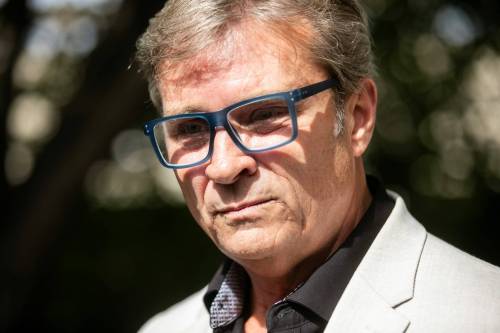
Paul Heidebrecht, who directs Project Ploughshares, acknowledged the landscape of the world has shifted when it comes to defence. But he believes Canadians need more conversation about how much to spend on the military.
“We need a time-out to talk about this,” he said, adding that the goal of five per cent of GDP “feels arbitrary to me.”
Heidebrecht also questions if building weapons is the best strategy for creating employment for Canadians.
“Will it create jobs for the long term?” he said, adding that he wonders if those jobs will disappear once Canada’s defence needs are met or if all those new weapons factories will start looking for export customers to keep going.
“That could see us ending up selling things to countries in ways that compromise our values,” he said.
While defence is getting a big increase, the federal government is cutting international development — something Heidebrecht sees as also being important to Canadian security. “There’s almost no debate about that,” he said.
Another group calling for conversations about defence spending is Mennonite Central Committee Canada. Through its Bread, Not Bombs campaign, MCC Canada is inviting people to send a letter to the prime minister to tell him they care about how Canada engages with the world, and that they are concerned about the decrease in foreign aid while military spending increases.
“Canada has the opportunity to be a good global neighbour by investing in peace, justice, and human flourishing,” says the letter, which can be found on MCC Canada’s website.
It adds that the country should “prioritize diplomatic and peacebuilding efforts over expanding military spending.”
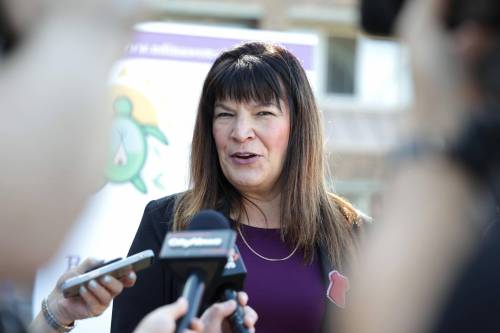
“This is a moment for churches and Canadians who care about global flourishing to send that message to the government,” said Anna Vogt, who directs MCC Canada’s Ottawa office.
When it comes to how Canada spends money, Vogt also believes there is a need for greater conversation.
“Let’s talk about the choices we can make,” she said.
This includes discussion about peacemaking, which has helped define Canada internationally since the 1950s.
“There’s a role for peacebuilding in the world,” Vogt said, adding that humanitarian aid also plays an important role in global security.
“While Canada increases the defence budget, we should not lose sight of what we can do through peacekeeping.”
Sandra Wiens is in charge of government relations for the Canadian Friends Service Committee, also known as Quakers. She believes “there are far better ways to spend money than on the military” when it comes to global security.
Quakers are especially concerned about how military spending might take money away from social programs and foreign aid, she said, and about the lack of funding for peacekeeping.
That historic approach to international conflict “has been systematically dismantled over time,” Wiens stated.
Wiens also believes there is a need for a national conversation about what security means to Canadians. For her, that conversation would include questions such as: “What are the threats? What are the best ways to address them? What are we cutting to fund the military? What is the role of foreign aid? What will lessen conflict, or create more of it?”
Right now, there is no space for those questions, Wiens said.
“Let’s start a conversation. Let’s listen to other voices … let’s not only talk about military necessity.”
Jdl562000@yahoo.com
The Free Press is committed to covering faith in Manitoba through our Religion in the News project. This reporting continues because readers like you step forward to fund it.
Donate now to support our reporting on religion.
Your donation is eligible for a charitable tax receipt.
BECOME A FAITH JOURNALISM SUPPORTER
Our newsroom depends on a growing audience of readers to power our journalism. If you are not a paid reader, please consider becoming a subscriber.
Our newsroom depends on its audience of readers to power our journalism. Thank you for your support.
The Free Press is committed to covering faith in Manitoba through our Religion in the News project. This reporting continues because readers like you step forward to fund it.
Donate now to support our reporting on religion.
Your donation is eligible for a charitable tax receipt.
BECOME A FAITH JOURNALISM SUPPORTER
Our newsroom depends on a growing audience of readers to power our journalism. If you are not a paid reader, please consider becoming a subscriber.
Our newsroom depends on its audience of readers to power our journalism. Thank you for your support.
Advertisement Advertise With Us
Advertisement Advertise With Us
The Free Press acknowledges the financial support it receives from members of the city’s faith community, which makes our coverage of religion possible.