Long-awaited supervised drug consumption site opens quietly after months of loud opposition
Read this article for free:
or
Already have an account? Log in here »
To continue reading, please subscribe:

Digital Subscription
One year of digital access for only $205*
- Enjoy unlimited reading on winnipegfreepress.com
- Read the E-Edition, our digital replica newspaper
- Access News Break, our award-winning app
- Play interactive puzzles
*First annual payment billed as $205.00 + GST for one year. This annual subscription will automatically renew at $233.00 + GST every 52 weeks (10% off the regular annual price of $259.35). Offer available to new and qualified returning subscribers only. Cancel any time.
To continue reading, please subscribe:
Add Free Press access to your Brandon Sun subscription for only an additional
$1 for the first 4 weeks*
- Enjoy unlimited reading on winnipegfreepress.com
- Read the E-Edition, our digital replica newspaper
- Access News Break, our award-winning app
- Play interactive puzzles
*Your next Brandon Sun subscription payment will increase by $1.00 and you will be charged $17.95 plus GST for four weeks. After four weeks, your payment will increase to $24.95 plus GST every four weeks.
Read unlimited articles for free today:
or
Already have an account? Log in here »
After three years of planning, delays and constant controversy, Manitoba’s first supervised drug consumption site quietly opened its doors Tuesday morning.
The space, operating temporarily out of the fenced-off parking lot at 366 Henry Ave. while repairs to the adjacent building are underway, has spots to sit, free clean needles and other drug-use supplies.
Signs welcome guests in several languages.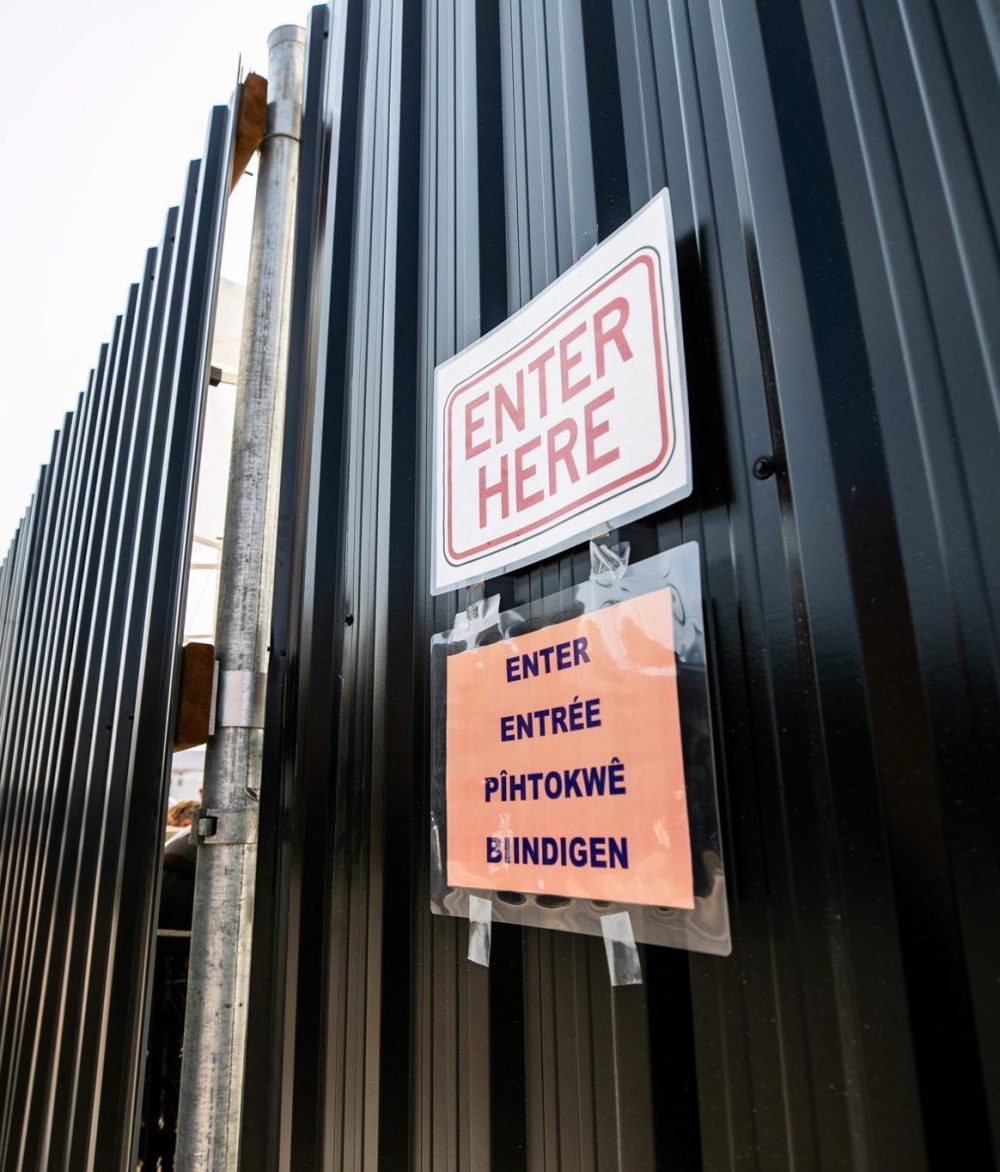
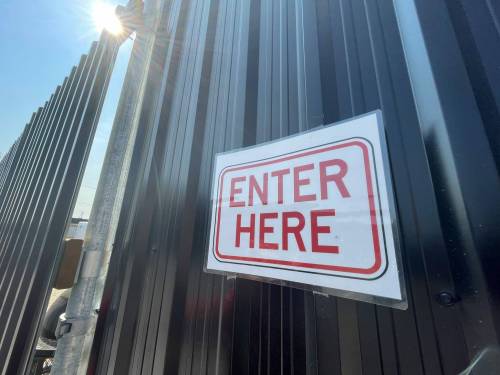
Staff provide supervision to anyone who arrives to use drugs. A simple laminated sign taped to the gate reads “Enter” in English, French, Cree and Ojibwe.
Security guards, in marked and unmarked vehicles, were parked around the building Tuesday morning. Members of the Downtown Community Safety Partnership, decked out in green, lingered outside.
When the gate was unlocked for the first time, staff and a few supporters cheered.
A dozen or so people visited the site in its first few hours. Two men, both originally from Swan River but currently living in Winnipeg, were among the first clients.
John, who lives at the nearby Salvation Army centre on Henry Avenue, uses opioids and methamphetamine. Chris, who lives with family, also uses meth. Both asked that their last names not be published.
They each left holding a plastic bag filled with clean needles, hygiene products such as dental floss and shower caps and granola bars and juice boxes.
“Instead of going out and using dirty rigs or whatever, and spreading disease and whatnot, and viruses and everything else, this way, we got clean, safe help,” a grinning John, waving a half-eaten granola bar, told the Free Press outside the site Tuesday.
“Plus, we get snacks.”
John and Chris visited the supervised consumption site Tuesday afternoon after learning they were providing clean needles. Both men said they regularly take meth, and plan to use the site as a clean, safe place to use.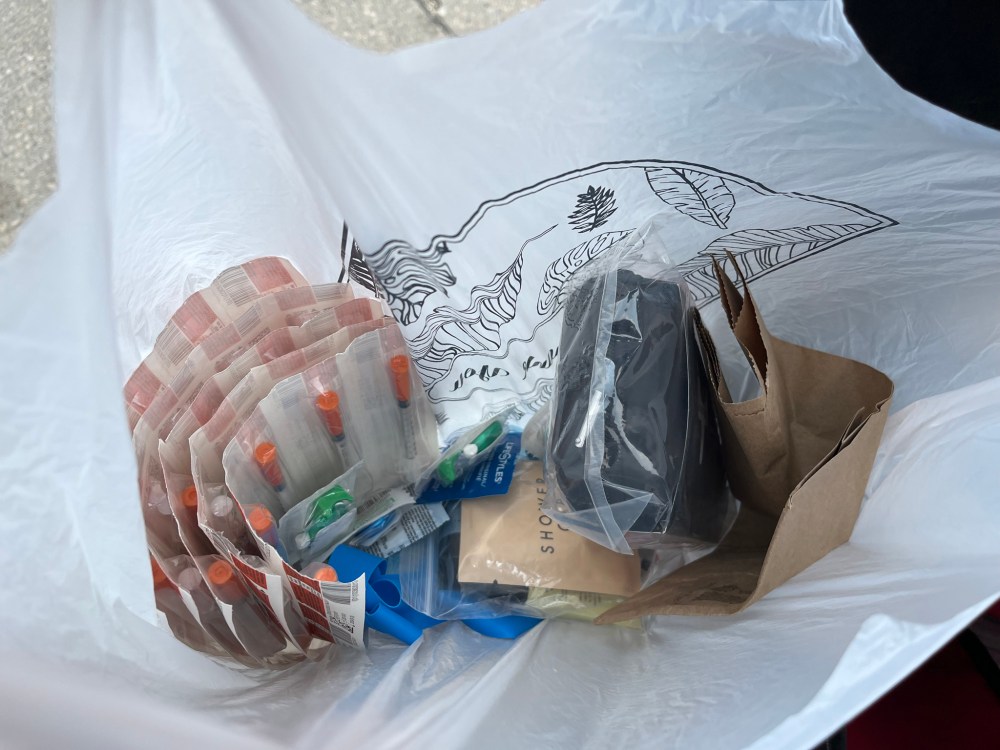
Both men said the most important thing for them is access to clean tools at the site. Back in Swan River, they said, people harmed themselves after breaking into and digging through sharps disposals to find usable needles.
“Without having cleans and that, you’d be going around picking up dirty needles trying to get high,” Chris said.
Some people living in the neighbourhood visited the site Tuesday not to use it, but to show their support.
Kelly Hughes has lived at the corner of Logan Avenue and Fountain Street for 12 years.
He attended several public consultation meetings held by the province, and said it felt like they were filled with “a lot of carpetbaggers,” suggesting many in attendance did not live in the neighbourhood.
“Nobody lives closer to here than we do, and I sat in some of those meetings… I was just disgusted by the people that were in opposition to it who don’t live over here, who just think that the the drugs are just going to disappear if we don’t have this,” he said.
“It’s not like it’s this or everything goes back to 1957. It’s this, or people are shooting up or smoking up on my front steps.”
Moved to action, he packed his truck with water bottles, bags of chips and other goods to hand out to staff and visitors. He was concerned protesters might show up, but none did.
MIKAELA MACKENZIE / FREE PRESS Local resident Kelly Hughes hopes people using the service feel welcome.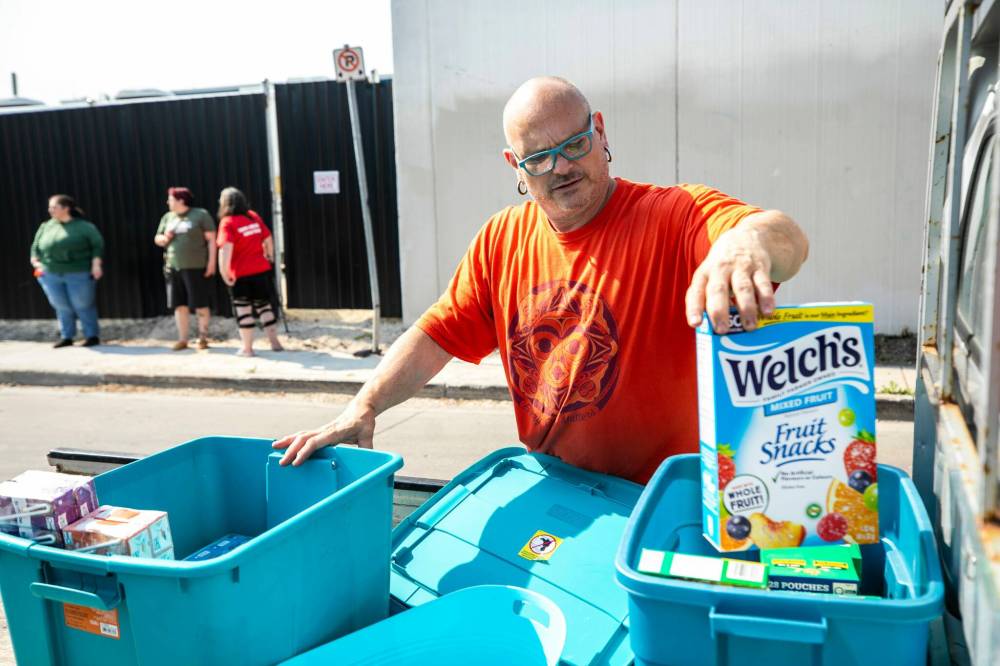
He said he hopes people using the service feel welcome.
“What kind of community do we live in when we’ve got people dying in the Tim Hortons bathrooms? That’s bulls—t,” he said. “I think (the site) is good.”
Sandra Mohamed, who always keeps opioid overdose reversing drug naloxone on her, said she has revived people nearly 200 times over the last few years, and has several family members who have struggled with addiction. She was there to show her support.
“A dead person can’t recover, a dead person can’t make different choices, a dead person can’t (do) anything,” she said. “And this is helping to keep people alive, so they can make choices on what they want to do and how they want to do it.”
MIKAELA MACKENZIE / FREE PRESS Sandra Mohamed said she was there to show her support.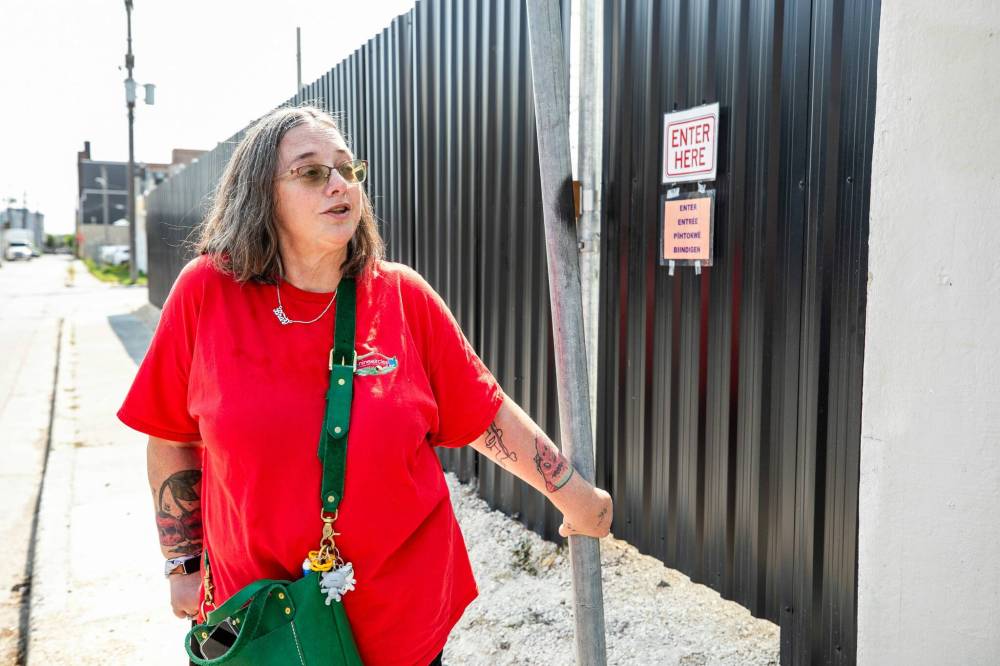
Not every visitor Tuesday morning was so optimistic.
Joseph Fourre is a familiar face in Winnipeg’s harm-reduction conversation. He founded the Singing Red Bear Foundation, which provides support to families coping with addiction, after his son, Harlan, died of fentanyl poisoning in 2023.
Fourre, who is in recovery after a years-long addiction to heroin and methamphetamine, has opposed the site, calling on the province to focus its funding on improving detox and treatment spaces.
“My heart is breaking right now,” he said outside the building.
“I know the people here are really good-hearted, and it’s nothing against the people that are are putting their faith into this… I was hoping that the province would have gone in a different direction and created those resources for recovery, as opposed to enabling the agony of addiction, which is basically what this site is going to do.”
Joseph Fourre wants the province to focus its funding on improving detox and treatment spaces.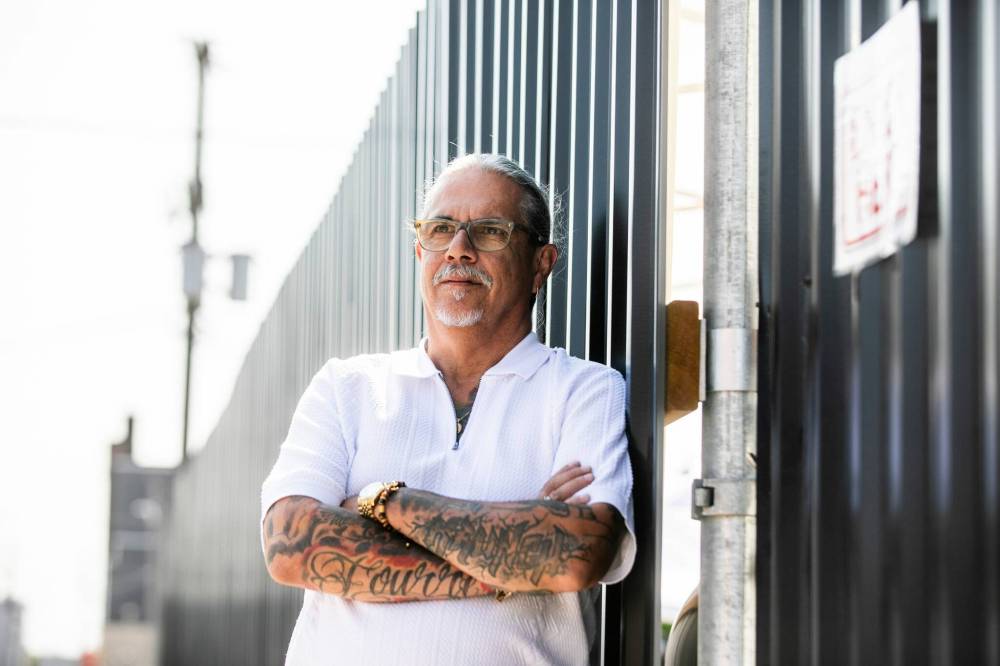
Pampanga Restaurant, located across the street, held a series of town halls on the planned facility. Staff made their opposition clear, arguing it would scare away customers from eating there.
On Tuesday, Lourdes Miranda, who owns the restaurant with her husband, said while she hopes the facility helps people in need, the province did not hear their concerns.
“You’re trying to help them. Are you helping us? You’re scaring us. We’re scared,” she said.
“I don’t know if this is the right solution, but a lot of people think it’s not.”
Some critics fear the facility will create safety risks for nearby businesses and residents.
The Aboriginal Health and Wellness Centre, which is running the site in partnership with the province, said in a statement that the space is committed to a “culturally safe, holistic model of care that honours the dignity of our relatives while maintaining accountability to our surrounding neighbours.”
At a press conference in her office Tuesday afternoon, Housing, Addictions and Homelessness Minister Bernadette Smith teared up as she described the site’s opening.
“You’re trying to help them. Are you helping us? You’re scaring us. We’re scared.”
“It’s bittersweet in the sense that folks know I’ve lost loved ones to the overdose crisis. I’ve also met with so many families that have also lost their loved ones to an overdose or are currently supporting them and don’t have anywhere for them to go and be supervised to connect with people with compassionate care,” she said.
“We have a lot of stigma around people who use drugs and we really need to embrace and start working with them so that they can see themselves coming out of this, going into recovery and really having hope.”
She said there have been 11 community consultations since the site was announced.
“Some folks were against, some folks were for it,” she said. “We’ve been in constant communication with them, and we’ll continue because we want to hear what folks have to say because they are Manitobans and they have concerns. We want to make sure that those concerns are being addressed.”
When the renovated building opens its doors it will offer housing supports, mental and primary health care and recovery services, said Smith.
For now, the temporary site is fully staffed with eight employees, including nurses, clinicians and mentors.
MIKAELA MACKENZIE / FREE PRESS “I think we need to kind of get rid of the noise and all the politics to it,” said Jamil Mahmood, Main Street Project executive director.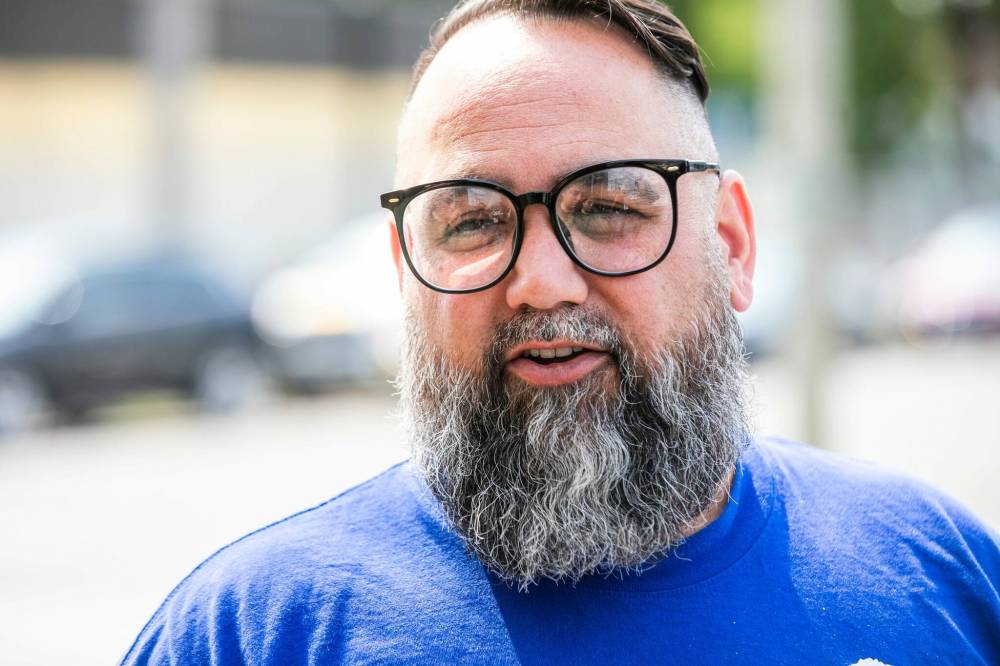
Jamil Mahmood, executive director of Main Street Project, said the facility is sorely needed, especially at a time when organizations serving people with addictions have seen large spikes in overdoses.
Earlier in the summer, MSP’s shelter staff dealt with as many as 15 overdoses a day requiring intervention with naloxone. The number has settled to about five a day at the shelter; the outreach team is seeing up to 10 overdoses on the street.
“This last four months have been like we’ve never seen before in our city,” Mahmood said, adding the city might need as many as five supervised consumption sites to meet the number of people who need them.
“We focus on what the data shows. It shows these sites are safe, they save lives, people don’t die in these locations and they also provide a lot of essential services,” he said.
“I think we need to kind of get rid of the noise and all the politics to it. These are the services that any health clinic should be offering to give people essential health care — and addiction is a health issue — and we should treat it that way.”

Tuesday’s opening comes after Winnipeg Police Service renewed an enforcement effort last week targeting open drug use. Community groups are participating in the crackdown to help connect people with resources.
Officers involved in the enforcement have been made aware of the location of the site, and are “targeting street-level drug dealing,” said WPS spokesperson Const. Pat Saydak.
“Outreach in and around the supervised consumption site will primarily be the responsibility of (the Downtown Community Safety Partnership), who are part of the layered security approach, and individuals will be encouraged to use the services offered at the SCS,” Saydak said in an email Tuesday.
Officers will respond to calls for service in and around the site that require police or emergency response, Saydak said.
— With files from Carol Sanders
malak.abas@freepress.mb.ca
‘There should be less use on public streets’: Gillingham
Mayor Scott Gillingham is optimistic the long-awaited opening of Winnipeg’s first supervised drug consumption site will help curb open substance use.
“What I’m hoping, and what I’m really expecting, is now there should be less use on public streets. I want to see our service partners, (who) work with people that are struggling with addiction, communicating to those individuals that there’s a space for you to use now. It’s the supervised consumption site. It’s not the sidewalk. It’s not the bus shelter. As I (have) said before, I don’t think we should tolerate that,” said Gillingham.
The long-awaited and hotly debated provincially led consumption site fully opened Tuesday at 366 Henry Ave.
The mayor did not directly answer questions about whether he personally supports the addition of a supervised consumption site.
“It’s open. It’s here. And, so, what I think we need to focus on is that it’s a place where people can not only use, but, to my understanding, can access the supports that they need long term…. What’s important is to get people into detox, off of drugs, into long-term recovery,” he said.
Health Minister Uzoma Asagwara, who joined the mayor for a downtown announcement Tuesday morning, said the province has invested in safety resources, such as Downtown Community Safety Partnership patrols, that should help ensure the site operates safely.
The health minister said the site will provide both security and health-care benefits.
“The supervised consumption site, of course, is about making sure that people have a place they can safely get services, (be) connected to housing, use safely, not overdose, not die in our streets. It is about primary care.
“This is an important step that’s going to support… making sure that downtown is a safer and healthier community, and that people will have a place to go where they know if they are unhoused, there’s somebody there who’s going to connect them to housing, that if they’re ready for detox, they’re going to get fast-tracked into detox,” said Asagwara.
— Joyanne Pursaga

Malak Abas is a city reporter at the Free Press. Born and raised in Winnipeg’s North End, she led the campus paper at the University of Manitoba before joining the Free Press in 2020. Read more about Malak.
Every piece of reporting Malak produces is reviewed by an editing team before it is posted online or published in print — part of the Free Press‘s tradition, since 1872, of producing reliable independent journalism. Read more about Free Press’s history and mandate, and learn how our newsroom operates.
Our newsroom depends on a growing audience of readers to power our journalism. If you are not a paid reader, please consider becoming a subscriber.
Our newsroom depends on its audience of readers to power our journalism. Thank you for your support.
Related Articles
Quiet opening fitting for controversial site




History
Updated on Tuesday, August 11, 2026 5:57 PM CDT: Adds details, quotes, new headline.