Status update
Social media’s self-promotional nature risks a loss of genuine storytelling — and our humanity
Advertisement
Read this article for free:
or
Already have an account? Log in here »
To continue reading, please subscribe:

Digital Subscription
One year of digital access for only $205*
- Enjoy unlimited reading on winnipegfreepress.com
- Read the E-Edition, our digital replica newspaper
- Access News Break, our award-winning app
- Play interactive puzzles
*First annual payment billed as $205.00 + GST for one year. This annual subscription will automatically renew at $233.00 + GST every 52 weeks (10% off the regular annual price of $259.35). Offer available to new and qualified returning subscribers only. Cancel any time.
To continue reading, please subscribe:
Add Free Press access to your Brandon Sun subscription for only an additional
$1 for the first 4 weeks*
- Enjoy unlimited reading on winnipegfreepress.com
- Read the E-Edition, our digital replica newspaper
- Access News Break, our award-winning app
- Play interactive puzzles
*Your next Brandon Sun subscription payment will increase by $1.00 and you will be charged $17.95 plus GST for four weeks. After four weeks, your payment will increase to $24.95 plus GST every four weeks.
Read unlimited articles for free today:
or
Already have an account? Log in here »
A conversation is overheard between two people; one congratulates the other on their success, evident through countless posts on LinkedIn, but the other confesses the prolific aggrandizement is due to slumping success.
A young man on an airplane spends three hours poring over selfies taken on a vacation, zooming in on his biceps and using AI to retouch photos before posting on Instagram.
Anonymous and cowardly trolls on Reddit attempt to end another person’s career.
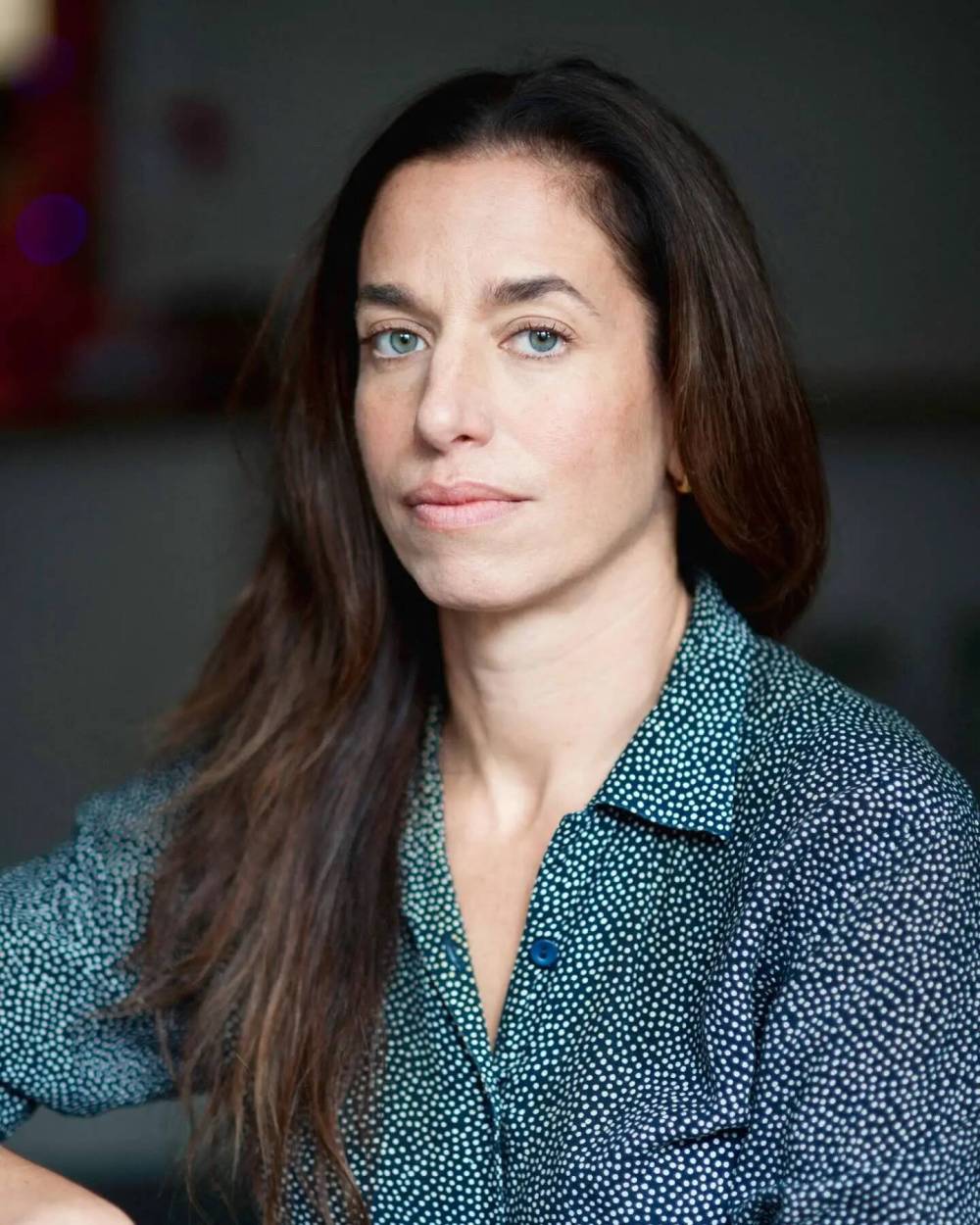
CAROLINE DESILETS PHOTO
Kathryn Jezer-Morton
All this “storytelling” was observed in one day by this reviewer.
The practice and art of storytelling is embedded into who we are as a species. Stories are our memory, our way of understanding the universe, a way to explain the unexplainable. Through poems, songs, the drum, film, photographs, dance, ancient drawings in caves, books and now social media, we are perpetually scratching on the walls in an attempt to make sense of lives and connect with others.
Life is lonely without stories.
But what happens when storytelling is eroded? What happens when the art of storytelling becomes a myriad of lies, self promotion, petty grievances and a race to claim “I am OK, and probably better than you?”
Montreal-based writer Kathyrn Jezer-Morton, in an expansion of her doctoral thesis, seeks to answer this question in her latest, The Story of Your Life: How Social Media Shapes the Way We Experience Everything. Born from her research on momfluencers (this reviewer learned a new word), the former Vermont commune member turned Concordia grad student hit the road to speak with social media users all over North America to get a sense of what compels many to spend their lives on platforms controlled by oligarchs, manipulated by algorithms and sanitized by our need to conform to something that doesn’t really exist — perfection.
Jezer-Moton, a self-admitted user of social media, takes the reader through history and the connection between neoliberalism, capitalism and our need to showcase our progress — as in things are getting better, bigger and more successful. In The Story of Your Life, she specifically highlights how, over the past two decades, social media has transformed from a platform where we simply say things about our lives to a full focus on personal branding. Social media, for Jezer-Morton, has changed how we think and speak about ourselves.
Using weddings, our vacations, our families, our homes and our bodies as examples, Jezer-Morton’s inquiry posits that we have lost the ability to create a bona fide narrative about ourselves. Rather, as she argues, our stories on social media have become “all light and no shadow.”
We are coerced into a culture based on a “celebration of compliance,” where we covet the perfect kitchen and the perfect kids all while exclaiming to the world, as the author suggests, that “We Do S–t!”
Jezer-Morton’s angst and lament is not simply about screen time, but rather that we are losing our ability to both just be — to accept that life does not have to have linear projection — and to tell legitimate stories free of “showing off, exaggeration, or even lying.” As she argues, social media has created the conditions for the loss of our humanity and our understanding of how we process it: “Creating perfect images has become not just a hobby but an entire value system,” she notes.
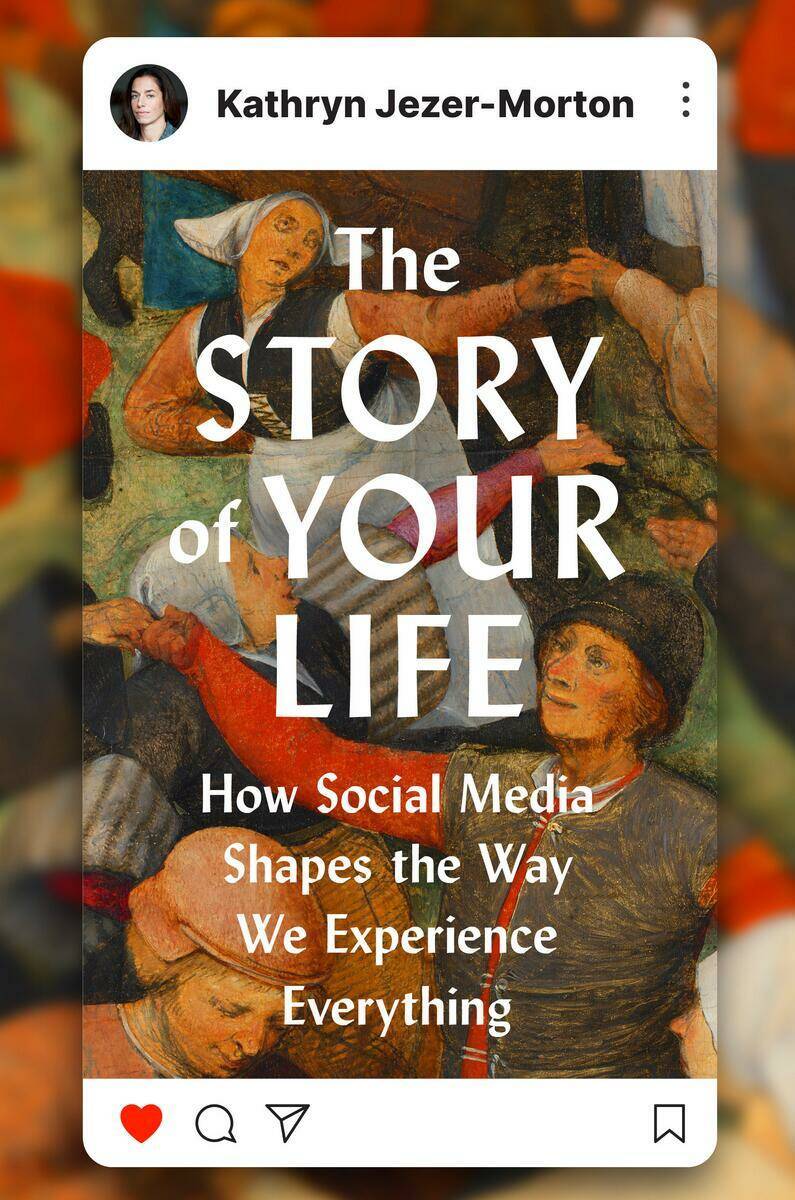
The Story of Your Life
A dark foreshadowing of our demise is persistent, until Jezer-Morton returns to her roots. The commune that taught her the imperfection, failure and experiences of life is enough. In a long walk with an elder, the millennial author ponders an alternative. “What if instead of thinking of our lives as moments to be captured and contained, we thought of them as impressions and feelings to be retrieved?” she asks.

What if we stopped fabricating our lives and actually lived them?
Recently, I took in An Iliad at Shakespeare in the Ruins and then the Christopher Nolan film The Odyssey at Grant Park cinemas. Both ancient stories are not hero stories. They don’t have answers. They don’t glorify any one person or perspective. Rather, they are simply examples of the tradition of telling stories to figure stuff out, to help us connect with each other and to be in the moment. To explain things like war, greed, love, selfishness and joy — and perhaps to not be so lonely.
Social media has exasperated our loneliness, our shallowness and our acceptance of dishonesty. If we are to create healthy communities, we need to get back to telling real stories that contain both shadow and light.
We need real stories that are ambiguous and authentic — ones which help us feed our humanity, rather than suffocating it.
Matt Henderson is superintendent of the Winnipeg School Division.